
Why Antarctica Is a Desert Despite Being Covered in Ice

The driest place on Earth is not the Sahara. It is a continent buried under nearly three kilometres of ice, where temperatures drop low enough to freeze carbon dioxide out of the air. Antarctica earns the label desert by the same rule that governs every desert on the planet, and understanding that rule changes how the word sounds forever after.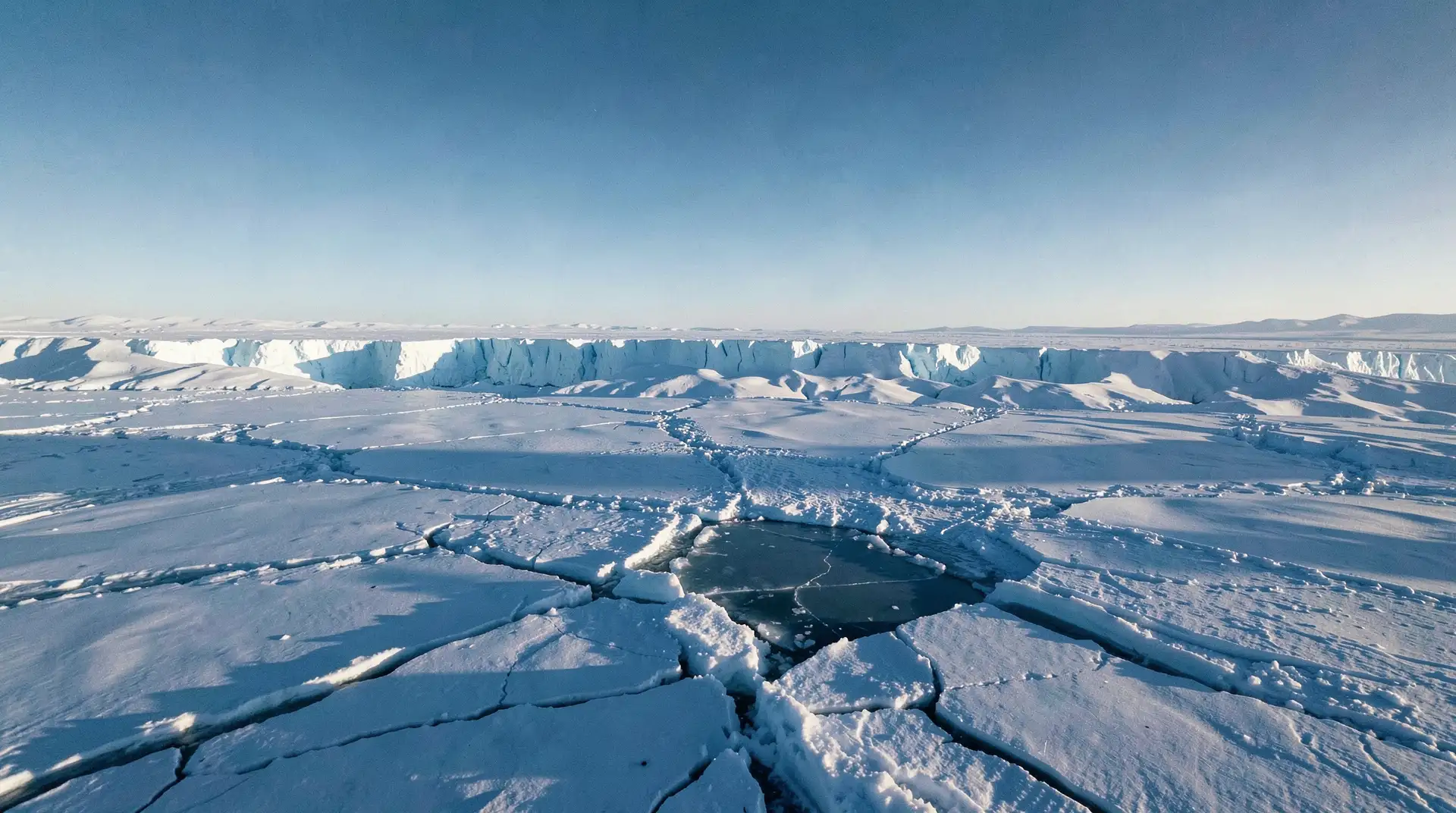
The word desert describes a water budget, not a landscape. Antarctica's ice sheet is not a contradiction of its desert status, it is the consequence of an ice age that never fully ended, trapping ancient snowfall in place while new precipitation arrives in quantities too small to register on an annual scale. The continent is frozen precisely because it is so dry: without the moderating effect of liquid water and cloud cover, temperatures fall to extremes that preserve everything that does arrive. Sand and ice are different materials, but the sky above them is equally empty.
What Makes a Desert a Desert
A desert is defined by how little precipitation falls, not by how hot it gets or whether sand is involved. The threshold used by most climatologists is an annual average of less than 250 millimetres of precipitation. The Sahara receives roughly 25 millimetres a year in its driest stretches. The interior of Antarctica receives less than 50 millimetres a year, mostly as snow, and the driest valleys on the continent receive almost none at all. By this measure, Antarctica is not just a desert, it is the largest desert on Earth, covering about 14 million square kilometres.Why So Little Snow Falls on a Frozen Continent
Precipitation requires moisture in the air, and moisture requires warmth to evaporate in the first place. Antarctica's interior is so cold that the air holds almost no water vapour. What little moisture exists is locked into the ice sheet itself, accumulated over hundreds of thousands of years, not replenished from above in any meaningful quantity each year. The coast receives more snow because it sits closer to the Southern Ocean, but even there, totals stay well below what a temperate forest receives in a single month. Cold air is simply dry air, it cannot carry the moisture that produces heavy snowfall.The Dry Valleys: Where Antarctica Looks Most Like a Desert
The McMurdo Dry Valleys on the continent's eastern edge are the clearest illustration of the paradox. These valleys have been free of ice for millions of years. The surrounding mountains block glaciers from flowing in, and the air is so dry and cold that any snow that falls sublimates, turns directly from solid to vapour, before it can accumulate. The ground is bare rock and frozen soil. Some of these valleys have not seen liquid water or significant snowfall for an estimated two million years, making them among the most arid places on the planet's surface. Scientists study them partly because the conditions resemble those on Mars.Two Types of Desert, One Definition
Climatologists distinguish between hot deserts and cold deserts, but both share the precipitation rule. The Gobi in Central Asia is a cold desert, temperatures fall well below freezing in winter, yet it qualifies because annual rainfall stays low. Patagonia in South America, the Great Basin in North America, and the Tibetan Plateau all carry cold desert classifications for the same reason. Antarctica is simply the most extreme version of this category. The ice sheet itself is the accumulated record of every snowfall over hundreds of thousands of years, not evidence that the continent is wet, but evidence that almost nothing melts or evaporates fast enough to leave.The word desert describes a water budget, not a landscape. Antarctica's ice sheet is not a contradiction of its desert status, it is the consequence of an ice age that never fully ended, trapping ancient snowfall in place while new precipitation arrives in quantities too small to register on an annual scale. The continent is frozen precisely because it is so dry: without the moderating effect of liquid water and cloud cover, temperatures fall to extremes that preserve everything that does arrive. Sand and ice are different materials, but the sky above them is equally empty.
Next Story