
Congo's Ebola death toll crosses 2,000 as country battles fastest-growing outbreak


Congo's confirmed Ebola death toll has risen to 2,011, with the second 1,000 deaths recorded in about three weeks compared with roughly nine weeks for the first 1,000, as the country battles the fastest-growing Ebola outbreak on record.
The latest government figures put the number of confirmed infections at 4,381 across five provinces, less than three months after authorities declared the outbreak on May 15.
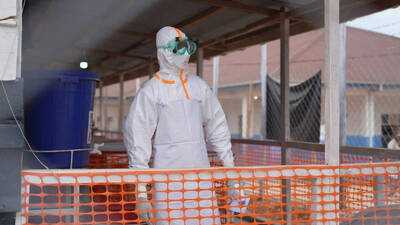
According to the Associated Press (AP), 704 patients were admitted and in isolation as health teams continued efforts to contain transmission, including in some of the country's hardest-to-reach areas.
Second 1,000 deaths recorded in about three weeks
It took roughly nine weeks after the outbreak was declared for the confirmed death toll to reach 1,000. The next 1,000 deaths were recorded in about three weeks.
The virus had been circulating for months before authorities detected the outbreak. The World Health Organization (WHO) said genetic analysis indicated transmission since February, while subsequent research suggests it may have begun as early as January in Ituri province.
Some early infections were mistaken for malaria and typhoid, delaying detection. Contact tracing has also been hampered by insecurity, poor infrastructure, population movement and pressure on health services, with many new infections emerging outside known transmission chains.
The outbreak is caused by Bundibugyo virus, a type of Ebola for which there is no approved vaccine or proven treatment.
WHO on July 2 added the first molecular diagnostic test specifically designed to detect Bundibugyo virus to its Emergency Use Listing, allowing faster confirmation of suspected infections.
Congo records its largest Ebola outbreak
The current outbreak is Congo's 17th since Ebola was first identified in the country in 1976 and is now its largest by recorded case count. Globally, it is second only to the 2014-2016 West Africa epidemic, which recorded 28,616 cases and 11,310 deaths across Guinea, Liberia and Sierra Leone.
US raises Ebola assistance to $512 million The US on August 5 announced another $242 million for the response, taking its total assistance to $512 million. The State Department said the additional funding would support up to six months of response operations.
US officials said the assistance had supported more than 180 health facilities and helped distribute nearly 300 tonnes of supplies.
President Donald Trump said on May 18 that he was concerned about the outbreak and that it remained confined to Africa at the time. The administration also imposed entry restrictions and enhanced screening for travellers from affected countries.
The US Centers for Disease Control and Prevention (CDC) has said no outbreak-linked Ebola cases have been reported in the US.
A WHO-sponsored clinical trial is testing the monoclonal antibody MBP134 and remdesivir, separately and in combination, to determine whether they can improve survival among people with Bundibugyo virus disease. Separate vaccine candidates targeting the virus are also being studied as researchers seek new tools to control the outbreak.
The latest government figures put the number of confirmed infections at 4,381 across five provinces, less than three months after authorities declared the outbreak on May 15.
According to the Associated Press (AP), 704 patients were admitted and in isolation as health teams continued efforts to contain transmission, including in some of the country's hardest-to-reach areas.
Second 1,000 deaths recorded in about three weeks
It took roughly nine weeks after the outbreak was declared for the confirmed death toll to reach 1,000. The next 1,000 deaths were recorded in about three weeks.
The virus had been circulating for months before authorities detected the outbreak. The World Health Organization (WHO) said genetic analysis indicated transmission since February, while subsequent research suggests it may have begun as early as January in Ituri province.
Some early infections were mistaken for malaria and typhoid, delaying detection. Contact tracing has also been hampered by insecurity, poor infrastructure, population movement and pressure on health services, with many new infections emerging outside known transmission chains.
The outbreak is caused by Bundibugyo virus, a type of Ebola for which there is no approved vaccine or proven treatment.
WHO on July 2 added the first molecular diagnostic test specifically designed to detect Bundibugyo virus to its Emergency Use Listing, allowing faster confirmation of suspected infections.
Congo records its largest Ebola outbreak
The current outbreak is Congo's 17th since Ebola was first identified in the country in 1976 and is now its largest by recorded case count. Globally, it is second only to the 2014-2016 West Africa epidemic, which recorded 28,616 cases and 11,310 deaths across Guinea, Liberia and Sierra Leone.
US raises Ebola assistance to $512 million The US on August 5 announced another $242 million for the response, taking its total assistance to $512 million. The State Department said the additional funding would support up to six months of response operations.
US officials said the assistance had supported more than 180 health facilities and helped distribute nearly 300 tonnes of supplies.
President Donald Trump said on May 18 that he was concerned about the outbreak and that it remained confined to Africa at the time. The administration also imposed entry restrictions and enhanced screening for travellers from affected countries.
The US Centers for Disease Control and Prevention (CDC) has said no outbreak-linked Ebola cases have been reported in the US.
A WHO-sponsored clinical trial is testing the monoclonal antibody MBP134 and remdesivir, separately and in combination, to determine whether they can improve survival among people with Bundibugyo virus disease. Separate vaccine candidates targeting the virus are also being studied as researchers seek new tools to control the outbreak.
Next Story