
Congo's Ebola outbreak could become deadliest in history, WHO warns


The Ebola outbreak in eastern Congo is spreading at a pace that could make it the deadliest Ebola outbreak ever recorded, according to the World Health Organization .
WHO Director-General Tedros Adhanom Ghebreyesus warned on Wednesday that the current outbreak could surpass the West African epidemic of 2014 to 2016, which killed more than 11,000 people among over 28,000 reported cases.
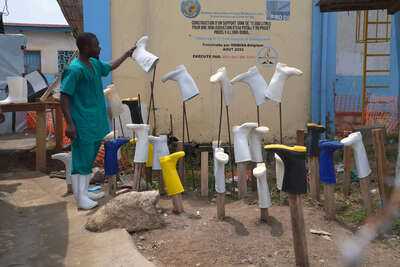
“At its current pace, it's on track to eclipse the West African Ebola outbreak of 2014 to 2016,” Tedros told reporters.
More than 2,000 people have already died in eastern Congo, with the number of reported cases exceeding 4,300. The outbreak was officially declared on May 15, although health authorities later discovered through genetic sequencing that the virus had been spreading since February.
What makes the current outbreak particularly concerning is the strain of Ebola involved. It is the rare Bundibugyo virus , for which there are currently no approved vaccines or treatments. Researchers and health authorities are working to develop ways to prevent and treat the disease.
The outbreak is also spreading in one of the most difficult environments for health workers. The affected region in eastern Congo has poor infrastructure and is dealing with an ongoing conflict. It is close to the borders with South Sudan, Uganda and Rwanda.
Many of the latest infections and deaths are occurring in communities that health workers are struggling to reach. Medical facilities in some areas lack adequate resources, while some health workers have gone on strike over unpaid wages.
Misinformation about Ebola is adding to the challenge. Some communities remain suspicious of outsiders and are reluctant to visit health centres, making it harder for authorities to identify patients and contain the virus.
Tedros said health workers were now trying to catch up with an outbreak that had already spread significantly before it was detected.
“The outbreak had a big head start, still way ahead of us. and we’re playing catch-up,” Tedros said.
The WHO expects the outbreak to reach its peak within the next six months. However, that is considered the moderate scenario.
Dr Abdirahman Mahamud, the WHO's director for health emergency alert and response operations, said a more prolonged outbreak could continue for between nine months and a year.
“But ... that’s the moderate scenario,” Mahamud added. “There is a one-case scenario where this outbreak may last nine months to 12 months."
WHO Director-General Tedros Adhanom Ghebreyesus warned on Wednesday that the current outbreak could surpass the West African epidemic of 2014 to 2016, which killed more than 11,000 people among over 28,000 reported cases.
“At its current pace, it's on track to eclipse the West African Ebola outbreak of 2014 to 2016,” Tedros told reporters.
More than 2,000 people have already died in eastern Congo, with the number of reported cases exceeding 4,300. The outbreak was officially declared on May 15, although health authorities later discovered through genetic sequencing that the virus had been spreading since February.
What makes the current outbreak particularly concerning is the strain of Ebola involved. It is the rare Bundibugyo virus , for which there are currently no approved vaccines or treatments. Researchers and health authorities are working to develop ways to prevent and treat the disease.
The outbreak is also spreading in one of the most difficult environments for health workers. The affected region in eastern Congo has poor infrastructure and is dealing with an ongoing conflict. It is close to the borders with South Sudan, Uganda and Rwanda.
Many of the latest infections and deaths are occurring in communities that health workers are struggling to reach. Medical facilities in some areas lack adequate resources, while some health workers have gone on strike over unpaid wages.
Misinformation about Ebola is adding to the challenge. Some communities remain suspicious of outsiders and are reluctant to visit health centres, making it harder for authorities to identify patients and contain the virus.
Tedros said health workers were now trying to catch up with an outbreak that had already spread significantly before it was detected.
“The outbreak had a big head start, still way ahead of us. and we’re playing catch-up,” Tedros said.
The WHO expects the outbreak to reach its peak within the next six months. However, that is considered the moderate scenario.
Dr Abdirahman Mahamud, the WHO's director for health emergency alert and response operations, said a more prolonged outbreak could continue for between nine months and a year.
“But ... that’s the moderate scenario,” Mahamud added. “There is a one-case scenario where this outbreak may last nine months to 12 months."
Next Story