
Polar Nights in Norway: What Indian Backpackers Should Know

Above the Arctic Circle, the sun does not rise for weeks at a stretch. This is not a long evening or an overcast afternoon, it is genuine, complete darkness at noon, broken only by a faint blue glow on the southern horizon for an hour or two around midday. Norwegians call it mørketid, the dark time, and they have built an entire way of living around it. For an Indian backpacker used to twelve hours of hard sunlight, stepping into mørketid is one of the more disorienting and quietly beautiful things travel can offer.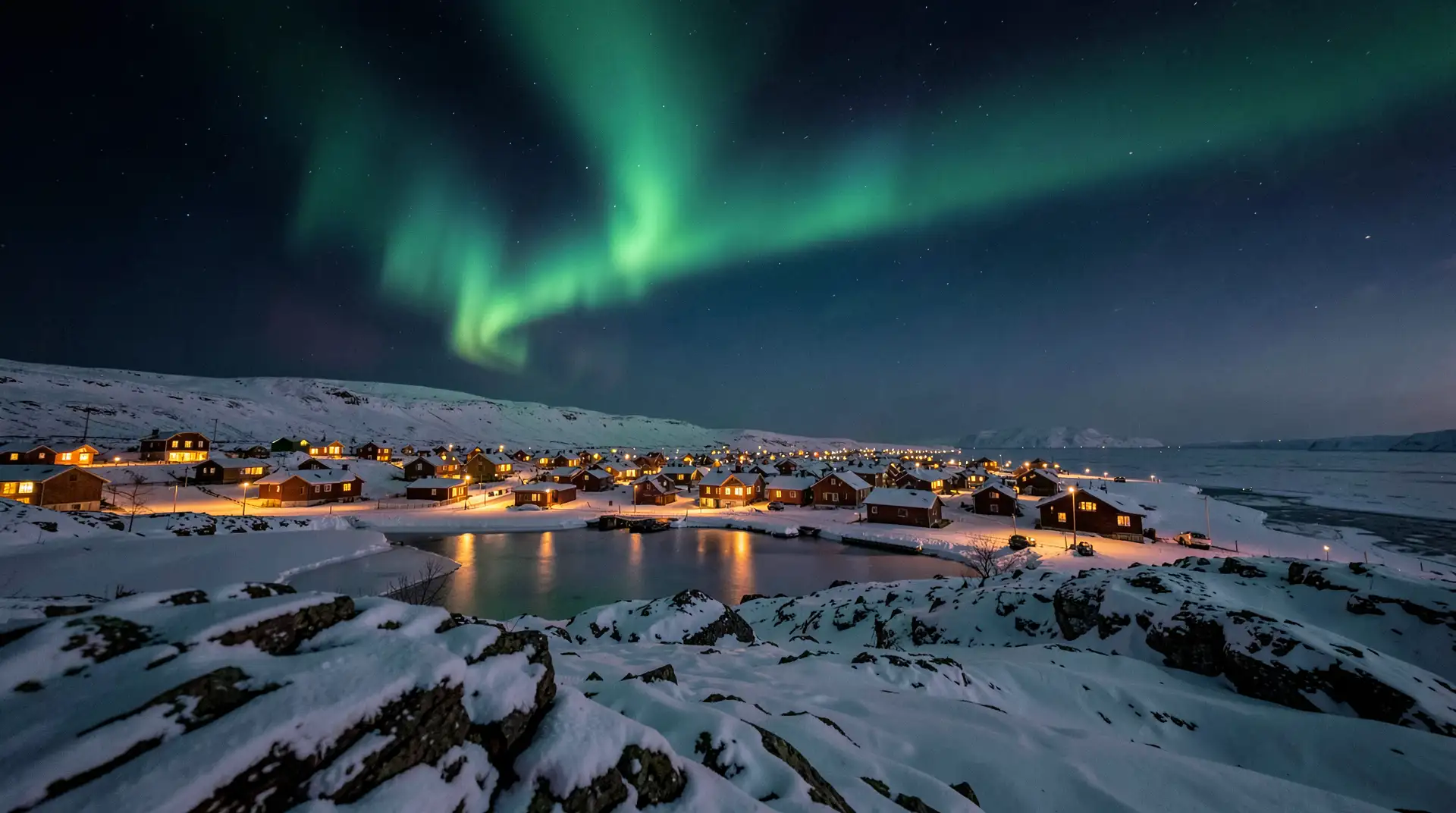
Tromsø has a proper airport with connections through Oslo, Helsinki, and London. Svalbard requires a domestic hop from mainland Norway but needs no visa for most nationalities, including Indian passport holders, because Norway's Svalbard Treaty gives it a special status outside the Schengen immigration zone.
Auroras can appear at what would normally be midday. Experienced aurora watchers in Tromsø describe this as a fundamental shift, instead of racing against a rising sun, you simply wait, and the sky decides.
The other consequence of total darkness is that the stars and the Milky Way, washed out in most of the world by light pollution, become overwhelming. Tromsø sits far from industrial centres. On a clear night away from the town centre, the sky is dense with light in a way that most Indian cities have not seen in generations.
Towns stay lit and functional. Cafés open, museums run, dog-sled operators go out on trails. The darkness is not an absence of life, it is a different texture of it. Norwegian towns handle mørketid with warm indoor culture: candles everywhere, long meals, saunas, and the particular social warmth that comes from everyone being in the same situation together.
Merino wool as a base layer, a mid-layer of fleece or down, and a windproof outer shell is the standard system. Hands, ears, and face need their own coverage. Indian travellers often underestimate how different wet Arctic cold feels from dry cold-season air in Delhi or Shimla. A wool hat that covers the ears matters more than an extra jacket.
The other practical reality is that most aurora tour operators run group trips in heated vehicles or on snowmobiles. These are not cheap, but they take the navigation and weather-reading out of the equation for a first-time visitor. Going independently is possible, simply driving or walking out of town on a clear night, but local operators know which cloud systems are moving in and which valleys stay clear.
Norwegian towns manage this with deliberate rhythm: scheduled meals at fixed hours, saunas in the evening, the social ritual of coffee at the same time each morning. Joining that rhythm, rather than fighting the darkness, is what separates a traveller who leaves exhausted from one who leaves changed.
The polar night is not a backdrop for a photograph. It is the experience itself, a weeks-long argument that darkness can be generous, that the absence of something ordinary can make everything else more vivid.
Where the Darkness Actually Happens
Polar night is not a Norway-wide event. Oslo stays dim in winter but keeps its sunrises. The phenomenon begins above the Arctic Circle, roughly at 66.5 degrees north latitude. Tromsø, at nearly 70 degrees north, experiences polar night for about two months. Longyearbyen on the Svalbard archipelago, sitting above 78 degrees, goes dark for roughly four months. These are the two destinations most accessible to international travellers.Tromsø has a proper airport with connections through Oslo, Helsinki, and London. Svalbard requires a domestic hop from mainland Norway but needs no visa for most nationalities, including Indian passport holders, because Norway's Svalbard Treaty gives it a special status outside the Schengen immigration zone.
The Northern Lights and Why Darkness Is the Point
The aurora borealis does not appear because of polar night, it appears because of solar wind interacting with Earth's magnetic field, and it happens year-round at high latitudes. What polar night gives you is the one thing aurora hunters need most: a sky dark enough to see it. During polar night, that window is not two or three hours after sunset. It is the entire twenty-four hours.Auroras can appear at what would normally be midday. Experienced aurora watchers in Tromsø describe this as a fundamental shift, instead of racing against a rising sun, you simply wait, and the sky decides.
The other consequence of total darkness is that the stars and the Milky Way, washed out in most of the world by light pollution, become overwhelming. Tromsø sits far from industrial centres. On a clear night away from the town centre, the sky is dense with light in a way that most Indian cities have not seen in generations.
What the Days Actually Feel Like
The blue hour, the period around civil twilight when the horizon glows a deep indigo even though the sun stays below it, stretches for an hour or more in both directions around midday. Photographers travel specifically for this light. Snow-covered landscapes, frozen fjords, and birch forests take on colours that do not exist in any other season: a blue that is neither day nor night, with pink and orange at the edges where the sun almost surfaces.Towns stay lit and functional. Cafés open, museums run, dog-sled operators go out on trails. The darkness is not an absence of life, it is a different texture of it. Norwegian towns handle mørketid with warm indoor culture: candles everywhere, long meals, saunas, and the particular social warmth that comes from everyone being in the same situation together.
Practical Realities for Indian Backpackers
Norway is expensive by any measure. Budget travel here means hostel dormitories, cooking in shared kitchens, and choosing a base like Tromsø over Svalbard for daily costs. The Svalbard option is worth the extra expense for at least a few nights if the budget allows, because the landscape, glaciers, polar desert, reindeer wandering into town, is unlike anything on the Norwegian mainland. Layering is not optional. The cold at these latitudes is not merely cold; it is the kind that makes fingers useless in minutes if the gloves are wrong.Merino wool as a base layer, a mid-layer of fleece or down, and a windproof outer shell is the standard system. Hands, ears, and face need their own coverage. Indian travellers often underestimate how different wet Arctic cold feels from dry cold-season air in Delhi or Shimla. A wool hat that covers the ears matters more than an extra jacket.
The other practical reality is that most aurora tour operators run group trips in heated vehicles or on snowmobiles. These are not cheap, but they take the navigation and weather-reading out of the equation for a first-time visitor. Going independently is possible, simply driving or walking out of town on a clear night, but local operators know which cloud systems are moving in and which valleys stay clear.
The Thing Most Travellers Do Not Expect
Polar night changes time perception in a way that is difficult to describe before experiencing it. Without the sun as an anchor, the body loses its usual clock. Meals feel arbitrary. Sleep comes at strange hours. Some travellers find this disorienting; others find it quietly liberating, a week where the usual structure of a day simply does not apply.Norwegian towns manage this with deliberate rhythm: scheduled meals at fixed hours, saunas in the evening, the social ritual of coffee at the same time each morning. Joining that rhythm, rather than fighting the darkness, is what separates a traveller who leaves exhausted from one who leaves changed.
The polar night is not a backdrop for a photograph. It is the experience itself, a weeks-long argument that darkness can be generous, that the absence of something ordinary can make everything else more vivid.
Next Story