
5 Surprising Facts About the Sahara's Green Past

The Sahara covers roughly nine million square kilometres today, an ocean of sand and rock where almost nothing survives. But beneath those dunes lies evidence of a completely different world, one that existed not in some unimaginably distant geological past, but within the span of human history.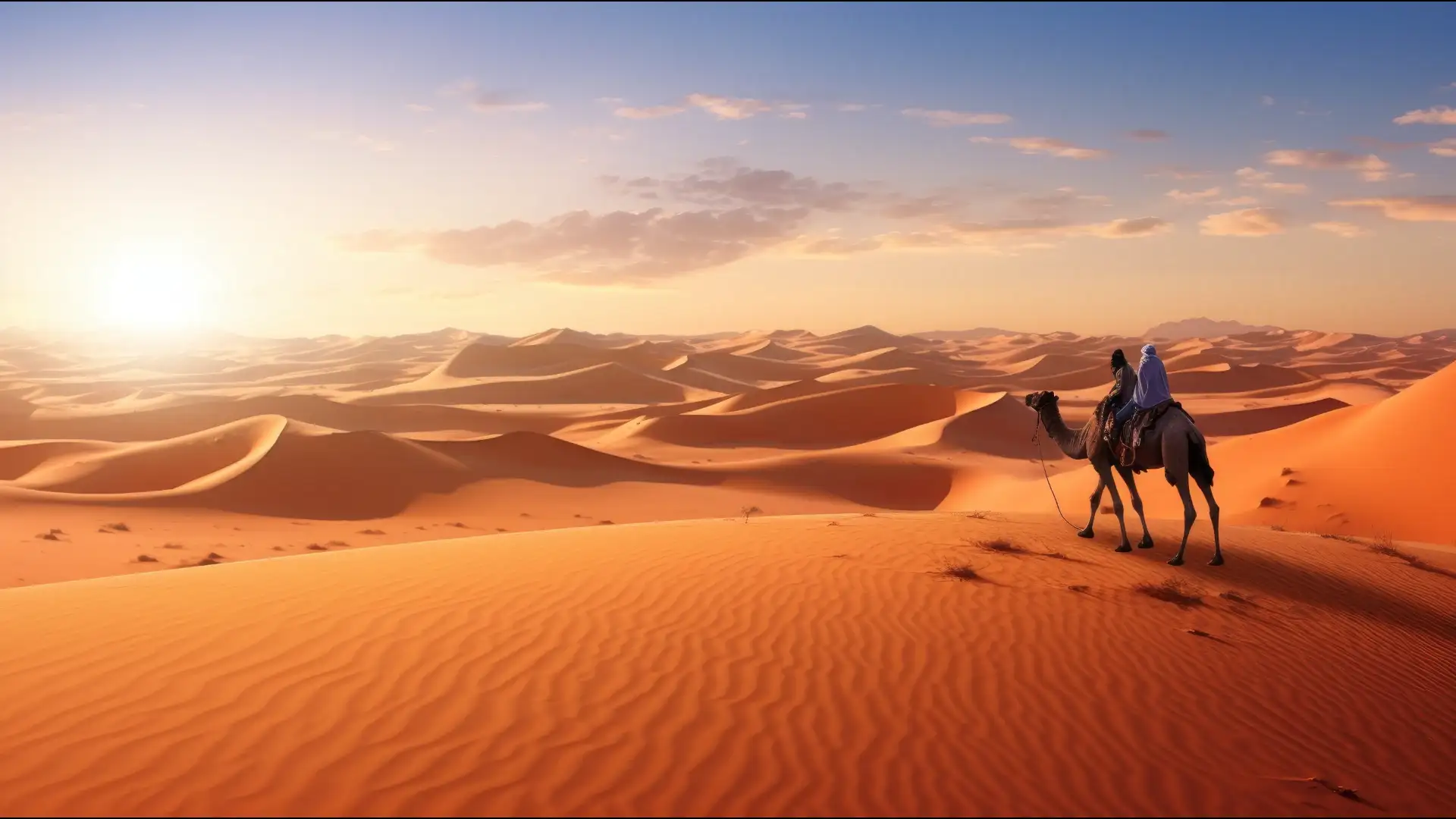
The Sahara Was Once a Savannah
Between roughly 11,000 and 5,000 years ago, the region that is now the Sahara looked more like the East African savannah than a desert. Seasonal monsoon rains pushed deep into North Africa, feeding permanent lakes, marshes, and rivers. Hippos wallowed in what is now southern Algeria. Elephants, giraffes, and crocodiles lived across territory that today receives less than 25 millimetres of rain a year. Geologists and archaeologists call this period the African Humid Period, and the evidence for it is everywhere once you know to look, in ancient lake beds, in fossilised pollen, in bones buried under the sand.Rock Art Left by People Who Lived There
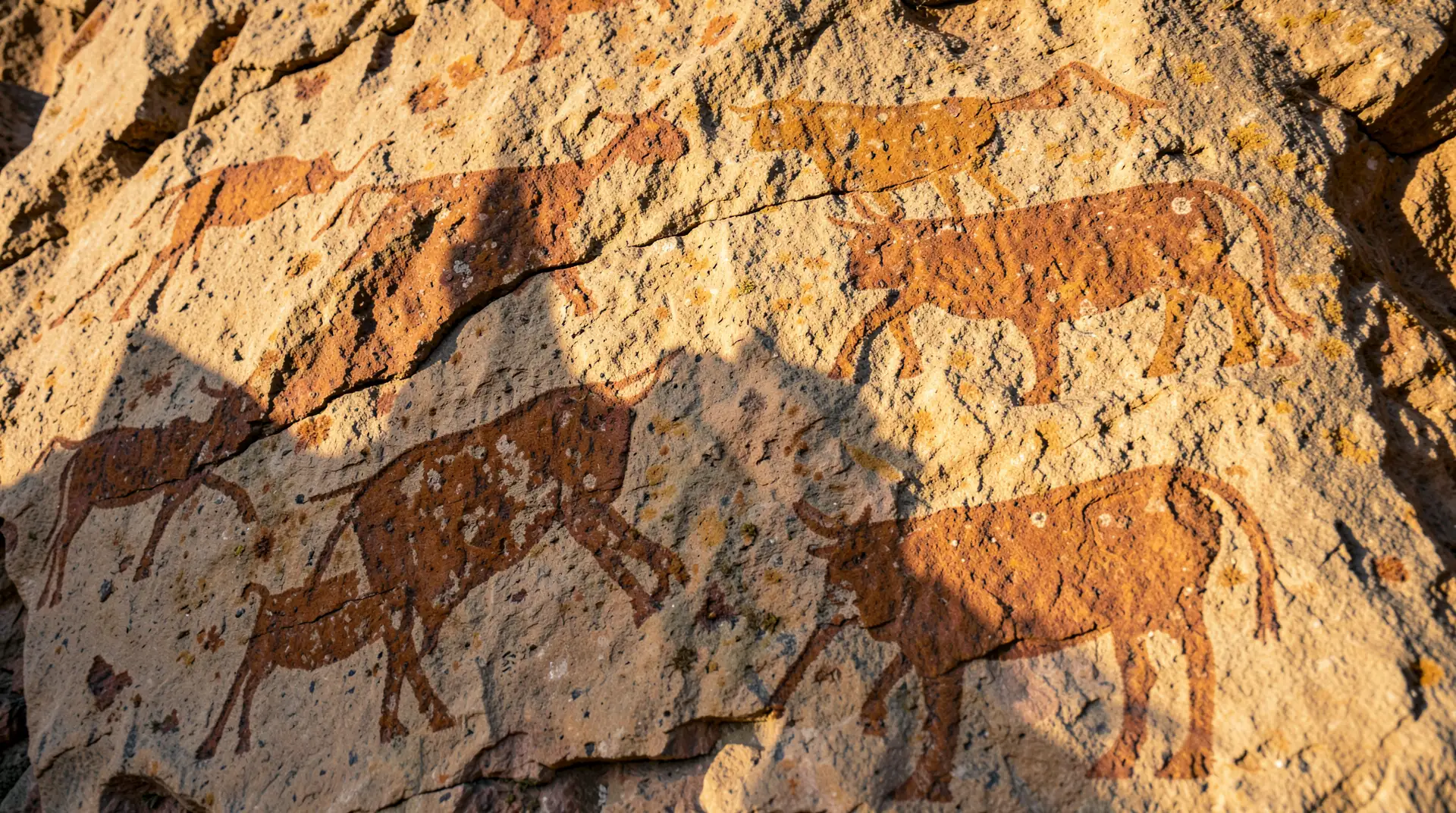
Some of the most striking evidence is not geological but human. Across the Sahara's central massifs, particularly in the Tassili n'Ajjer plateau in Algeria and the Fezzan region of Libya, thousands of rock paintings and engravings survive from this green era. They show cattle herders, swimmers, boats, and animals that have not lived in the region for millennia. These were not travellers passing through. The density and variety of the art points to settled communities who farmed, herded livestock, and fished in lakes that no longer exist. The Sahara was, for a time, one of the more hospitable places in Africa.The Trigger Was a Wobble in Earth's Orbit
What turned a savannah into a desert was not a catastrophe but a slow, predictable shift in how Earth moves through space. The planet's axial tilt and the shape of its orbit around the sun change gradually over tens of thousands of years, a set of cycles described by Serbian mathematician Milutin Milanković in the early twentieth century. Around 11,000 years ago, these cycles placed the Northern Hemisphere's summer closer to the sun, intensifying solar heating and pulling the West African monsoon system far north of where it sits today. As the orbital geometry shifted back over millennia, the monsoon retreated south, the rains failed, and the vegetation collapsed. The desert did not invade from outside, it grew from within, as the soil dried and lost the plants that had been holding moisture in the ground.Lakes the Size of Countries Once Filled the Basin
At the height of the humid period, a body of water called Mega-Lake Chad occupied a basin in central Africa that stretched across parts of what are now Chad, Niger, Nigeria, and Cameroon. At its largest, it covered an area comparable to the Caspian Sea, roughly 400,000 square kilometres. Today, Lake Chad itself has shrunk to a fraction of that size, and the ancient shorelines of the mega-lake are visible from satellite imagery as pale rings in the landscape. Separate lake systems existed further north, in the heart of what is now the Sahara proper. The Fezzan lakes in Libya supported fish and crocodiles. Some of these water bodies persisted long enough that isolated populations of Nile crocodiles survived in Saharan pools into the twentieth century, a living remnant of the green era.The Collapse May Have Pushed People Toward the Nile
One of the more consequential ideas in archaeology connects the drying of the Sahara to the sudden flourishing of ancient Egyptian civilisation. As the green Sahara faded, the people who had lived across it, cattle herders, fishers, artists, had fewer places to go. The Nile Valley, one of the few remaining reliable water sources in the region, would have drawn population from across a vast area over centuries. Some researchers argue that this migration brought skills, livestock-herding practices, and cultural traditions that fed into the early development of Egyptian society. The link is contested and almost certainly not simple, but the timing is striking: the Sahara's final drying corresponds roughly with the period when complex settlement along the Nile accelerated. The desert that seems like an eternal barrier may have, in its dying, helped build one of history's most enduring civilisations.Next Story