
How China is using maritime tactics and propaganda to squeeze Taiwan


China is increasingly relying on “hybrid warfare” and other grey-zone tactics to intensify pressure on Taiwan, moving away from direct military confrontation and instead using coast guard deployments, research vessels and legal claims to advance its objectives, a senior Taiwanese security official has said.
According to news agency ANI, Taiwan National Security Institute deputy secretary-general Ho Cheng-hui said Beijing is placing greater emphasis on operations that fall below the threshold of war, combining sovereignty claims, maritime activities and propaganda campaigns to influence public opinion and exert diplomatic pressure on Taiwan and regional neighbours.
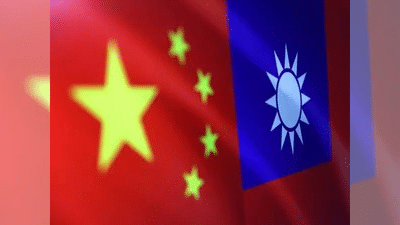
Speaking on the changing security environment, Ho said that as conflicts in Ukraine and Iran appear to be easing, China may view the prospects of achieving its goals through outright military force as becoming less favourable.
As a result, it is increasingly turning to alternative methods to challenge Taiwan and reshape regional dynamics.
Focus on maritime pressure and legal claims
Ho argued that Beijing is exploiting gaps in international law and using legal instruments to justify increasingly assertive behaviour in disputed waters.
He identified Taiwan’s exclusive economic zones, the median line in the Taiwan Strait and waters surrounding Kinmen and Matsu as potential flashpoints for future Chinese activity.
According to him, China’s coast guard has become a key instrument in this strategy, regularly operating near contested maritime boundaries to create uncertainty and challenge existing norms.
Ho said these actions are designed not only to reinforce Beijing’s territorial claims but also to shape international perceptions and complicate responses from Taiwan and its partners.
Taiwan urged to adopt ‘absolute transparency’
Ho called on Taiwan to take a more proactive approach in countering Chinese activities, pointing to the Philippines’ policy of “absolute transparency” as a successful model.
By publicly documenting and exposing every Chinese maritime intrusion, Manila has been able to challenge Beijing’s narratives and counter disinformation campaigns.
Ho suggested Taiwan could adopt similar measures, including live-streaming coast guard patrols around its outlying islands to quickly refute false claims.
He also advocated stronger cooperation among Taiwan, Japan and the Philippines through intelligence-sharing, joint maritime enforcement efforts and diplomatic coordination over fishing and resource disputes.
According to news agency ANI, Taiwan National Security Institute deputy secretary-general Ho Cheng-hui said Beijing is placing greater emphasis on operations that fall below the threshold of war, combining sovereignty claims, maritime activities and propaganda campaigns to influence public opinion and exert diplomatic pressure on Taiwan and regional neighbours.
Speaking on the changing security environment, Ho said that as conflicts in Ukraine and Iran appear to be easing, China may view the prospects of achieving its goals through outright military force as becoming less favourable.
As a result, it is increasingly turning to alternative methods to challenge Taiwan and reshape regional dynamics.
Focus on maritime pressure and legal claims
Ho argued that Beijing is exploiting gaps in international law and using legal instruments to justify increasingly assertive behaviour in disputed waters.
He identified Taiwan’s exclusive economic zones, the median line in the Taiwan Strait and waters surrounding Kinmen and Matsu as potential flashpoints for future Chinese activity.
According to him, China’s coast guard has become a key instrument in this strategy, regularly operating near contested maritime boundaries to create uncertainty and challenge existing norms.
Ho said these actions are designed not only to reinforce Beijing’s territorial claims but also to shape international perceptions and complicate responses from Taiwan and its partners.
Taiwan urged to adopt ‘absolute transparency’
Ho called on Taiwan to take a more proactive approach in countering Chinese activities, pointing to the Philippines’ policy of “absolute transparency” as a successful model.
By publicly documenting and exposing every Chinese maritime intrusion, Manila has been able to challenge Beijing’s narratives and counter disinformation campaigns.
Ho suggested Taiwan could adopt similar measures, including live-streaming coast guard patrols around its outlying islands to quickly refute false claims.
He also advocated stronger cooperation among Taiwan, Japan and the Philippines through intelligence-sharing, joint maritime enforcement efforts and diplomatic coordination over fishing and resource disputes.
Next Story