
Why an Igloo Made of Snow Keeps People Warm Inside

Snow is one of the best natural insulators on the planet, and the igloo is the most refined proof of that fact. Indigenous Arctic peoples, the Inuit and Yupik among them, developed this structure over thousands of years not despite the cold, but because of what the cold makes possible.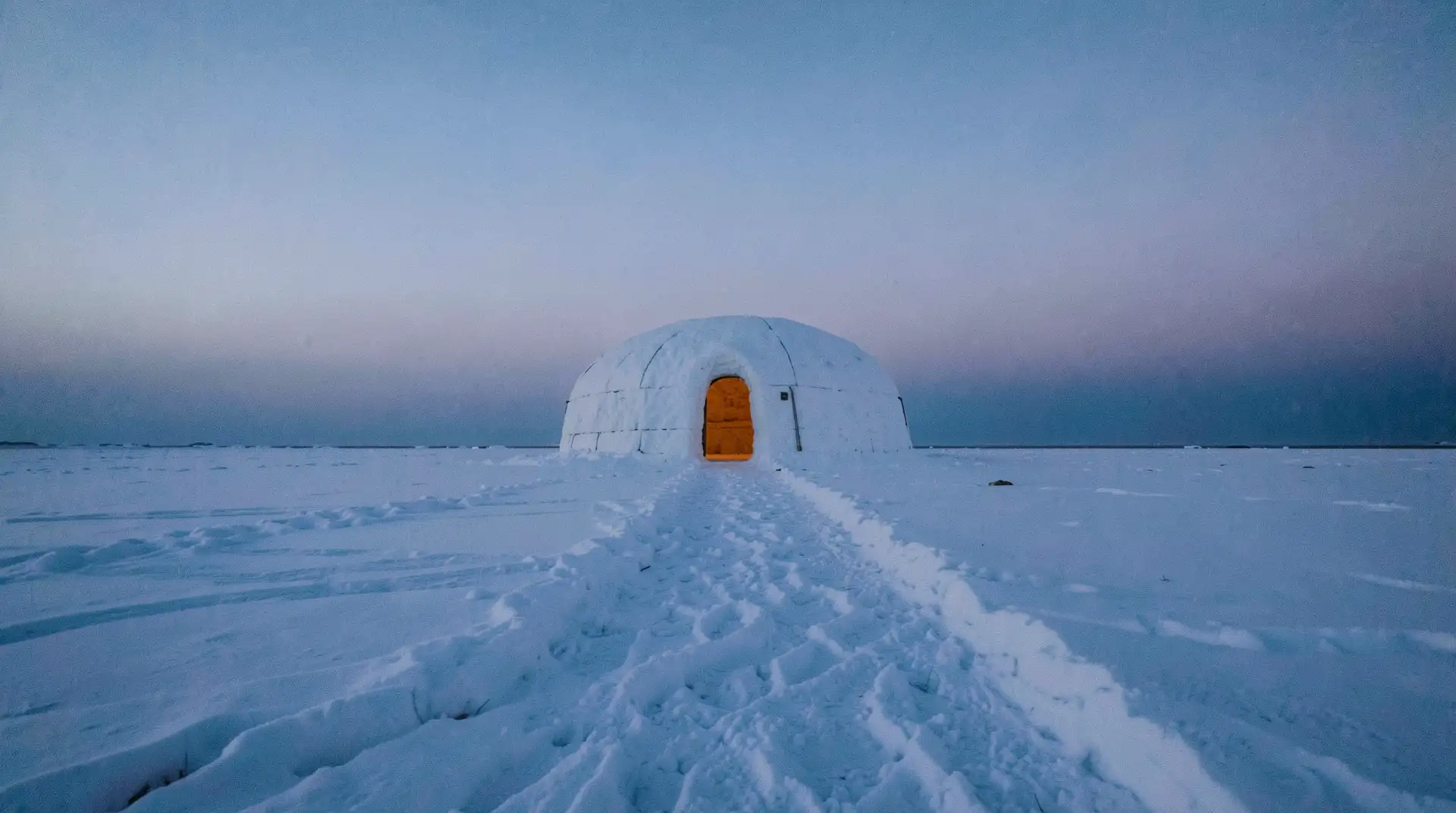
The ice crystals in snow form a lattice that holds millions of tiny air pockets in place, and those pockets resist the transfer of heat. The outside cold cannot push through easily, and the warmth generated inside cannot escape quickly. The thicker the snow wall, the more air it traps, and the better it holds.
There are no corners where stress concentrates. The shape also matters for heat: warm air rises and pools at the top of the dome, away from the sleeping area near the floor.
The entrance tunnel is deliberately dug lower than the interior floor, so cold air, which is denser than warm air, sinks into the tunnel and stays there rather than flooding the living space.
A small oil lamp, traditionally a qulliq, burning seal or whale fat, raises it further. The walls respond to this warmth in a useful way: the inner surface melts very slightly and then refreezes into a smooth glaze of ice.
That ice layer seals any gaps between the snow blocks and makes the interior surface nearly airtight, reducing the convective heat loss that would otherwise bleed warmth through drafts.
Builders cut blocks in a spiral that rises as it goes around, so each ring leans inward slightly, and the final keystone block locks the dome closed from above. The whole structure can be raised by two experienced builders in under two hours.
A small ventilation hole near the top prevents carbon dioxide from accumulating and allows moisture to escape, which keeps the interior from becoming dangerously humid.
The same extreme cold that makes survival urgent is what keeps the walls solid and the dome standing. Take the igloo to a temperate climate and it melts. Leave it in the Arctic and it hardens with every night that passes. The structure and the landscape are the same thing, which is why it has lasted as long as the people who invented it.
Snow Is Mostly Air
Freshly fallen snow is between 90 and 95 percent trapped air by volume. Air, when it cannot move, is an excellent insulator, the same principle that makes a wool sweater or a double-glazed window work.The ice crystals in snow form a lattice that holds millions of tiny air pockets in place, and those pockets resist the transfer of heat. The outside cold cannot push through easily, and the warmth generated inside cannot escape quickly. The thicker the snow wall, the more air it traps, and the better it holds.
The Dome Shape Does Real Work
A hemisphere is the strongest arch a builder can make. The igloo's dome distributes the weight of the structure evenly around its circumference, which means the walls can be surprisingly thin, typically between 20 and 40 centimetres, and still bear the load of the snow above without collapsing inward.There are no corners where stress concentrates. The shape also matters for heat: warm air rises and pools at the top of the dome, away from the sleeping area near the floor.
The entrance tunnel is deliberately dug lower than the interior floor, so cold air, which is denser than warm air, sinks into the tunnel and stays there rather than flooding the living space.
Body Heat Is Enough
Inside a well-built igloo with no fire at all, the body heat of two or three people can raise the interior temperature to somewhere between zero and sixteen degrees Celsius, even when the outside sits at minus thirty or colder.A small oil lamp, traditionally a qulliq, burning seal or whale fat, raises it further. The walls respond to this warmth in a useful way: the inner surface melts very slightly and then refreezes into a smooth glaze of ice.
That ice layer seals any gaps between the snow blocks and makes the interior surface nearly airtight, reducing the convective heat loss that would otherwise bleed warmth through drafts.
The Right Snow, Cut the Right Way
Not all snow builds an igloo. Wind-packed snow, the kind that has been compressed and partially sintered by Arctic winds, is the material. It is denser than fresh snow, cuts cleanly into blocks without crumbling, and is strong enough to be shaped and stacked.Builders cut blocks in a spiral that rises as it goes around, so each ring leans inward slightly, and the final keystone block locks the dome closed from above. The whole structure can be raised by two experienced builders in under two hours.
A small ventilation hole near the top prevents carbon dioxide from accumulating and allows moisture to escape, which keeps the interior from becoming dangerously humid.
Cold as the Raw Material
The igloo inverts the usual logic of shelter. Most structures fight the environment they sit in. The igloo uses the Arctic environment as its building supply, its insulation, and its structural material all at once.The same extreme cold that makes survival urgent is what keeps the walls solid and the dome standing. Take the igloo to a temperate climate and it melts. Leave it in the Arctic and it hardens with every night that passes. The structure and the landscape are the same thing, which is why it has lasted as long as the people who invented it.
Next Story