
In 1828, a priest planted a South American tree for shade in Honolulu, and its descendants now cover more than 150,000 acres across Hawaii


One of Hawaii’s most widespread trees can be traced back to a single planting nearly two centuries ago. According to the U.S. Department of Agriculture (USDA) Forest Service, more than 150,000 acres of Hawaii’s dry kiawe forests are believed to be descendants of one tree planted by Father Alexis Bachelot in 1828, who was also the first Catholic priest to serve in the Hawaiian Islands. Brought from Paris, though some historians believe it originated in Peru during the voyage, the tree was originally planted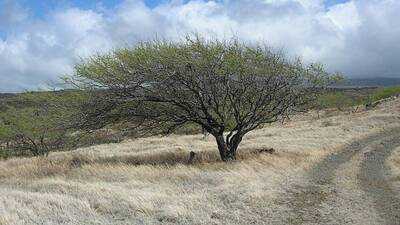 for shade near a church in Honolulu. It is worth noting that what began as a modest introduction eventually reshaped large swathes of Hawaii’s dry coastal ecosystems.
From a churchyard to forests across Hawaii
According to the USDA Forest Service, Father Bachelot had planted a young tree at the corner of a church in Honolulu after arriving in Hawaii. As per the USDA reports, the tree started producing fruit in 1832, and within less than a decade, its offspring had become a common tree for shade in Honolulu before it spread quickly across the dry leeward plains of all the major Hawaiian islands. In the historical accounts compiled by researchers in the Pacific Science, cattle, goats, and other livestock were named to have played a major role in dispersing the seeds after eating the sweet pods, allowing kiawe to grow vast stretches of otherwise sparsely vegetated land.
From a churchyard to forests across Hawaii
According to the USDA Forest Service, Father Bachelot had planted a young tree at the corner of a church in Honolulu after arriving in Hawaii. As per the USDA reports, the tree started producing fruit in 1832, and within less than a decade, its offspring had become a common tree for shade in Honolulu before it spread quickly across the dry leeward plains of all the major Hawaiian islands. In the historical accounts compiled by researchers in the Pacific Science, cattle, goats, and other livestock were named to have played a major role in dispersing the seeds after eating the sweet pods, allowing kiawe to grow vast stretches of otherwise sparsely vegetated land.
Next Story