
In 1936, a Rockefeller heir gave a Canadian island to a college for $1 on one condition: it had to remain a bird sanctuary


In 1936, John Sterling Rockefeller transferred a remote island in Canada’s Bay of Fundy to Bowdoin College for a symbolic price of $1. This was, however, accompanied by a condition that would shape its future: the college had to maintain the island as a bird sanctuary. Located several miles south of Grand Manan in New Brunswick, the 200-acre island had already been protected by Rockefeller for six years. According to Bowdoin College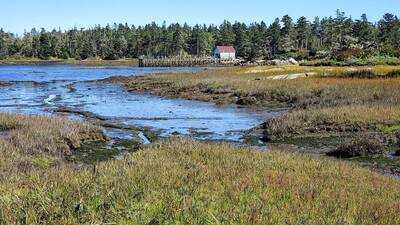 , he had purchased it in 1930 for $25,000 after naturalist Allan Moses persuaded him to help protect the island’s nesting common eiders. The donation became the foundation of the Bowdoin Scientific Station, which has operated on Kent Island for nine decades.
One rare bird sparked an unusual conservation legacy
The story began not on Kent Island but during a 1928-29 scientific expedition to what was then known as Tanganyika Territory and the Belgian Congo. Allan Moses, a naturalist from Grand Manan, accompanied Rockefeller on an expedition searching for the elusive Grauer’s broadbill. Bowdoin’s historical records say a mild bout of malaria forced a fatigued Moses to sit out the active daily trek and rest at the base camp, and his enforced stillness paid off. While resting near his tent, he unexpectedly spotted the rare bird moving through the nearby canopy. He collected the specimen, and Rockefeller, impressed by it, asked how he could reward him. Moses reportedly requested help protecting Kent Island, where nesting common eiders were facing increasing pressure from human exploitation. Therefore, Rockefeller purchased the island and established a bird sanctuary.
The timing played a significant role, as eiders had already suffered substantial declines from hunting and egg collection. This purchase helped Moses and another warden, Ralph Griffin, live on the island and protect the nesting colonies. Notably, by the mid-1930s, the island’s eider population had recovered significantly, highlighting the potential value of protecting breeding habitat from disturbance and predation.
The transformation from bird sanctuary to an outdoor laboratory
Researchers soon recognised that Kent Island offered something more valuable than a protected nesting site: a relatively undisturbed outdoor laboratory. In 1932, ornithologists Ernst Mayr and Alfred O. Gross conducted research on Kent Island, studying its bird population and nesting colonies. Impressed by the potential, in 1934, Gross arranged a field trip, and Bowdoin College students spent the summer carrying out research under his supervision. The college’s historical record suggests that the successful fieldwork helped establish the island as a valuable site for undergraduate biological research.
Another student research project on the island was organised by Gross in 1935, strengthening the connection between Kent Island and Bowdoin’s biology programme. The following year, in 1936, Rockefeller transferred the island to Bowdoin College for $1, with the stipulation that it remain a bird sanctuary. Therefore, this gift provided the college with a permanent base for field research while preserving the conservation purpose for which Rockefeller had originally bought the island.
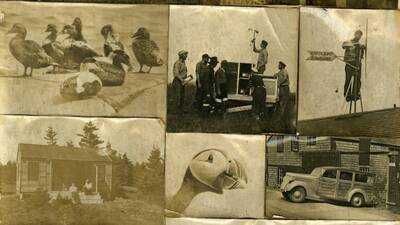
The college has reported that researchers have published hundreds of studies based on species inhabiting or breeding on the island, while its scientific station combines research, undergraduate field education and conservation. Kent Island’s isolation helped preserve a landscape insulated from commercial development and industrial exploitation, thus providing a controlled environment where forests, fields, and intertidal habitats could be tracked over time. While the island was far from unmanaged, hosting seasonal research infrastructure, permanent wardens since 1930, and regular student fieldwork, the absence of public utility networks and urban encroachment allowed for highly focused ecological baselines. One of the most valuable scientific records includes the monitoring of Leach’s storm-petrels on Kent Island, which began in 1953, thus creating a dataset spanning more than seven decades. Researchers utilised these long-running observations to investigate population dynamics, behaviour, survival and the effects of changing climate. Additionally, the station supported decades of studies of Savannah sparrows, pollination, and forest regeneration and other components of the reserve’s ecosystem.
Nearly a century after Rockefeller first bought the island, his $1 transfer remains more than an unusual real estate transaction. The act created a protected place where conservation and scientific research could thrive with minimal disturbance. Today, the island’s bird colonies continue to be studied. Its weather and ecological records continue to grow with generations of students using the same landscape as a living outdoor laboratory.
One rare bird sparked an unusual conservation legacy
The story began not on Kent Island but during a 1928-29 scientific expedition to what was then known as Tanganyika Territory and the Belgian Congo. Allan Moses, a naturalist from Grand Manan, accompanied Rockefeller on an expedition searching for the elusive Grauer’s broadbill. Bowdoin’s historical records say a mild bout of malaria forced a fatigued Moses to sit out the active daily trek and rest at the base camp, and his enforced stillness paid off. While resting near his tent, he unexpectedly spotted the rare bird moving through the nearby canopy. He collected the specimen, and Rockefeller, impressed by it, asked how he could reward him. Moses reportedly requested help protecting Kent Island, where nesting common eiders were facing increasing pressure from human exploitation. Therefore, Rockefeller purchased the island and established a bird sanctuary.
The timing played a significant role, as eiders had already suffered substantial declines from hunting and egg collection. This purchase helped Moses and another warden, Ralph Griffin, live on the island and protect the nesting colonies. Notably, by the mid-1930s, the island’s eider population had recovered significantly, highlighting the potential value of protecting breeding habitat from disturbance and predation.
The transformation from bird sanctuary to an outdoor laboratory
Researchers soon recognised that Kent Island offered something more valuable than a protected nesting site: a relatively undisturbed outdoor laboratory. In 1932, ornithologists Ernst Mayr and Alfred O. Gross conducted research on Kent Island, studying its bird population and nesting colonies. Impressed by the potential, in 1934, Gross arranged a field trip, and Bowdoin College students spent the summer carrying out research under his supervision. The college’s historical record suggests that the successful fieldwork helped establish the island as a valuable site for undergraduate biological research.
Another student research project on the island was organised by Gross in 1935, strengthening the connection between Kent Island and Bowdoin’s biology programme. The following year, in 1936, Rockefeller transferred the island to Bowdoin College for $1, with the stipulation that it remain a bird sanctuary. Therefore, this gift provided the college with a permanent base for field research while preserving the conservation purpose for which Rockefeller had originally bought the island.
The college has reported that researchers have published hundreds of studies based on species inhabiting or breeding on the island, while its scientific station combines research, undergraduate field education and conservation. Kent Island’s isolation helped preserve a landscape insulated from commercial development and industrial exploitation, thus providing a controlled environment where forests, fields, and intertidal habitats could be tracked over time. While the island was far from unmanaged, hosting seasonal research infrastructure, permanent wardens since 1930, and regular student fieldwork, the absence of public utility networks and urban encroachment allowed for highly focused ecological baselines. One of the most valuable scientific records includes the monitoring of Leach’s storm-petrels on Kent Island, which began in 1953, thus creating a dataset spanning more than seven decades. Researchers utilised these long-running observations to investigate population dynamics, behaviour, survival and the effects of changing climate. Additionally, the station supported decades of studies
Nearly a century after Rockefeller first bought the island, his $1 transfer remains more than an unusual real estate transaction. The act created a protected place where conservation and scientific research could thrive with minimal disturbance. Today, the island’s bird colonies continue to be studied. Its weather and ecological records continue to grow with generations of students using the same landscape as a living outdoor laboratory.
Next Story