
In 2021, a destroyer sunk in a 1944 battle became the deepest shipwreck ever visited, 6.4 kilometres down, filmed by a crewed submersible on a record-setting wreck dive


More than 76 years after USS Johnston (DD-557) sank while fighting the enemy forces in World War II, it became one of the deepest shipwrecks explored by humans. In March 2021, retired U.S. Navy commander and explorer Victor Vescovo piloted the deep-submergence vehicle DSV Limiting Factor to DD-557’s resting place, nearly 6.4 kilometres beneath the Philippine Sea. According to CNN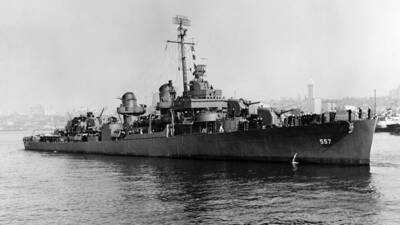 , the expedition completed the deepest wreck dives ever conducted, thus providing the first close-up documentation of a ship that was once celebrated for being one of the most courageous vessels in the history of the U.S. Navy.
The destroyer sank in the Battle off Samar
According to the Naval History and Heritage Command, USS Johnston was sunk on 25 October 1944 during the Battle off Samar, which is also considered one of the fiercest engagements with the larger Battle of Leyte Gulf. Commanded by Cmdr. Ernest E. Evans, the destroyer, charged a superior Japanese fleet that included battleships and heavy cruisers in an effort to protect lightly armed American escort carriers.
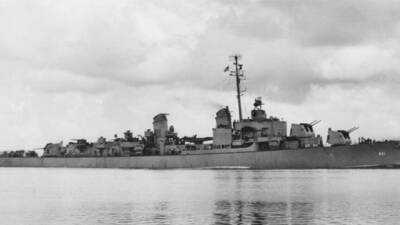
Notably, despite suffering major damage, Johnston continued fighting for several hours before it finally sank, with Evans being posthumously awarded the Medal of Honor, while the vessel received the Presidential Unit Citation for its heroism in the war. While the destroyer’s sacrifice became legendary, its final resting place beneath the ocean remained uncertain for several decades. In 2021, the crewed submersible DSV Limiting Factor, certified for repeated dives to full ocean depth, finally made a comprehensive visual inspection possible.
The deepest wreck dive ever completed
According to CNN, Vescovo and his crew carried out two dives that lasted around eight hours each and documented the relatively well-preserved destroyer despite decades on the seabed. Furthermore, the survey confirmed key identifying features, including hull number 557, gun mounts, torpedo tubes and sections of the bridge. These findings helped historians to verify the identity of the wrecked ship underneath the ocean. Additionally, the dives even set a new benchmark in underwater exploration, surpassing all previous wreck investigations in depth, regardless of whether conducted by crewed or remotely operated vehicles.
The destroyer sank in the Battle off Samar
According to the Naval History and Heritage Command, USS Johnston was sunk on 25 October 1944 during the Battle off Samar, which is also considered one of the fiercest engagements with the larger Battle of Leyte Gulf. Commanded by Cmdr. Ernest E. Evans, the destroyer, charged a superior Japanese fleet that included battleships and heavy cruisers in an effort to protect lightly armed American escort carriers.
Notably, despite suffering major damage, Johnston continued fighting for several hours before it finally sank, with Evans being posthumously awarded the Medal of Honor, while the vessel received the Presidential Unit Citation for its heroism in the war. While the destroyer’s sacrifice became legendary, its final resting place beneath the ocean remained uncertain for several decades. In 2021, the crewed submersible DSV Limiting Factor, certified for repeated dives to full ocean depth, finally made a comprehensive visual inspection possible.
The deepest wreck dive ever completed
According to CNN, Vescovo and his crew carried out two dives that lasted around eight hours each and documented the relatively well-preserved destroyer despite decades on the seabed. Furthermore, the survey confirmed key identifying features, including hull number 557, gun mounts, torpedo tubes and sections of the bridge. These findings helped historians to verify the identity of the wrecked ship underneath the ocean. Additionally, the dives even set a new benchmark in underwater exploration, surpassing all previous wreck investigations in depth, regardless of whether conducted by crewed or remotely operated vehicles.
Next Story