
Japan builds first centralised intelligence agency since World War II. But why now?


Japan is considered one of the world's most peaceful countries. Under its post-war Constitution, the country officially renounced war as a way to settle international disputes; therefore, its national defence forces have long operated under a strict "defence-only" policy.
Now, Prime Minister Sanae Takaichi 's government is creating Japan's first centralised intelligence agency since the Second World War, marking the country's first such intelligence overhaul in more than eight decades.
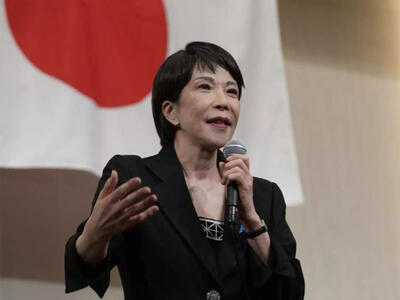
With tensions with China and North Korea flaring up from time to time, the move marks a significant shift in Japan's post-war security framework. To understand why this is such a landmark reform, it is important first to look at how the country's intelligence system has functioned for decades.
Japan's post-World War II shift to pacifism
Japan's shift towards pacifism began after its surrender to the Allied powers in World War II. The change was reflected in Article 9 of its post-war Constitution.
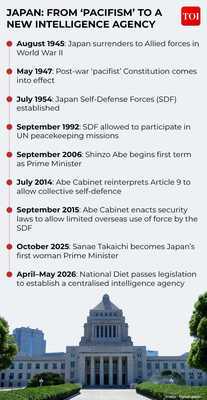
Article 9 of the Constitution says Japan "forever renounces war" and will "never maintain" armed forces. But over the years, successive governments have interpreted the provision to allow the minimum force needed for self-defence. That led to the creation of the Self-Defense Forces, which have long operated under a strictly defence-oriented policy.
The interpretation changed significantly in 2014 under then-Prime Minister Shinzo Abe . Instead of amending the Constitution, his government reinterpreted Article 9 to allow Japan to come to the aid of allies under attack. A year later, new security laws permitted the limited use of force overseas, but only under strict conditions, such as when Japan faces an existential threat and any military response remains defensive and proportionate.
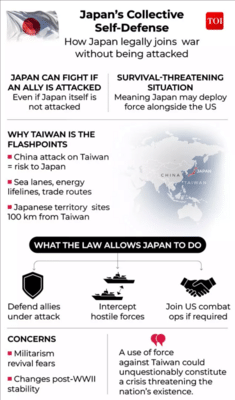
Against this backdrop, Tokyo's decision to set up a new intelligence agency marks another major shift in its approach to national security.
How Japan gathered intelligence over the years
According to experts, Japan's post-World War II intelligence system has remained fragmented, with responsibilities spread across multiple government bodies, including the foreign ministry, police, defence agencies and other departments.
The lack of a centralised agency has often limited coordination and information-sharing, making it harder to respond to espionage and foreign interference.
In addition, over the years, Tokyo has relied heavily on Washington for intelligence support.
According to Andrew Shearer , Australia's former ambassador in Tokyo, Japanese officials believe the country's intelligence capabilities have been "frozen in time for decades," underscoring the need for a centralised intelligence agency.
"It's a big thing that the prime minister (Takaichi) has chosen to make it a priority. She is investing the political capital to get it done," Shearer, an ex-Australian spy chief was quoted as saying by ANI.
The new spy agency, therefore, is expected to address these long-standing gaps by bringing intelligence gathering and coordination under one roof.
What the new intelligence agency will do
In May, Japan's House of Councillors, the upper house of the National Diet, passed legislation paving the way for the new agency to be established.
The legislation had already been passed by the House of Representatives, the lower house of the National Diet, in April.
The project, estimated to cost about $407 million, is expected to become operational by December. The agency is initially expected to employ a few hundred people, with entrance examinations for new recruits planned for next year, according to Japanese media reports.
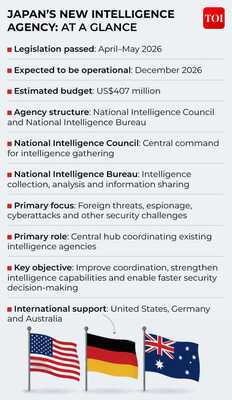
Once operational, the new intelligence system is expected to create a more centralised structure for Japan’s security decision-making. Under the new framework, Tokyo plans to change the existing Cabinet Intelligence and Research Office into a centralised National Intelligence Council and the National Intelligence Bureau.
The National Intelligence Council will act as the government’s command centre for intelligence gathering, while the National Intelligence Bureau will focus on collecting, analysing and sharing information.
Together, the two bodies are expected to improve coordination between different parts of the government and ensure that intelligence reaches policymakers more effectively.
The new agency will focus on areas such as foreign threats, espionage, cyberattacks and other security challenges. It will also help Japan strengthen its own intelligence-gathering capabilities at a time when the country faces a more complex security environment.
However, the agency will not replace existing intelligence bodies. Instead, it will work as a central hub, connecting information from different sources and helping the government make faster and more informed decisions.
How allies are involved
Japan is not undertaking the reform alone. The Takaichi government has been consulting allies on setting up the new intelligence agency.
For instance, the United States, Japan's main security ally, has reportedly shared expertise on cyber defence, countering industrial espionage, monitoring foreign investment, and identifying foreign intelligence operatives active in Japan.
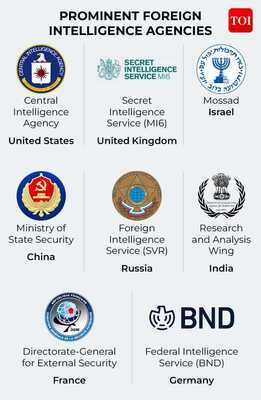
Germany, which, like Japan, was defeated in World War II, is believed to have sent the head of its foreign intelligence service, the BND, to Tokyo to discuss the new intelligence agency and ways to strengthen intelligence-sharing between the two countries.
According to Shearer, Australia's former ambassador to Japan, Canberra's assistance has focused on technology as well as helping different ministries work together to improve coordination and information-sharing.
Taken together, the support reflects Japan's effort to build a more modern intelligence system by drawing on the experience of allies that have long operated centralised intelligence agencies.
Why Japan is overhauling its intelligence system now
Since succeeding Shigeru Ishiba as prime minister in October last year, Takaichi, Japan's first woman premier, has taken a series of steps that mark a notable departure from the country's long-held pacifist approach to security.
In December 2025, Takaichi's cabinet approved a record defence budget of 9.04 trillion yen (about $58 billion), a 9.4% increase from the previous year's 8.7 trillion yen (about $55.1 billion). The government said the additional funding would help accelerate the "transformation" of Japan's defence capabilities.
A few months later, in April 2026, the cabinet also moved closer to lifting a longstanding ban on the export of lethal weapons, such as tanks and warships, a move that sparked protests.
The decision to establish a new intelligence agency is part of the same broader effort to strengthen Japan's national security framework.
Experts believe the measures reflect Tokyo's response to growing security concerns involving China, North Korea and Russia.
China has long been one of Japan's main strategic rivals, with the two countries engaged in a longstanding dispute over a group of islands in the East China Sea claimed by both sides. Tokyo has also voiced concerns over China's expanding military presence around Taiwan.
Tokyo also remains concerned about North Korea's frequent ballistic missile tests and its advancing nuclear weapons programme, with some of its missiles flying over Japanese territory and others landing in waters within Japan's Exclusive Economic Zone.
Meanwhile, recent reports have highlighted how Russian intelligence operatives have exploited Tokyo's weak counter-espionage laws, leading some experts to describe Japan as a "spy paradise" or a "den of spies".
Together, these concerns have strengthened Tokyo's case for overhauling its intelligence system.
A new chapter in Japan’s security policy
Now, Prime Minister Sanae Takaichi 's government is creating Japan's first centralised intelligence agency since the Second World War, marking the country's first such intelligence overhaul in more than eight decades.
With tensions with China and North Korea flaring up from time to time, the move marks a significant shift in Japan's post-war security framework. To understand why this is such a landmark reform, it is important first to look at how the country's intelligence system has functioned for decades.
Japan's post-World War II shift to pacifism
Japan's shift towards pacifism began after its surrender to the Allied powers in World War II. The change was reflected in Article 9 of its post-war Constitution.
Article 9 of the Constitution says Japan "forever renounces war" and will "never maintain" armed forces. But over the years, successive governments have interpreted the provision to allow the minimum force needed for self-defence. That led to the creation of the Self-Defense Forces, which have long operated under a strictly defence-oriented policy.
The interpretation changed significantly in 2014 under then-Prime Minister Shinzo Abe . Instead of amending the Constitution, his government reinterpreted Article 9 to allow Japan to come to the aid of allies under attack. A year later, new security laws permitted the limited use of force overseas, but only under strict conditions, such as when Japan faces an existential threat and any military response remains defensive and proportionate.
Against this backdrop, Tokyo's decision to set up a new intelligence agency marks another major shift in its approach to national security.
How Japan gathered intelligence over the years
According to experts, Japan's post-World War II intelligence system has remained fragmented, with responsibilities spread across multiple government bodies, including the foreign ministry, police, defence agencies and other departments.
The lack of a centralised agency has often limited coordination and information-sharing, making it harder to respond to espionage and foreign interference.
In addition, over the years, Tokyo has relied heavily on Washington for intelligence support.
According to Andrew Shearer , Australia's former ambassador in Tokyo, Japanese officials believe the country's intelligence capabilities have been "frozen in time for decades," underscoring the need for a centralised intelligence agency.
"It's a big thing that the prime minister (Takaichi) has chosen to make it a priority. She is investing the political capital to get it done," Shearer, an ex-Australian spy chief was quoted as saying by ANI.
The new spy agency, therefore, is expected to address these long-standing gaps by bringing intelligence gathering and coordination under one roof.
What the new intelligence agency will do
In May, Japan's House of Councillors, the upper house of the National Diet, passed legislation paving the way for the new agency to be established.
The legislation had already been passed by the House of Representatives, the lower house of the National Diet, in April.
The project, estimated to cost about $407 million, is expected to become operational by December. The agency is initially expected to employ a few hundred people, with entrance examinations for new recruits planned for next year, according to Japanese media reports.
Once operational, the new intelligence system is expected to create a more centralised structure for Japan’s security decision-making. Under the new framework, Tokyo plans to change the existing Cabinet Intelligence and Research Office into a centralised National Intelligence Council and the National Intelligence Bureau.
The National Intelligence Council will act as the government’s command centre for intelligence gathering, while the National Intelligence Bureau will focus on collecting, analysing and sharing information.
Together, the two bodies are expected to improve coordination between different parts of the government and ensure that intelligence reaches policymakers more effectively.
The new agency will focus on areas such as foreign threats, espionage, cyberattacks and other security challenges. It will also help Japan strengthen its own intelligence-gathering capabilities at a time when the country faces a more complex security environment.
However, the agency will not replace existing intelligence bodies. Instead, it will work as a central hub, connecting information from different sources and helping the government make faster and more informed decisions.
How allies are involved
Japan is not undertaking the reform alone. The Takaichi government has been consulting allies on setting up the new intelligence agency.
For instance, the United States, Japan's main security ally, has reportedly shared expertise on cyber defence, countering industrial espionage, monitoring foreign investment, and identifying foreign intelligence operatives active in Japan.
Germany, which, like Japan, was defeated in World War II, is believed to have sent the head of its foreign intelligence service, the BND, to Tokyo to discuss the new intelligence agency and ways to strengthen intelligence-sharing between the two countries.
According to Shearer, Australia's former ambassador to Japan, Canberra's assistance has focused on technology as well as helping different ministries work together to improve coordination and information-sharing.
Taken together, the support reflects Japan's effort to build a more modern intelligence system by drawing on the experience of allies that have long operated centralised intelligence agencies.
Why Japan is overhauling its intelligence system now
Since succeeding Shigeru Ishiba as prime minister in October last year, Takaichi, Japan's first woman premier, has taken a series of steps that mark a notable departure from the country's long-held pacifist approach to security.
In December 2025, Takaichi's cabinet approved a record defence budget of 9.04 trillion yen (about $58 billion), a 9.4% increase from the previous year's 8.7 trillion yen (about $55.1 billion). The government said the additional funding would help accelerate the "transformation" of Japan's defence capabilities.
A few months later, in April 2026, the cabinet also moved closer to lifting a longstanding ban on the export of lethal weapons, such as tanks and warships, a move that sparked protests.
The decision to establish a new intelligence agency is part of the same broader effort to strengthen Japan's national security framework.
Experts believe the measures reflect Tokyo's response to growing security concerns involving China, North Korea and Russia.
China has long been one of Japan's main strategic rivals, with the two countries engaged in a longstanding dispute over a group of islands in the East China Sea claimed by both sides. Tokyo has also voiced concerns over China's expanding military presence around Taiwan.
Tokyo also remains concerned about North Korea's frequent ballistic missile tests and its advancing nuclear weapons programme, with some of its missiles flying over Japanese territory and others landing in waters within Japan's Exclusive Economic Zone.
Meanwhile, recent reports have highlighted how Russian intelligence operatives have exploited Tokyo's weak counter-espionage laws, leading some experts to describe Japan as a "spy paradise" or a "den of spies".
Together, these concerns have strengthened Tokyo's case for overhauling its intelligence system.
A new chapter in Japan’s security policy
Next Story