
Meet Oskar Speck, the 25-year-old who kayaked from Germany to Australia after losing his business in the Depression: A seven-year journey that ended in his arrest as World War II began


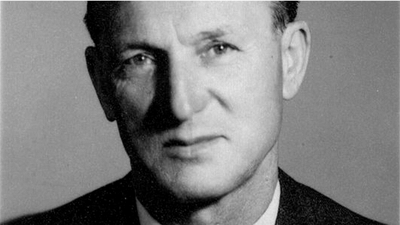
When Oskar Speck pushed a folding kayak into Germany’s Danube River in May 1932, he wasn’t chasing a world record. The 25-year-old electrical contractor had lost his business during the Great Depression and hoped to paddle as far as Cyprus, where jobs were available in the island’s copper mines. He packed only the essentials, expecting the trip to last a few months. Instead, each destination led to another, and what began as an attempt to rebuild his life became one of the longest solo kayak expeditions ever completed. Seven years later, after traveling nearly 30,000 miles (about 50,000 kilometers) across rivers, seas and open ocean, Speck reached the Australian coast only to find himself arrested as an enemy alien. According to the 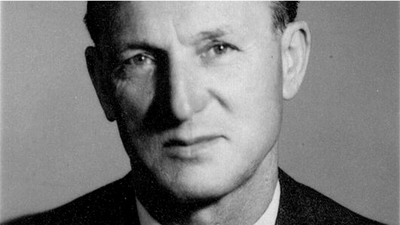 Australian Broadcasting Corporation (ABC), he arrived in Darwin on 20 September 1939, just weeks after Britain declared war on Germany, ending one of history’s most extraordinary paddling feats in the shadow of a global conflict.
 A modest plan slowly turned into an epic crossing of continents
Speck never set out intending to circle half the globe. His original destination was Cyprus, but after successfully reaching the eastern Mediterranean, he found himself eager to continue. He paddled through Yugoslavia, Bulgaria, Turkey, Syria, Lebanon, Palestine, Iraq, Persia, India, Sri Lanka, Burma, Malaya, the Dutch East Indies and New Guinea, adapting his route as political unrest, difficult coastlines and changing weather forced him to improvise. According to the Maritime Heritage Association, Speck covered thousands of miles almost entirely under his own power, replacing several folding kayaks worn out by years of constant use while relying on local communities for food, repairs and occasional shelter. He navigated without satellite positioning, digital weather forecasts or modern communications, often spending days alone on open water before reaching the next settlement.
Storms, tropical seas, and unfamiliar cultures tested him every step of the way
The physical demands of the expedition were relentless. Speck crossed the Black Sea, followed coastlines across the Indian Ocean, and threaded his way through the maze of islands that now form Indonesia and Papua New Guinea. Tropical storms repeatedly damaged his kayak, saltwater corroded equipment, and supplies were never guaranteed. There were encounters with pirates, dangerous currents, and stretches of coastline where safe landing places were scarce. Yet the voyage was shaped by hospitality as much as hardship. Villagers welcomed him into their homes, colonial officials helped arrange permits, and strangers offered food or repairs when he needed them most. Rather than racing the clock, Speck spent months exploring ports and communities along the way, documenting people and landscapes through photographs and journals that now provide a rare glimpse of Asia and the Pacific during the 1930s. According to the Maritime Heritage Association, his detailed diaries show that cultural exchanges became just as memorable as the miles he paddled.
Speck never set out intending to circle half the globe. His original destination was Cyprus, but after successfully reaching the eastern Mediterranean, he found himself eager to continue. He paddled through Yugoslavia, Bulgaria, Turkey, Syria, Lebanon, Palestine, Iraq, Persia, India, Sri Lanka, Burma, Malaya, the Dutch East Indies and New Guinea, adapting his route as political unrest, difficult coastlines and changing weather forced him to improvise. According to the Maritime Heritage Association, Speck covered thousands of miles almost entirely under his own power, replacing several folding kayaks worn out by years of constant use while relying on local communities for food, repairs and occasional shelter. He navigated without satellite positioning, digital weather forecasts or modern communications, often spending days alone on open water before reaching the next settlement.
Storms, tropical seas, and unfamiliar cultures tested him every step of the way
The physical demands of the expedition were relentless. Speck crossed the Black Sea, followed coastlines across the Indian Ocean, and threaded his way through the maze of islands that now form Indonesia and Papua New Guinea. Tropical storms repeatedly damaged his kayak, saltwater corroded equipment, and supplies were never guaranteed. There were encounters with pirates, dangerous currents, and stretches of coastline where safe landing places were scarce. Yet the voyage was shaped by hospitality as much as hardship. Villagers welcomed him into their homes, colonial officials helped arrange permits, and strangers offered food or repairs when he needed them most. Rather than racing the clock, Speck spent months exploring ports and communities along the way, documenting people and landscapes through photographs and journals that now provide a rare glimpse of Asia and the Pacific during the 1930s. According to the Maritime Heritage Association, his detailed diaries show that cultural exchanges became just as memorable as the miles he paddled.
Next Story