
Muhammad Yunus’s Gift to Pakistani General Sparks Controversy: Bangladesh Map Includes Northeast India

The recent gifting of the artwork ‘ Art of Triumph ’ by Bangladesh’s Chief Advisor Muhammad Yunus to Pakistan’s Chairman Joint Chiefs of Staff Committee, General Sahir Shamshad Mirza, has stirred unease in Indian intelligence circles. Officials suggest the gesture may be more than a simple diplomatic courtesy.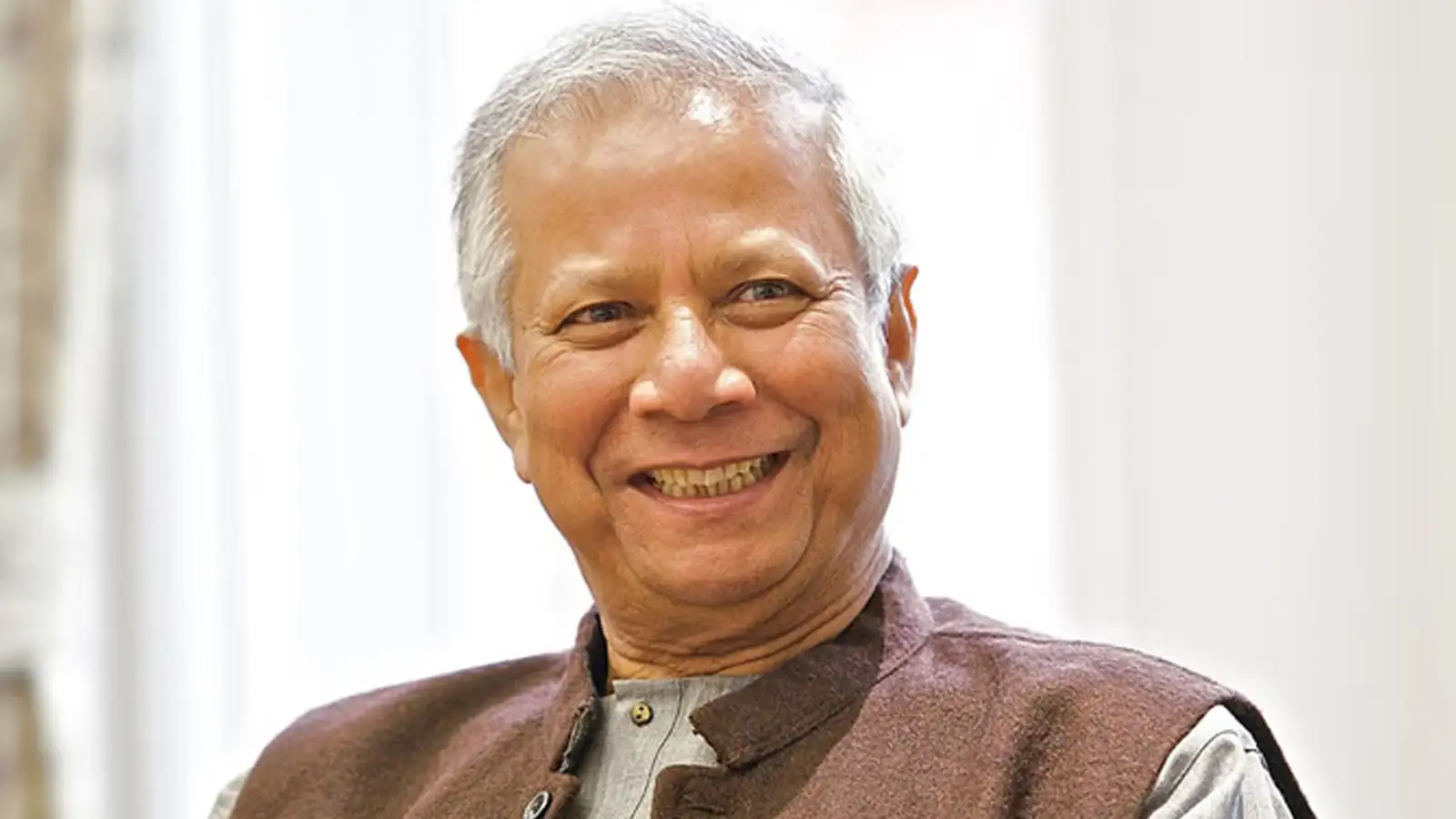
Sources claim that Yunus’s decision to present the artwork reportedly featuring a controversial map to Pakistan’s top general rather than a civilian envoy was deliberate. They allege the move carries layered symbolism, hinting at a growing alignment between Dhaka’s interim regime and Rawalpindi’s military establishment.
According to these intelligence sources, the artwork’s depiction of India’s Northeast within an expanded Bangladeshi boundary has triggered alarm among strategists. It is being described as a “psy-war” signal aimed at undermining India’s territorial integrity and reopening old wounds from the 1971 partition. Analysts cited in the report view it as an attempt to symbolically erase Pakistan’s defeat in 1971 while projecting a renewed ideological partnership between Dhaka and Islamabad.
The timing of the gesture has also raised suspicion. The incident coincides with a reported surge in illegal infiltrations along the Tripura and Mizoram borders, allegedly linked to Pakistan-backed Islamist NGOs operating through Bangladeshi networks. Intelligence officials interpret this as part of a broader soft-power offensive that uses art, diplomacy, and cultural channels rather than direct militant action.
Diplomatic insiders further claim that Yunus’s political ascent has been tacitly supported by Western funding agencies, including USAID and Washington-based think tanks. They argue that these institutions have long sought to weaken Sheikh Hasina’s pro-India stance and use Dhaka as a counterbalance to New Delhi’s growing regional influence.
Intelligence agencies caution that while the diplomatic fallout of the ‘Art of Triumph’ remains limited for now, the gesture might represent a “US-scripted soft-power experiment” - a calculated provocation meant to gauge India’s response without crossing overt diplomatic lines.
Sources claim that Yunus’s decision to present the artwork reportedly featuring a controversial map to Pakistan’s top general rather than a civilian envoy was deliberate. They allege the move carries layered symbolism, hinting at a growing alignment between Dhaka’s interim regime and Rawalpindi’s military establishment.
According to these intelligence sources, the artwork’s depiction of India’s Northeast within an expanded Bangladeshi boundary has triggered alarm among strategists. It is being described as a “psy-war” signal aimed at undermining India’s territorial integrity and reopening old wounds from the 1971 partition. Analysts cited in the report view it as an attempt to symbolically erase Pakistan’s defeat in 1971 while projecting a renewed ideological partnership between Dhaka and Islamabad.
You may also like
The timing of the gesture has also raised suspicion. The incident coincides with a reported surge in illegal infiltrations along the Tripura and Mizoram borders, allegedly linked to Pakistan-backed Islamist NGOs operating through Bangladeshi networks. Intelligence officials interpret this as part of a broader soft-power offensive that uses art, diplomacy, and cultural channels rather than direct militant action.
Diplomatic insiders further claim that Yunus’s political ascent has been tacitly supported by Western funding agencies, including USAID and Washington-based think tanks. They argue that these institutions have long sought to weaken Sheikh Hasina’s pro-India stance and use Dhaka as a counterbalance to New Delhi’s growing regional influence.
Intelligence agencies caution that while the diplomatic fallout of the ‘Art of Triumph’ remains limited for now, the gesture might represent a “US-scripted soft-power experiment” - a calculated provocation meant to gauge India’s response without crossing overt diplomatic lines.






Loving Newspoint? Download the app now
