
Oman distributes 274,000 fruit and wild tree seedlings: The ambitious plan to green a desert nation


Planting a tree is one of the simplest ways to invest in the future, but scaling that effort to hundreds of thousands of seedlings requires careful planning, scientific expertise and long-term commitment. Oman has taken a significant step in that direction by distributing more than 274,000 fruit and wild tree seedlings across the Sultanate through a nationwide programme designed to strengthen food security, expand green spaces and reduce carbon emissions. The initiative supports farmers, investors and public institutions while encouraging sustainable agricultural practices suited to the country's arid climate. Beyond increasing fruit production, the programme reflects Oman's broader environmental ambitions, demonstrating how strategic partnerships between government and industry can contribute to biodiversity conservation, climate resilience and sustainable economic development.
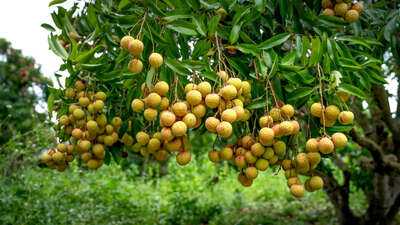
Why Oman is distributing more than 274,000 fruit and wild tree seedlings
The nationwide initiative was implemented through a partnership involving the Ministry of Agriculture, Fisheries and Water Resources, the Agriculture and Fisheries Development Fund and a state-owned energy company. According to Times of Oman, more than 274,000 fruit and wild tree seedlings have been distributed across the country's governorates to expand green cover, improve agricultural productivity and support environmental sustainability.
The programme includes some of Oman's most valuable fruit crops, including mangoes, Omani lemons, figs, grapes, guavas, pomegranates, bananas and cider apples. More than 169,000 seedlings have been allocated to commercial farms, while thousands more have been distributed to individual farmers, investors, government organisations and civil society institutions.
According to the Ministry of Agriculture, improving the quality of planting material and introducing superior fruit varieties are central to increasing agricultural productivity while strengthening national food security. These efforts also help preserve valuable plant genetic resources for future generations.
How the tree planting programme supports food security and climate resilience
The initiative extends well beyond simply planting more trees. The newly planted orchards are expected to produce more than 10,000 tonnes of fruit over the coming years, with an estimated market value of around US$11.1 million which is ₹105.7 crore (Indian Rupees) and OMR 4.27 million (Omani Rials). This additional production is expected to strengthen local food supplies while creating new income opportunities for farmers and rural communities.
The environmental benefits are equally significant. Experts involved in the programme estimate that the new trees could absorb tonnes of carbon dioxide each year, contributing to national climate mitigation efforts. Expanding vegetation also helps reduce land degradation, combat desertification and improve ecosystem resilience in one of the world's driest regions.
Speaking to Times of Oman, Dr Ali Ubaid Al Adawi, Director of the Department of Agricultural Research in North Al Batinah Governorate, said the initiative represents "a successful national model of partnership between the public and private sectors". He explained that it has enabled the production of high-quality, high-yield seedlings of economically important crops, including mango, Omani lemon, fig, grape, guava, pomegranate, banana and Sidr.
According to Dr Al Adawi, the programme is designed to support farmers, investors, commercial farms, government institutions and civil society organisations, while strengthening agricultural productivity, improving production efficiency and contributing to Oman's long-term food security goals.
The Food and Agriculture Organization of the United Nations (FAO) has consistently highlighted that well-managed trees and forests play a vital role in improving food security, protecting biodiversity, restoring degraded land and increasing resilience to climate change, particularly in dryland ecosystems.
Why native and fruit trees are central to Oman's long-term sustainability goals
Oman's investment in fruit and wild tree cultivation aligns closely with its broader sustainability agenda, which prioritises responsible natural resource management alongside economic diversification. Native species are better adapted to local climatic conditions, requiring less water while supporting local biodiversity. At the same time, expanding commercial fruit cultivation enables farmers to increase productivity using improved varieties developed through agricultural research.
Why Oman is distributing more than 274,000 fruit and wild tree seedlings
The nationwide initiative was implemented through a partnership involving the Ministry of Agriculture, Fisheries and Water Resources, the Agriculture and Fisheries Development Fund and a state-owned energy company. According to Times of Oman, more than 274,000 fruit and wild tree seedlings have been distributed across the country's governorates to expand green cover, improve agricultural productivity and support environmental sustainability.
The programme includes some of Oman's most valuable fruit crops, including mangoes, Omani lemons, figs, grapes, guavas, pomegranates, bananas and cider apples. More than 169,000 seedlings have been allocated to commercial farms, while thousands more have been distributed to individual farmers, investors, government organisations and civil society institutions.
According to the Ministry of Agriculture, improving the quality of planting material and introducing superior fruit varieties are central to increasing agricultural productivity while strengthening national food security. These efforts also help preserve valuable plant genetic resources for future generations.
How the tree planting programme supports food security and climate resilience
The initiative extends well beyond simply planting more trees. The newly planted orchards are expected to produce more than 10,000 tonnes of fruit over the coming years, with an estimated market value of around US$11.1 million which is ₹105.7 crore (Indian Rupees) and OMR 4.27 million (Omani Rials). This additional production is expected to strengthen local food supplies while creating new income opportunities for farmers and rural communities.
The environmental benefits are equally significant. Experts involved in the programme estimate that the new trees could absorb tonnes of carbon dioxide each year, contributing to national climate mitigation efforts. Expanding vegetation also helps reduce land degradation, combat desertification and improve ecosystem resilience in one of the world's driest regions.
Speaking to Times of Oman, Dr Ali Ubaid Al Adawi, Director of the Department of Agricultural Research in North Al Batinah Governorate, said the initiative represents "a successful national model of partnership between the public and private sectors". He explained that it has enabled the production of high-quality, high-yield seedlings of economically important crops, including mango, Omani lemon, fig, grape, guava, pomegranate, banana and Sidr.
According to Dr Al Adawi, the programme is designed to support farmers, investors, commercial farms, government institutions and civil society organisations, while strengthening agricultural productivity, improving production efficiency and contributing to Oman's long-term food security goals.
The Food and Agriculture Organization of the United Nations (FAO) has consistently highlighted that well-managed trees and forests play a vital role in improving food security, protecting biodiversity, restoring degraded land and increasing resilience to climate change, particularly in dryland ecosystems.
Why native and fruit trees are central to Oman's long-term sustainability goals
Oman's investment in fruit and wild tree cultivation aligns closely with its broader sustainability agenda, which prioritises responsible natural resource management alongside economic diversification. Native species are better adapted to local climatic conditions, requiring less water while supporting local biodiversity. At the same time, expanding commercial fruit cultivation enables farmers to increase productivity using improved varieties developed through agricultural research.
Next Story