
'True meaning of people power': Greta Thunberg backs Indian youth over CJP protest

Indian government, including the resignation of Union Education Minister Dharmendra Pradhan, compensation for affected families, and full immunity from legal action for participating students. Thunberg praised the demonstration as an inspiring victory for democracy and collective resilience that offers hope to youth movements worldwide.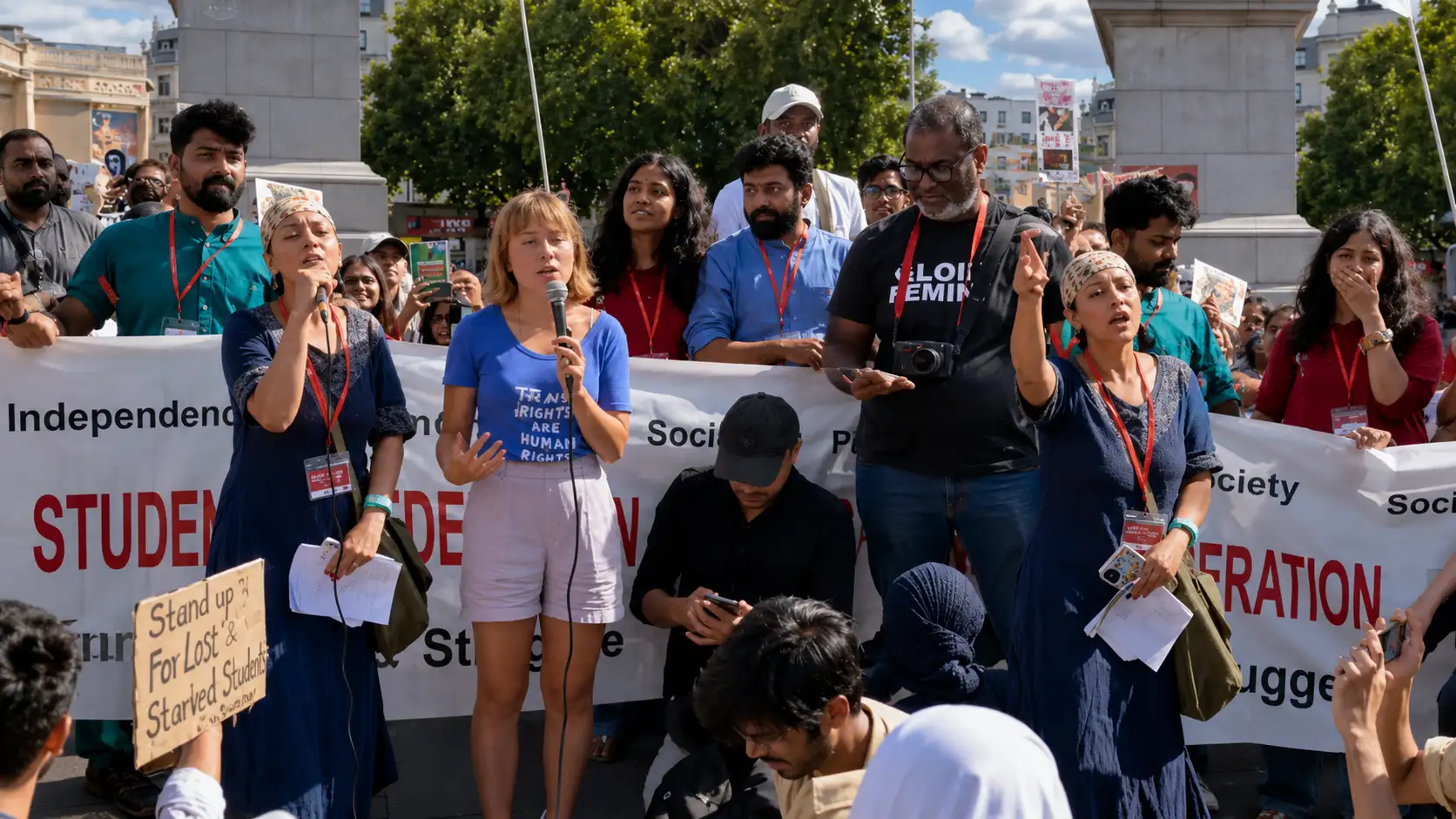
Swedish climate activist Greta Thunberg has publicly commended Indian students for their recent nationwide demonstrations, describing their movement as a striking demonstration of "the true meaning of people power."
Addressing a gathering organised by the Students' Federation of India (SFI) at Trafalgar Square in London, Thunberg voiced strong solidarity with young Indians who successfully campaigned for reform following the NEET examination irregularities. She stressed that their achievements offer a renewed sense of hope to youth movements across the globe.
"The Indian student protest has made us all proud! They have given us hope! They show what we can accomplish when people come together and resist," Thunberg told the assembled crowd. "The Indian students' struggle for justice and the broader struggle for democracy and liberation is also our struggle. So we all have to come together now and rise up in solidarity with India."
The Origins of the Movement
The agitation began in June following widespread allegations surrounding paper leaks and scoring irregularities in the National Eligibility cum Entrance Test (NEET-UG), a critical competitive examination for aspiring medical students in India.
The demonstrations were spearheaded by an online outfit known as the Cockroach Janta Party (CJP), alongside prominent environmentalist and activist Sonam Wangchuk. Together, they demanded accountability and called for the resignation of Union Education Minister Dharmendra Pradhan.
What started as localized outrage rapidly expanded into a sustained 36-day campaign, drawing thousands of volunteers, students, and citizens to key protest sites such as New Delhi's Jantar Mantar.
Government Response and Minister's Resignation
As public anger mounted, Prime Minister Narendra Modi announced the establishment of a fast-track court specifically tasked with investigating exam leaks and related malpractices. However, student groups maintained their stance, insisting that systemic accountability required ministerial leadership to step down.
The turning point occurred on 25 July, when Dharmendra Pradhan formally submitted his resignation to the Prime Minister, accepting responsibility for the administrative lapses surrounding the NEET-UG paper leak. Following his resignation, senior government representatives, including Union Ministers J.P. Nadda and Jitendra Singh, met with CJP delegates to discuss the movement's core demands.
The government subsequently agreed to meet key demands put forward by the protest organisers:
International Resonance and Global Lessons
The demonstration in London reflected growing international interest in student-led activism in South Asia. Observers at the event noted that the victory of Indian youth highlights the changing nature of modern protests, where online organization and ground-level mobilization combine to influence political outcomes.
By stepping out in London, international figures like Thunberg have helped bring widespread attention to the underlying issues within competitive educational systems and the severe mental health toll placed on young candidates.
For millions of students across India, the campaign stands as a historic example of how peaceful, disciplined collective action can compel policy changes and demand transparency from state institutions.
Swedish climate activist Greta Thunberg has publicly commended Indian students for their recent nationwide demonstrations, describing their movement as a striking demonstration of "the true meaning of people power."
Addressing a gathering organised by the Students' Federation of India (SFI) at Trafalgar Square in London, Thunberg voiced strong solidarity with young Indians who successfully campaigned for reform following the NEET examination irregularities. She stressed that their achievements offer a renewed sense of hope to youth movements across the globe.
"The Indian student protest has made us all proud! They have given us hope! They show what we can accomplish when people come together and resist," Thunberg told the assembled crowd. "The Indian students' struggle for justice and the broader struggle for democracy and liberation is also our struggle. So we all have to come together now and rise up in solidarity with India."
The Origins of the Movement
The agitation began in June following widespread allegations surrounding paper leaks and scoring irregularities in the National Eligibility cum Entrance Test (NEET-UG), a critical competitive examination for aspiring medical students in India.
The demonstrations were spearheaded by an online outfit known as the Cockroach Janta Party (CJP), alongside prominent environmentalist and activist Sonam Wangchuk. Together, they demanded accountability and called for the resignation of Union Education Minister Dharmendra Pradhan.
What started as localized outrage rapidly expanded into a sustained 36-day campaign, drawing thousands of volunteers, students, and citizens to key protest sites such as New Delhi's Jantar Mantar.
Government Response and Minister's Resignation
You may also like
- 2,000-year-old Egyptian hat stayed hidden inside a museum for more than 100 years until experts finally restored it
- Balochistan: Armed group launches coordinated attacks on Pakistani forces, torches mineral transport vehicles
- Bangladesh's care economy rests on back of child labour: Report
- APJ Abdul Kalam's legacy lives on in India's missiles, space programme
- Quote of the day by Dave Bautista: "I'm a poor kid from the streets. What I've been able to achieve has really just been through hard work and…" - an inspiring lesson on resilience, self-belief and turning adversity into achievement
As public anger mounted, Prime Minister Narendra Modi announced the establishment of a fast-track court specifically tasked with investigating exam leaks and related malpractices. However, student groups maintained their stance, insisting that systemic accountability required ministerial leadership to step down.
The turning point occurred on 25 July, when Dharmendra Pradhan formally submitted his resignation to the Prime Minister, accepting responsibility for the administrative lapses surrounding the NEET-UG paper leak. Following his resignation, senior government representatives, including Union Ministers J.P. Nadda and Jitendra Singh, met with CJP delegates to discuss the movement's core demands.
The government subsequently agreed to meet key demands put forward by the protest organisers:
- Financial Support: Maximum financial compensation for families affected by student suicides linked to the exam paper leaks.
- Legal Protections: A total withdrawal and immunity from legal or police proceedings against participating students and youth activists.
International Resonance and Global Lessons
The demonstration in London reflected growing international interest in student-led activism in South Asia. Observers at the event noted that the victory of Indian youth highlights the changing nature of modern protests, where online organization and ground-level mobilization combine to influence political outcomes.
By stepping out in London, international figures like Thunberg have helped bring widespread attention to the underlying issues within competitive educational systems and the severe mental health toll placed on young candidates.
For millions of students across India, the campaign stands as a historic example of how peaceful, disciplined collective action can compel policy changes and demand transparency from state institutions.






Loving Newspoint? Download the app now
