
Solar-powered sea drone for Philippines: How US aims to sharpen South China Sea surveillance


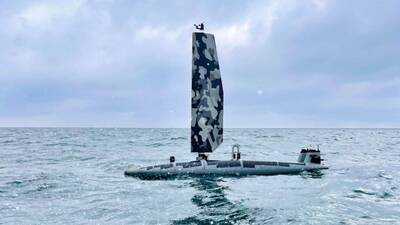
The United States is to provide the Philippines with the solar-powered Ocean Aero Triton autonomous underwater and surface vehicle worth $13 million in an effort to strengthen the maritime surveillance and reconnaissance capabilities of the South East Asian nation. The system capable of conducting long-endurance surveillance missions will help the Filipino armed forces keep an eye on Chinese vessels in the South China Sea, where the two nations have laid claims to the same set of islands, shoals and reefs.
Earlier this month, Philippines lodged a diplomatic protest over what it described as an "illegal" floating platform deployed at the disputed Scarborough Shoal, which Filipino authorities claim was likely placed by Chinese research vessels.
The Scarborough Shoal is located close to major shipping lanes and is coveted for its fish stocks and a turquoise lagoon that provides a haven for vessels during storms.
"From the lens of defence and security, we are doing what we can to perform our mandate, and that includes preventing Bajo de Masinloc (shoal's local name) from being developed into another man-made island," Philippine Navy spokesperson Roy Trinidad told a press briefing.
The South China Sea is one of the world's most contested waterways with China, the Philippines, Vietnam, Malaysia, Brunei and Taiwan laying claim to various islands, reefs and maritime zones.
Beijing claims most of the South China Sea, although the International Arbitral Tribunal at the Hague rejected China's assertions in 2016. China, however does not recognise the ruling.
About the Triton
Developed by US-based Ocean Aero, the Triton is described as the world's first Autonomous Underwater and Surface Vehicle (AUSV), capable of operating both on the surface of the sea and under the surface.
The platform can autonomously collect and relay data from and below the ocean surface, making it suitable for maritime Intelligence, Surveillance and Reconnaissance (ISR) missions.
Its specifications include:
· The Triton can sail autonomously for 30 plus days on solar and wind power at speeds of up to 5 knots.
· It can stay submerge autonomously for more than 5 days at a time at speeds of 2 knots.
Earlier this month, Philippines lodged a diplomatic protest over what it described as an "illegal" floating platform deployed at the disputed Scarborough Shoal, which Filipino authorities claim was likely placed by Chinese research vessels.
The Scarborough Shoal is located close to major shipping lanes and is coveted for its fish stocks and a turquoise lagoon that provides a haven for vessels during storms.
"From the lens of defence and security, we are doing what we can to perform our mandate, and that includes preventing Bajo de Masinloc (shoal's local name) from being developed into another man-made island," Philippine Navy spokesperson Roy Trinidad told a press briefing.
The South China Sea is one of the world's most contested waterways with China, the Philippines, Vietnam, Malaysia, Brunei and Taiwan laying claim to various islands, reefs and maritime zones.
Beijing claims most of the South China Sea, although the International Arbitral Tribunal at the Hague rejected China's assertions in 2016. China, however does not recognise the ruling.
About the Triton
Developed by US-based Ocean Aero, the Triton is described as the world's first Autonomous Underwater and Surface Vehicle (AUSV), capable of operating both on the surface of the sea and under the surface.
The platform can autonomously collect and relay data from and below the ocean surface, making it suitable for maritime Intelligence, Surveillance and Reconnaissance (ISR) missions.
Its specifications include:
· The Triton can sail autonomously for 30 plus days on solar and wind power at speeds of up to 5 knots.
· It can stay submerge autonomously for more than 5 days at a time at speeds of 2 knots.
Next Story