
Why Japanese People Bow and What Different Bows Mean

Walk into almost any shop in Japan and the staff will bow before you have said a word. Step off a bullet train and the platform attendant bows to the departing carriages. Watch two colleagues part ways on a street corner and they may bow a dozen times before either actually leaves. To an outsider this looks like ritual for ritual's sake. It is not. Every bow carries a specific message, and the Japanese read them the way others read a face.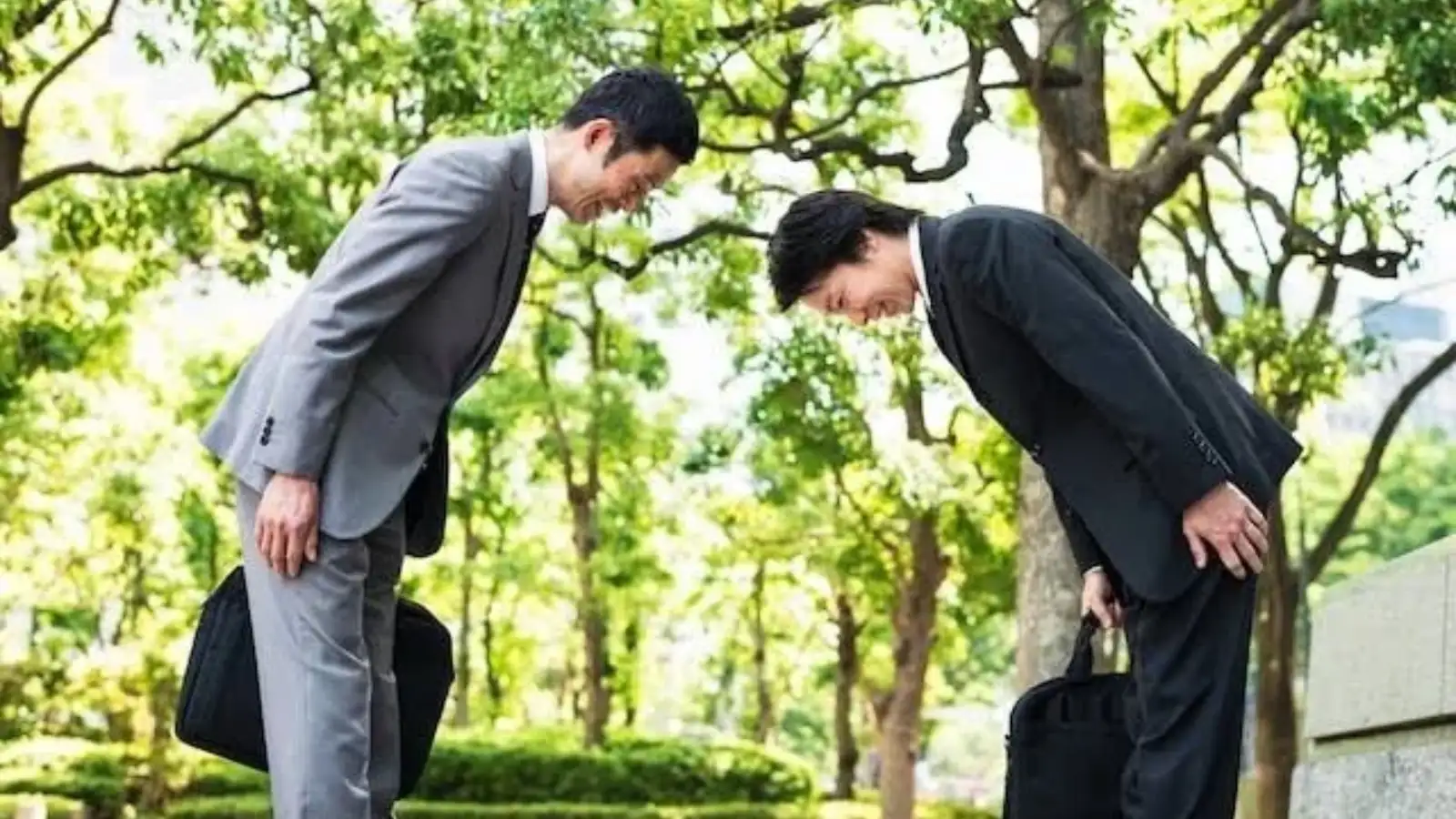
Where Bowing Comes From
A bow in Japan is called an ojigi. The practice predates written records, but historians trace its formal role to the influence of Chinese court culture, which reached Japan in the fifth and sixth centuries. Confucian ideas about hierarchy and social harmony gave the bow a structure it has kept ever since. The logic was straightforward: lowering your head makes you physically smaller than the person you face, and smallness in this context is respect. The deeper you go, the more you give. Over centuries the bow absorbed into everyday life so completely that it stopped feeling like a formal act and became simply how people speak with their bodies.What the Angle Actually Says
The angle of a bow is not guesswork. Japanese etiquette holds clear, widely understood conventions. A small nod of about fifteen degrees is the most casual acknowledgement, a greeting between friends, a thank-you to a shop assistant, a quick sign that you have heard someone. At thirty degrees the bow becomes genuinely respectful: this is the standard greeting in a professional setting, the angle a customer receives, the one used when meeting someone for the first time. At forty-five degrees the bow signals a sincere apology, deep gratitude, or a meeting with someone of real authority. Beyond that, a bow that holds the body nearly parallel to the floor is reserved for formal ceremonies and moments of profound apology. In corporate Japan, a public apology from a company executive often involves this deepest bow, held for several seconds, because the audience understands precisely what it costs.You may also like
- US airline restores system after outage disrupts Thanksgiving travel
- Political ambush? Eisenkot plans surprise govt announcement in Israel, swift Knesset vote to thwart defections
- A Michigan family used a gravel driveway across relatives' property for 35 years until construction blocked the route; an appeals court upheld a permanent easement after the neighbours failed to answer a lawsuit
- A Massachusetts father promised his son a 27-acre farmhouse, son paid over $200,000 towards it; years later, brother challenged his claim as five siblings fought over the inheritance
- Trump Warns of Strikes on Iran After New Year if Talks Stall
Duration and Repetition
How long a bow is held matters as much as how deep it goes. A brief dip and recovery reads as casual. Holding the low position for two or three seconds says the sentiment is genuine. The famous repeated bowing, where two people bow, then bow again in response, then again, is not awkward or accidental. Each return bow is a small act of courtesy, acknowledging the other person's bow. The exchange typically winds down naturally as the angle decreases with each pass. It is a conversation in miniature, and both parties know when it is finished.Who Bows First and Why It Matters
In Japan, hierarchy is not hidden, it is acknowledged openly and treated as something that makes social life run smoothly rather than something to be embarrassed about. The person with lower social rank bows first and bows deeper. A junior employee bows before a senior one. A customer is treated as someone of high status, so shop staff bow first and often more deeply. A student bows before a teacher. When the ranks are unclear, both people tend to bow at roughly the same moment, which is why the repeated exchange happens, each is trying to honour the other. Within a family, the formality drops, but the underlying logic of acknowledgement stays.Bowing in Daily Life Today
Modern Japan has adapted the bow without abandoning it. In a country where handshakes were never the default greeting, the bow survived the twentieth century intact and proved particularly suited to a world where physical contact became something people thought more carefully about. Young people bow in casual settings with the same ease their grandparents did. Department store staff bow in unison when a floor opens in the morning. Taxi drivers bow from inside the car. The practice has also travelled: Japanese companies operating abroad often find their local staff adopting a version of the bow within weeks, because it turns out that a visible, physical acknowledgement of another person communicates something that a verbal greeting alone does not. The bow is efficient. It is precise. And it requires nothing except a willingness to make yourself briefly smaller than the person in front of you.





Loving Newspoint? Download the app now
