
Why Time Moves Differently on Satellites Than on Earth: The Science Behind Space-Time

Most of us think of time as something constant. A second is a second, whether you are sitting in your living room, driving to work, or flying across the world. Yet modern science has revealed something astonishing: time does not flow at exactly the same rate everywhere. In fact, clocks aboard satellites orbiting Earth tick at a different speed from clocks on the ground.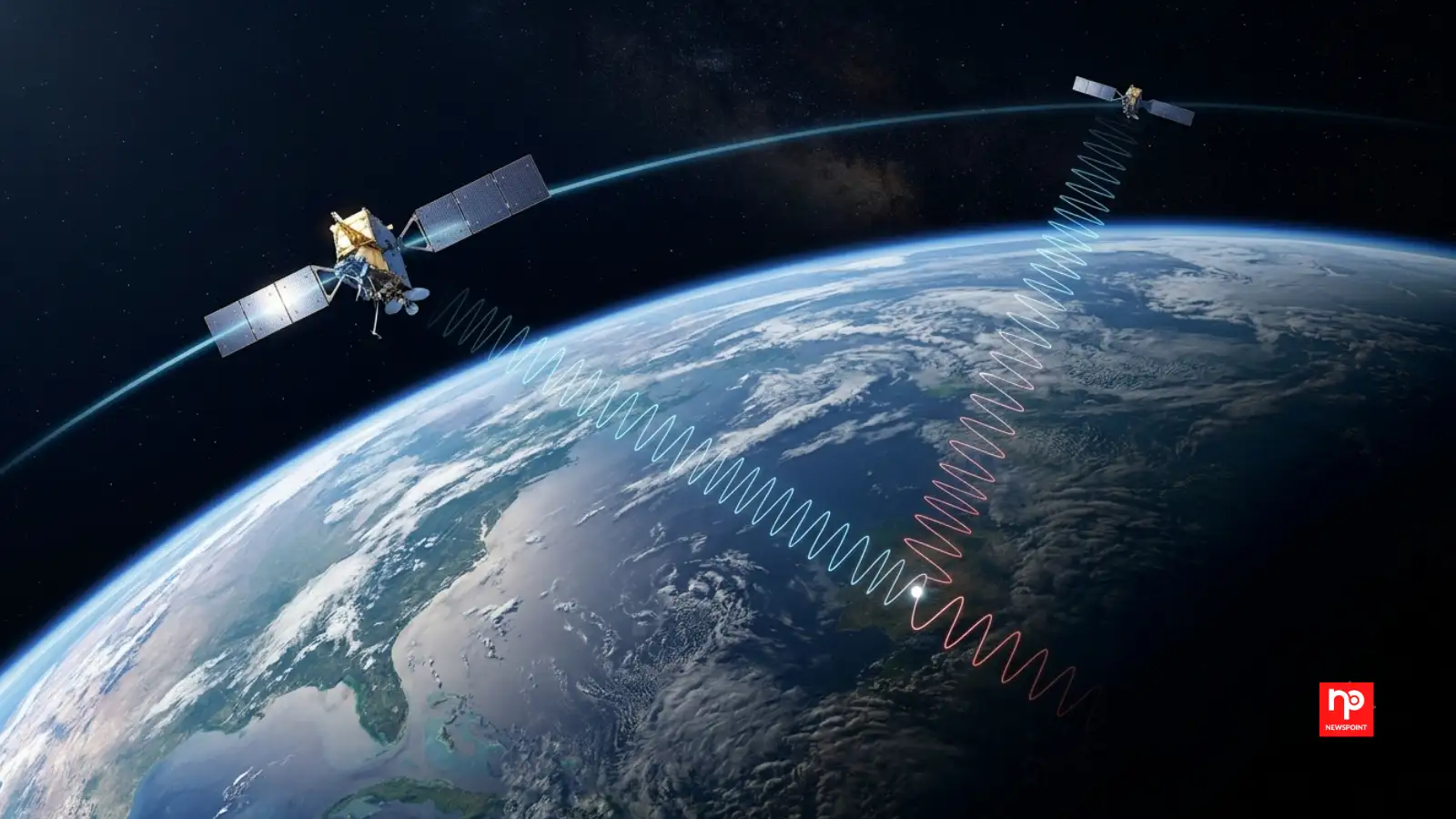
This might sound like science fiction, but it is a measurable reality that affects everyday technology. From GPS navigation and smartphone maps to military systems and financial networks, our modern world depends on understanding how time behaves in space. The explanation lies in one of the most remarkable scientific discoveries ever made, Albert Einstein's theory of relativity .
However, modern atomic clocks are so precise that even these tiny differences become significant. Over time, those fractions of a second accumulate and can create major errors in systems that depend on precise timing.
The idea that time can vary depending on location or motion is known as time dilation . It is one of the central concepts of Einstein's revolutionary work in the early twentieth century.
In 1905, Einstein introduced his theory of special relativity. One of its surprising conclusions was that time slows down for objects moving at very high speeds. The faster something travels, the more slowly time passes relative to a stationary observer.
A decade later, Einstein expanded these ideas with general relativity. This theory showed that gravity also affects time. Stronger gravity slows the passage of time, while weaker gravity allows it to move slightly faster.
These predictions sounded extraordinary at the time, but decades of experiments have repeatedly confirmed them.
However, another effect is simultaneously at work.
Satellites orbit hundreds or thousands of kilometres above Earth's surface, where gravity is weaker than it is on the ground. According to general relativity, weaker gravity causes time to pass faster.
The fascinating part is that these two effects pull in opposite directions. The speed of the satellite slows its clock, while the weaker gravity speeds it up.
For GPS satellites, the gravitational effect is stronger. As a result, their clocks run about 38 microseconds faster per day than clocks on Earth.
That may sound insignificant, but without correction, GPS positioning errors could grow by several kilometres within a single day.
GPS satellites constantly transmit timing signals to receivers in smartphones, vehicles and navigation devices. The receiver calculates its location by measuring how long these signals take to arrive.
Because light travels nearly 300,000 kilometres per second, even tiny timing errors can produce large location inaccuracies.
Engineers therefore adjust satellite clocks to compensate for relativistic effects. Without these corrections, modern navigation systems would quickly become unreliable.
This is one of the clearest examples of a scientific theory directly influencing everyday life.
The effect is tiny, but it is real. An astronaut spending months in orbit returns younger by a fraction of a second compared with someone who remained on Earth.
Scientists have also flown highly accurate atomic clocks aboard aircraft and satellites to verify relativity. These experiments consistently matched Einstein's predictions with remarkable precision.
Even mountains influence time. Because gravity weakens with altitude, a clock at the top of a mountain runs slightly faster than one at sea level.
As humanity plans future missions to the Moon, Mars and beyond, understanding time dilation will become even more important. Spacecraft travelling vast distances and operating in different gravitational environments will require extremely precise timekeeping.
The deeper scientists explore the universe, the more they discover that time is not the fixed, universal quantity it once seemed to be.
This might sound like science fiction, but it is a measurable reality that affects everyday technology. From GPS navigation and smartphone maps to military systems and financial networks, our modern world depends on understanding how time behaves in space. The explanation lies in one of the most remarkable scientific discoveries ever made, Albert Einstein's theory of relativity .
What Does It Mean for Time to Move Differently?
When scientists say that time moves differently, they do not mean that people aboard satellites suddenly age dramatically faster or slower. The difference is incredibly small, amounting to mere microseconds each day.However, modern atomic clocks are so precise that even these tiny differences become significant. Over time, those fractions of a second accumulate and can create major errors in systems that depend on precise timing.
The idea that time can vary depending on location or motion is known as time dilation . It is one of the central concepts of Einstein's revolutionary work in the early twentieth century.
Einstein Changed Our Understanding of Time
Before Einstein, scientists largely viewed time as universal. The assumption was that everyone experienced the same clock ticking at the same rate regardless of where they were.In 1905, Einstein introduced his theory of special relativity. One of its surprising conclusions was that time slows down for objects moving at very high speeds. The faster something travels, the more slowly time passes relative to a stationary observer.
A decade later, Einstein expanded these ideas with general relativity. This theory showed that gravity also affects time. Stronger gravity slows the passage of time, while weaker gravity allows it to move slightly faster.
These predictions sounded extraordinary at the time, but decades of experiments have repeatedly confirmed them.
Why Satellites Experience Time Differently
Satellites orbit Earth at tremendous speeds, often travelling around 14,000 kilometres per hour or more. According to special relativity, this rapid motion should cause their clocks to run slightly slower than clocks on Earth.However, another effect is simultaneously at work.
Satellites orbit hundreds or thousands of kilometres above Earth's surface, where gravity is weaker than it is on the ground. According to general relativity, weaker gravity causes time to pass faster.
The fascinating part is that these two effects pull in opposite directions. The speed of the satellite slows its clock, while the weaker gravity speeds it up.
For GPS satellites, the gravitational effect is stronger. As a result, their clocks run about 38 microseconds faster per day than clocks on Earth.
That may sound insignificant, but without correction, GPS positioning errors could grow by several kilometres within a single day.
The Hidden Role of Relativity in GPS
Many people use GPS every day without realising they are relying on Einstein's theories.GPS satellites constantly transmit timing signals to receivers in smartphones, vehicles and navigation devices. The receiver calculates its location by measuring how long these signals take to arrive.
Because light travels nearly 300,000 kilometres per second, even tiny timing errors can produce large location inaccuracies.
Engineers therefore adjust satellite clocks to compensate for relativistic effects. Without these corrections, modern navigation systems would quickly become unreliable.
This is one of the clearest examples of a scientific theory directly influencing everyday life.
Lesser-Known Facts About Time in Space
One surprising fact is that astronauts aboard the International Space Station also experience time differently. Because they are moving rapidly around Earth, they age ever so slightly slower than people on the ground.The effect is tiny, but it is real. An astronaut spending months in orbit returns younger by a fraction of a second compared with someone who remained on Earth.
Scientists have also flown highly accurate atomic clocks aboard aircraft and satellites to verify relativity. These experiments consistently matched Einstein's predictions with remarkable precision.
Even mountains influence time. Because gravity weakens with altitude, a clock at the top of a mountain runs slightly faster than one at sea level.
Why This Matters Today
The fact that time moves differently on satellites than on Earth is not merely an academic curiosity. It affects navigation, telecommunications, scientific research, banking systems and national security infrastructure.As humanity plans future missions to the Moon, Mars and beyond, understanding time dilation will become even more important. Spacecraft travelling vast distances and operating in different gravitational environments will require extremely precise timekeeping.
The deeper scientists explore the universe, the more they discover that time is not the fixed, universal quantity it once seemed to be.
Next Story