
How Coffee Spread from Ethiopia and Yemen to the World

The coffee plant grew wild in the forests of southwestern Ethiopia long before anyone thought to brew it. The people of the Kaffa region chewed the berries for energy, mixed the leaves into food, and fermented the pulp into a mild drink, but the dark, roasted cup the world knows today was still centuries away.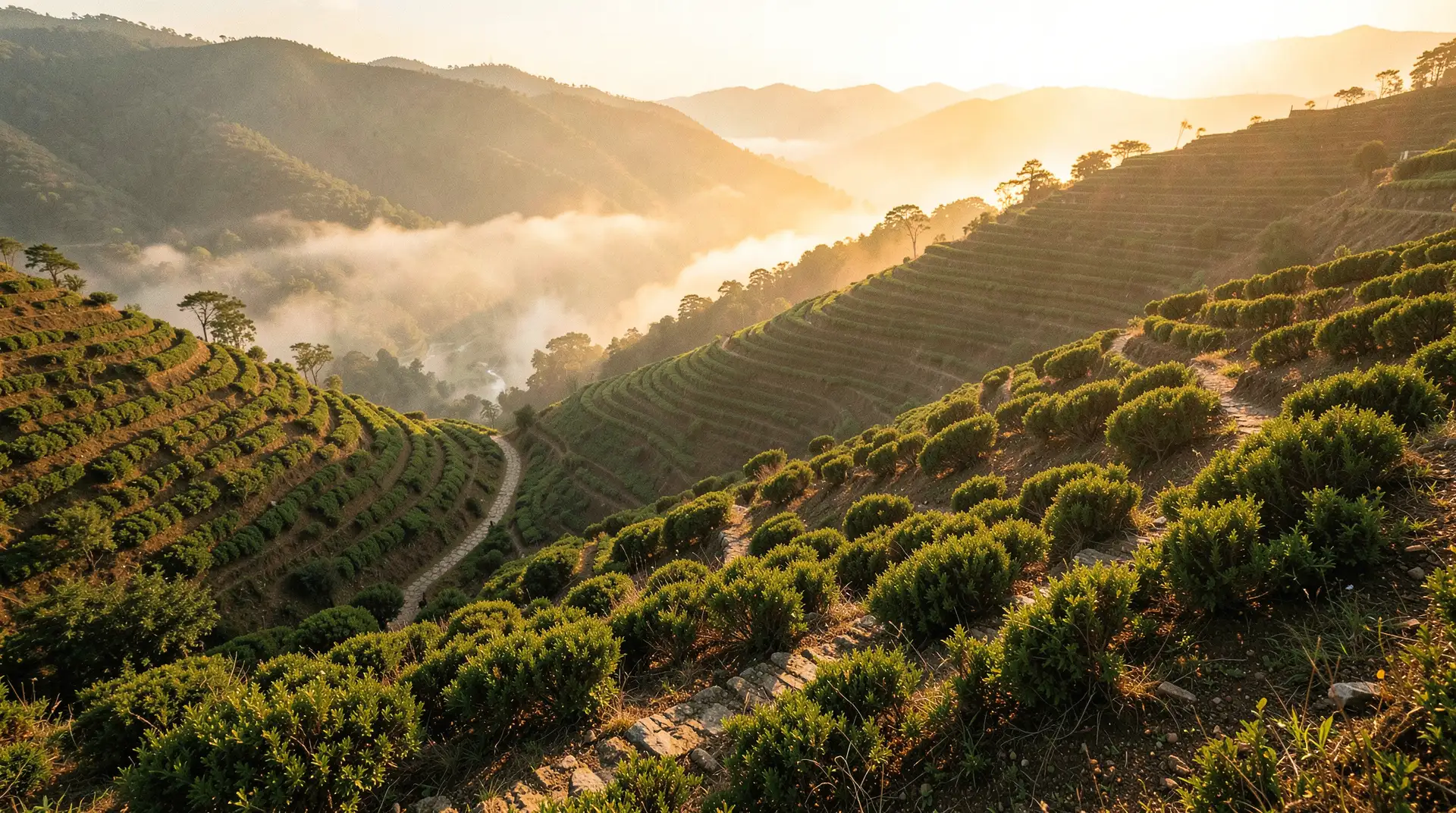
Yemen's terraced mountain farms, fed by monsoon rains and cooled by altitude, turned out to be nearly as hospitable to the plant as its Ethiopian homeland. For most of the fifteenth and sixteenth centuries, Yemen held a near-total monopoly on the world's coffee supply, and the port of Mocha gave its name to a style of coffee that persists in café menus to this day.
Ottoman authorities grew uneasy. Several sultans attempted to ban coffee, arguing that it encouraged seditious conversation and that roasting the bean made it intoxicating under Islamic law. The bans failed every time. Coffee was too embedded in daily life, too profitable, and too popular to suppress. By the mid-sixteenth century, Istanbul alone had hundreds of coffeehouses, and the drink had reached Persia, North Africa, and the Levant.
The coffeehouses of Paris fed the intellectual ferment of the Enlightenment. European monarchs were no more successful than Ottoman sultans at suppressing the drink. Charles II of England tried in 1675. The ban lasted eleven days.
Whether the story is entirely accurate or partly legend, coffee cultivation in India's Chikmagalur region dates to this period, and the hills there still carry his name. The Dutch broke the monopoly more systematically. They obtained live plants through their trading networks, established nurseries in Amsterdam's botanical gardens, and by the early eighteenth century had thriving plantations in Java, giving the world another word for coffee that has never quite left the language.
From Java, a single plant traveled to Amsterdam, then to the Paris botanical gardens, and then, in a chain of gifts and thefts that reads like a spy story, to Martinique in the Caribbean. From that one plant, historians estimate, most of Latin America's coffee descended.
The plant had traveled from a single highland forest in Ethiopia, through Yemen's mountain terraces, across the Ottoman world, into European botanical gardens, and finally into the tropical belt that now produces nearly all of it. What the Sufi monks of Aden brewed for night prayers became, in the span of a few centuries, a global agricultural system connecting millions of smallholder farmers to billions of daily drinkers. The cup in anyone's hand carries that entire journey, Ethiopian forest, Arabian port, colonial plantation, and all.
The Sufi Connection in Yemen
Sometime in the fifteenth century, coffee crossed the Red Sea to Yemen, carried by traders or pilgrims moving along the established routes between East Africa and the Arabian Peninsula. Sufi monks in the port city of Mocha and the highland town of Aden discovered that a hot infusion of roasted beans kept them alert through long nights of prayer and meditation. Their monasteries became the first places where coffee was deliberately cultivated, roasted, and brewed as a ritual drink.Yemen's terraced mountain farms, fed by monsoon rains and cooled by altitude, turned out to be nearly as hospitable to the plant as its Ethiopian homeland. For most of the fifteenth and sixteenth centuries, Yemen held a near-total monopoly on the world's coffee supply, and the port of Mocha gave its name to a style of coffee that persists in café menus to this day.
The Ottoman Coffeehouses and the First Coffee Culture
From Yemen, coffee moved north into the Ottoman Empire. Cairo and Istanbul received it in the early sixteenth century, and the coffeehouse, the qahveh khaneh, followed almost immediately. These were not merely places to drink. They were the public squares of their era: men gathered to play chess, hear music, exchange news, debate theology, and conduct business.Ottoman authorities grew uneasy. Several sultans attempted to ban coffee, arguing that it encouraged seditious conversation and that roasting the bean made it intoxicating under Islamic law. The bans failed every time. Coffee was too embedded in daily life, too profitable, and too popular to suppress. By the mid-sixteenth century, Istanbul alone had hundreds of coffeehouses, and the drink had reached Persia, North Africa, and the Levant.
You may also like
- Four Awami League activists arrested in Dhaka
- UN Climate Chief Urges Acceleration of Talks at COP31 in Antalya
- Chinese Premier Li Qiang Meets with Thailands King Maha Vajiralongkorn
- Turkish man sentenced to life for pushing pregnant wife off cliff freed after 6 years
- Xi Jinpings Vision for a Shared Future in the Asia-Pacific Region to be Featured in Qiushi Magazine
Europe Discovers the Cup
Venetian merchants brought coffee to Europe in the early seventeenth century, and it arrived already carrying a reputation, both for its stimulating effect and for the social spaces it created. The first English coffeehouse opened in Oxford in 1650, and London's followed two years later. Within decades, London had thousands of them, each one a gathering point for a particular trade or profession. Lloyds of London began as a coffeehouse where ship owners, merchants, and underwriters met.The coffeehouses of Paris fed the intellectual ferment of the Enlightenment. European monarchs were no more successful than Ottoman sultans at suppressing the drink. Charles II of England tried in 1675. The ban lasted eleven days.
Breaking the Monopoly: Coffee Goes Tropical
Yemen's growers understood the value of their monopoly and guarded it carefully. They parboiled or partially roasted exported beans to prevent germination, so no viable seed could leave the peninsula. The lock held until the early seventeenth century, when a Sufi pilgrim named Baba Budan reportedly smuggled seven live seeds out of Mocha strapped to his body and planted them in the hills of Karnataka in southern India.Whether the story is entirely accurate or partly legend, coffee cultivation in India's Chikmagalur region dates to this period, and the hills there still carry his name. The Dutch broke the monopoly more systematically. They obtained live plants through their trading networks, established nurseries in Amsterdam's botanical gardens, and by the early eighteenth century had thriving plantations in Java, giving the world another word for coffee that has never quite left the language.
From Java, a single plant traveled to Amsterdam, then to the Paris botanical gardens, and then, in a chain of gifts and thefts that reads like a spy story, to Martinique in the Caribbean. From that one plant, historians estimate, most of Latin America's coffee descended.
Coffee Becomes a Commodity
Brazil entered coffee cultivation in the eighteenth century, initially through a cutting obtained under circumstances that remain diplomatically murky, and by the nineteenth century had become the world's dominant producer, a position it has never surrendered. Colombia, Central America, and eventually Vietnam and Indonesia built their own industries.The plant had traveled from a single highland forest in Ethiopia, through Yemen's mountain terraces, across the Ottoman world, into European botanical gardens, and finally into the tropical belt that now produces nearly all of it. What the Sufi monks of Aden brewed for night prayers became, in the span of a few centuries, a global agricultural system connecting millions of smallholder farmers to billions of daily drinkers. The cup in anyone's hand carries that entire journey, Ethiopian forest, Arabian port, colonial plantation, and all.






Loving Newspoint? Download the app now
