
How the Croissant Travelled from Vienna to France

Walk into any boulangerie in France, and the croissant is almost certain to catch your eye with its golden, flaky layers and signature crescent shape. But have you ever wondered about the history of the croissant and how it became a French bakery favourite? The story of how the croissant travelled from Vienna to France is far more fascinating than you might expect. From its origins in Austria to its journey to Paris, this iconic pastry has a history shaped by culture, tradition and an unexpected connection to a military siege.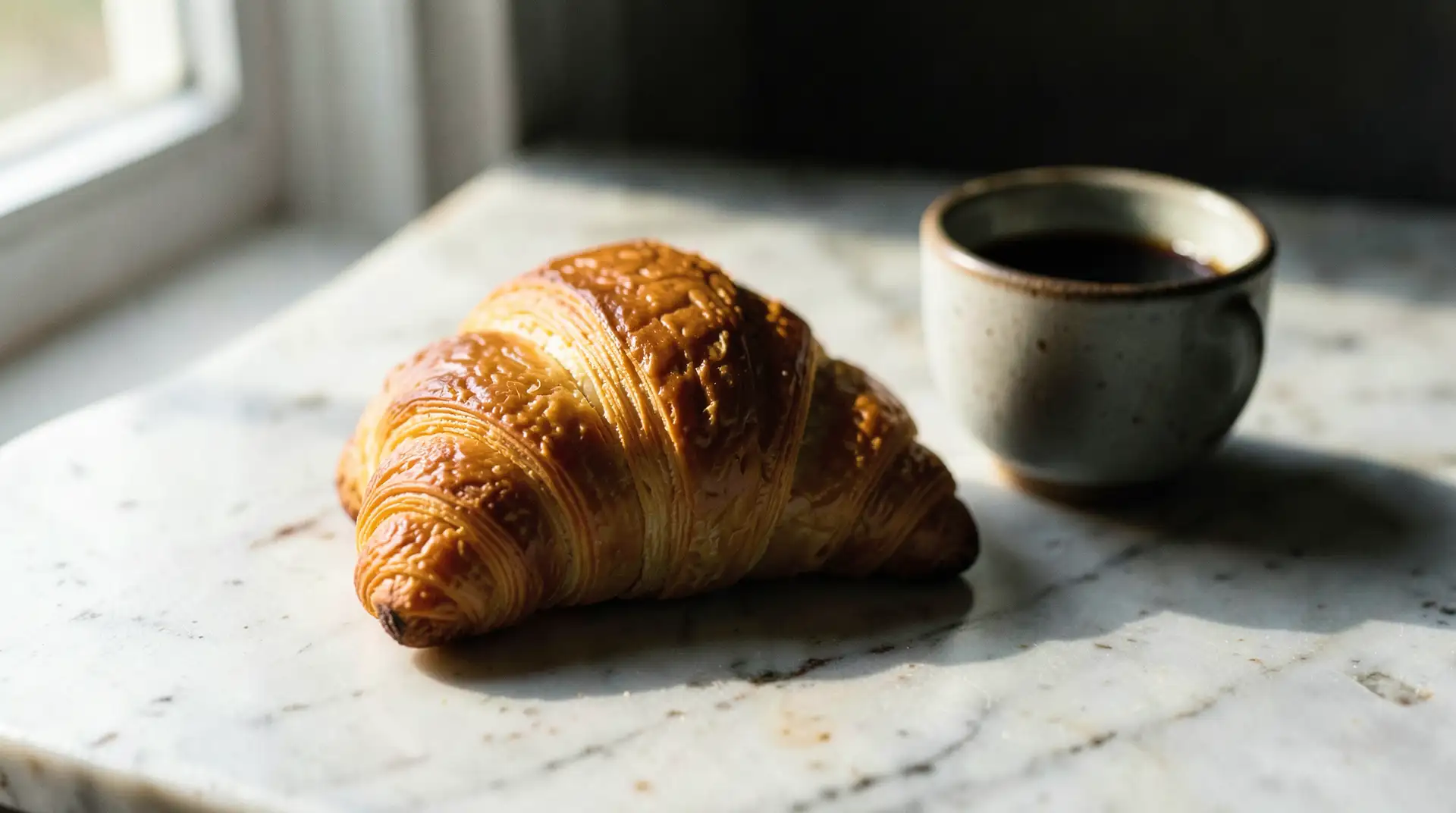
The story is vivid, and it has circulated for well over a century. Historians treat it with caution. No document from the period confirms it, and the crescent shape appears in European baked goods that predate the siege. What the story does capture is something real: Vienna was a city where crescent-shaped bread had cultural weight, and the kifli, a curved roll still eaten across Central Europe today, was already part of the city's baking tradition long before anyone thought of laminating dough with butter.
What they saw was a shaped roll that was soft and slightly sweet but not yet the layered, shattering thing the croissant would become. The transformation came when French bakers applied their own technique: feuilletage, the method of folding butter repeatedly into dough to create dozens of thin, separate layers. This is what gives the modern croissant its structure, the way it splinters when you bite it, the way each layer peels away from the next. The Viennese kipferl did not do this. The French croissant does, and that difference is the entire point.
That steam has nowhere to go but outward, and it pushes each layer away from the next. The result is a hollow, airy interior surrounded by a crust that is simultaneously crisp and tender. This is a French technical contribution, not a Viennese one. The kipferl that inspired the shape was made from a simpler dough, closer to a brioche, with no lamination at all. The croissant as the world knows it is a French invention built on an Austrian silhouette.
The curved shape signals to a buyer that what they are holding is not pure butter. This is a practical convention rather than a law, but it persists in many French bakeries and says something about how seriously the country takes the pastry it adopted. The croissant also travelled outward from France, arriving in cafes and hotel breakfast trays across the world in a form that is often softer and sweeter than the Parisian original, a further round of adaptation that the Viennese kipferl, sitting quietly at the beginning of the chain, could not have anticipated.
The croissant's journey is a clean illustration of how food actually moves between cultures: not in one dramatic transfer but through layers of borrowing, watching, and quiet improvement. Austria gave France a shape. France gave the shape a structure. The world then took the structure and softened it to its own taste. Each step changed the thing, and each change was genuine.
The Siege That May Have Started It All
The origin story most often told connects the croissant's crescent shape to the Ottoman siege of Vienna in 1683. According to this account, Viennese bakers working through the night heard Ottoman soldiers tunnelling beneath the city walls and raised the alarm, helping to repel the attack. As a reward, they were permitted to bake a pastry in the shape of the crescent on the Ottoman flag, a small, edible monument to the victory.The story is vivid, and it has circulated for well over a century. Historians treat it with caution. No document from the period confirms it, and the crescent shape appears in European baked goods that predate the siege. What the story does capture is something real: Vienna was a city where crescent-shaped bread had cultural weight, and the kifli, a curved roll still eaten across Central Europe today, was already part of the city's baking tradition long before anyone thought of laminating dough with butter.
The Viennese Bakery That Brought It to Paris
The more documented chapter begins in 1838 or 1839, when an Austrian artillery officer named August Zang opened a Viennese bakery on the Rue de Richelieu in Paris. Zang brought Viennese baking techniques with him, including the kipferl, a crescent-shaped roll made from an enriched dough. Parisian customers were drawn to the bakery, and French bakers, watching the crowds, began to study what Zang was doing.What they saw was a shaped roll that was soft and slightly sweet but not yet the layered, shattering thing the croissant would become. The transformation came when French bakers applied their own technique: feuilletage, the method of folding butter repeatedly into dough to create dozens of thin, separate layers. This is what gives the modern croissant its structure, the way it splinters when you bite it, the way each layer peels away from the next. The Viennese kipferl did not do this. The French croissant does, and that difference is the entire point.
You may also like
- Trump Declares Oval Office a National Monument to Halt Redesigns
- Eisenkot or Netanyahu? Herzog to Name Israel PM Choice on Sunday
- Harmeet Dhillon Quits as US Assistant AG After Midterm Drubbing
- Texas Governor-Elect Hinojosa Warns Musk: 'Operate on Our Terms'
- 'Bomb on board': How three minute warning changed Dublin to Rome Aer Lingus flight's route
What Lamination Actually Does
The technique that separates a croissant from a bread roll is called laminated dough. A baker starts with a yeasted dough, then folds a cold slab of butter into it repeatedly, each fold creating new layers. Done correctly, a croissant dough has somewhere between twenty and fifty discrete layers of dough separated by thin sheets of butter. When the pastry goes into a hot oven, the water in the butter turns to steam.That steam has nowhere to go but outward, and it pushes each layer away from the next. The result is a hollow, airy interior surrounded by a crust that is simultaneously crisp and tender. This is a French technical contribution, not a Viennese one. The kipferl that inspired the shape was made from a simpler dough, closer to a brioche, with no lamination at all. The croissant as the world knows it is a French invention built on an Austrian silhouette.
How France Made It Its Own
By the late nineteenth century, the croissant had moved from novelty to staple. French bakers standardised the shape, and the pastry entered the morning meal as naturally as coffee. A distinction that French bakers still observe today separates the straight croissant from the curved one: a croissant made entirely with butter is traditionally sold straight, while one made with margarine or a blend curves at the tips.The curved shape signals to a buyer that what they are holding is not pure butter. This is a practical convention rather than a law, but it persists in many French bakeries and says something about how seriously the country takes the pastry it adopted. The croissant also travelled outward from France, arriving in cafes and hotel breakfast trays across the world in a form that is often softer and sweeter than the Parisian original, a further round of adaptation that the Viennese kipferl, sitting quietly at the beginning of the chain, could not have anticipated.
The croissant's journey is a clean illustration of how food actually moves between cultures: not in one dramatic transfer but through layers of borrowing, watching, and quiet improvement. Austria gave France a shape. France gave the shape a structure. The world then took the structure and softened it to its own taste. Each step changed the thing, and each change was genuine.






Loving Newspoint? Download the app now
