
Why a Thumbs Up Is Rude in Some Countries

A single raised thumb. In India, it means fine, good, agreed. In parts of Iran, Greece, Sardinia, and several West African countries, it is the equivalent of a raised middle finger. The same hand, the same finger, two entirely opposite messages, and the gap between them has caused real embarrassment for travellers who never saw it coming.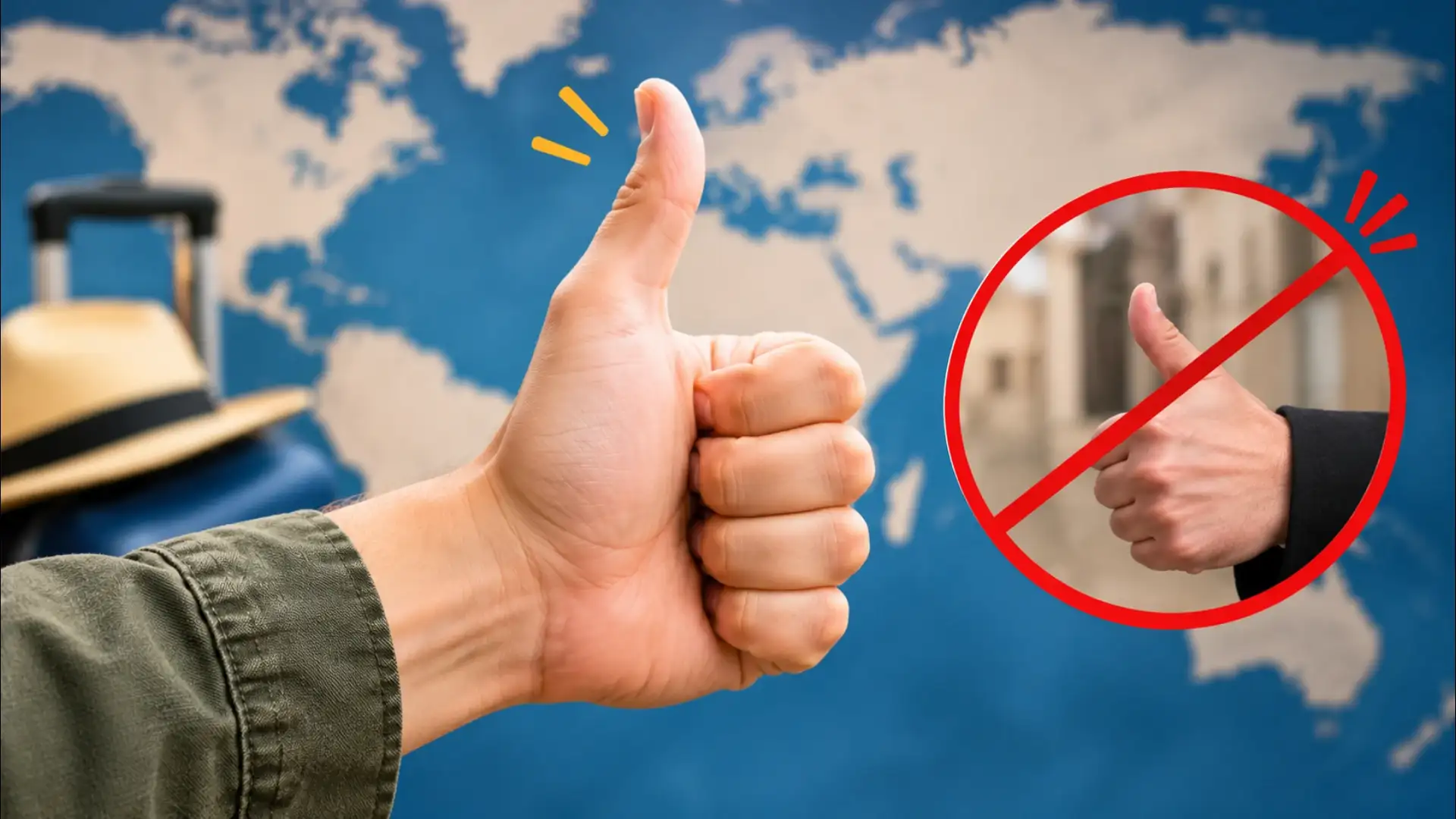
The same applies across parts of the Arab world, though the degree varies by country and generation. In Nigeria, Ghana, and parts of West Africa, the gesture carries a similar vulgar connotation. In Greece and Sardinia, the historical association is with an insult directed upward, and while younger urban populations increasingly read it through a global pop-culture lens, the older meaning has not entirely disappeared
he thumbs-up-as-approval image was largely popularised in the 19th century through paintings and later through Hollywood films, which borrowed the visual shorthand without checking the archaeology. The gesture became globally recognised as a positive signal through American military culture in the Second World War, when pilots used it to signal readiness for takeoff, and it spread outward from there through cinema, advertising, and eventually the internet.
The V-sign with palm facing inward is a rude gesture in the United Kingdom and Australia but means nothing offensive in most of the rest of the world. In each case, a community agreed, over time and without a formal vote, that this shape of hand would carry this meaning. Nobody decreed it. It accumulated.
Social media platforms that use a thumbs-up icon as their universal like button have accelerated this. But the shift is uneven. Rural areas, older generations, and formal or traditional contexts often retain the original local meaning. A traveller who assumes that a young person's interpretation applies everywhere is still likely to cause offence in the wrong room.
The thumbs up is a small, almost unconscious movement. What it reveals is larger: meaning is not in the gesture, it is in the shared understanding of the people watching it. Cross a border, and the understanding changes. The hand stays the same.
Where the Thumbs Up Goes Wrong
In Iran, the gesture is considered deeply offensive, roughly equivalent to the obscene gesture familiar in the West. Travellers and aid workers have documented awkward moments when a well-meaning foreigner gave a thumbs up to signal satisfaction, only to be met with visible offence.The same applies across parts of the Arab world, though the degree varies by country and generation. In Nigeria, Ghana, and parts of West Africa, the gesture carries a similar vulgar connotation. In Greece and Sardinia, the historical association is with an insult directed upward, and while younger urban populations increasingly read it through a global pop-culture lens, the older meaning has not entirely disappeared
Where the Gesture Came From, and Where It Didn't
The popular story is that Roman gladiatorial crowds used the thumbs up to spare a fallen fighter and the thumbs down to condemn him. This is almost certainly wrong. Historians who have studied the Latin sources, including classicist Anthony Corbeill, argue that the texts describe a turned or hidden thumb, not an upward one, as the signal for mercy.he thumbs-up-as-approval image was largely popularised in the 19th century through paintings and later through Hollywood films, which borrowed the visual shorthand without checking the archaeology. The gesture became globally recognised as a positive signal through American military culture in the Second World War, when pilots used it to signal readiness for takeoff, and it spread outward from there through cinema, advertising, and eventually the internet.
How Gestures Pick Up Meaning
Gestures are not universal. The body does not come with a shared instruction manual across cultures. Meaning attaches to movement through repetition inside a community, and different communities repeat different things. The OK sign, thumb and forefinger forming a circle, means fine in most of the world, but carries a vulgar meaning in Brazil and parts of southern Europe, and has been used as a white-supremacist symbol in some online contexts, which has complicated its use further.The V-sign with palm facing inward is a rude gesture in the United Kingdom and Australia but means nothing offensive in most of the rest of the world. In each case, a community agreed, over time and without a formal vote, that this shape of hand would carry this meaning. Nobody decreed it. It accumulated.
The Role of Exposure and Generational Shift
Global media has been slowly flattening some of these differences. Younger people in cities across the Middle East and West Africa are more likely to read the thumbs up through its American pop-culture meaning, approval, like, positive, than through the older local connotation.Social media platforms that use a thumbs-up icon as their universal like button have accelerated this. But the shift is uneven. Rural areas, older generations, and formal or traditional contexts often retain the original local meaning. A traveller who assumes that a young person's interpretation applies everywhere is still likely to cause offence in the wrong room.
The thumbs up is a small, almost unconscious movement. What it reveals is larger: meaning is not in the gesture, it is in the shared understanding of the people watching it. Cross a border, and the understanding changes. The hand stays the same.