
Why Autumn Leaves Turn Red, Orange and Gold Before They Fall

Every autumn, the same transformation plays out across temperate forests: green leaves flush into red, burn into orange, settle into gold, then let go. It looks like a farewell. Biologically, it is closer to a careful inventory before closing for the season.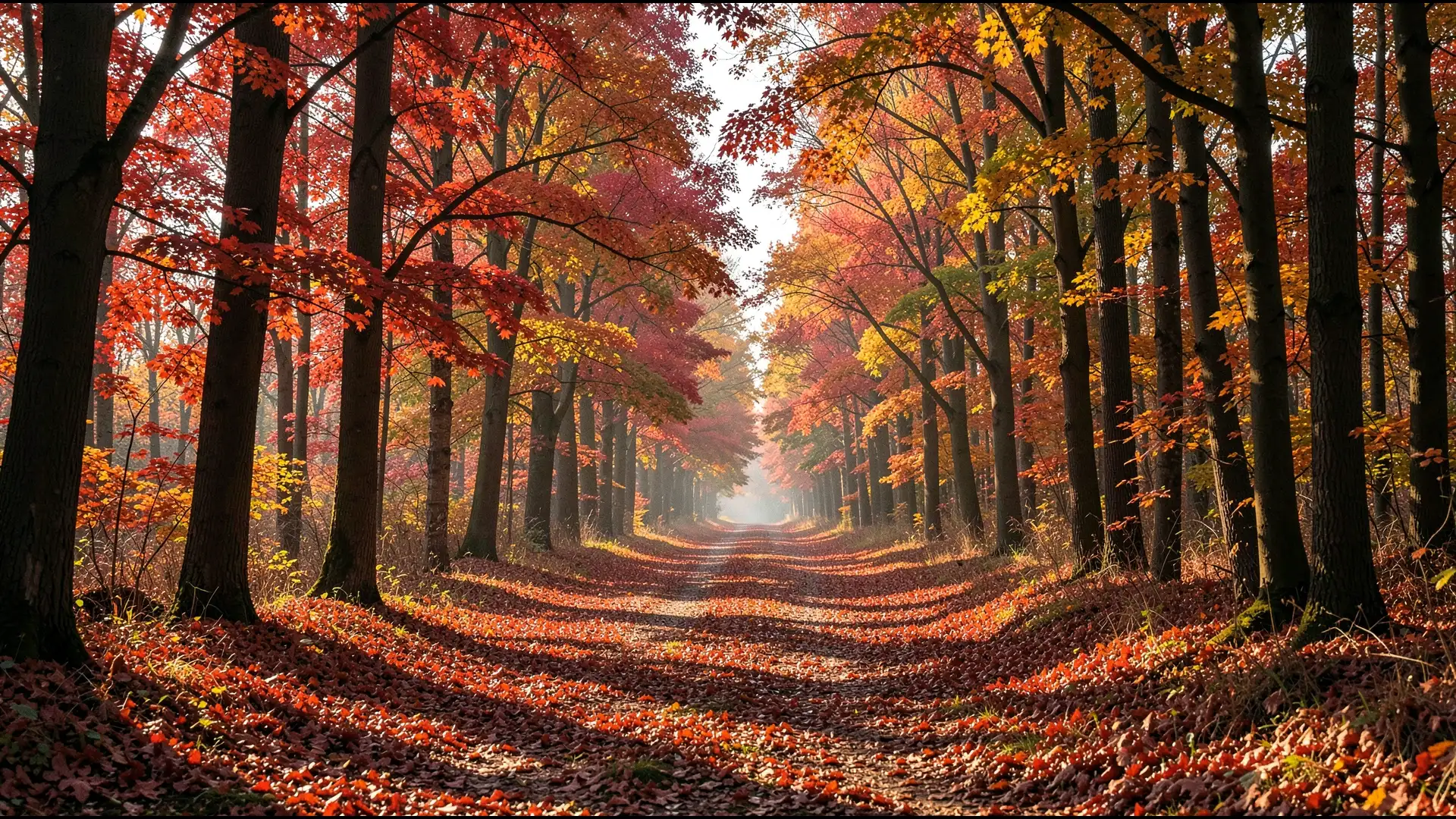
As long as days are long and warm, the tree keeps manufacturing it. The moment day length shortens past a threshold in late summer, the tree reads the signal and begins to slow that production.
As chlorophyll fades, the pigments that were always present underneath, carotenoids, finally become visible. Carotenoids are the same family of molecules that colour carrots, egg yolks and maize. In leaves, they produce the yellows and oranges. They were there all summer. Autumn simply removes the green curtain in front of them.
When the tree begins shutting down a leaf, it seals off the connection between leaf and branch with a layer of cells called the abscission zone. Sugars that were flowing out of the leaf toward the rest of the tree get trapped.
The leaf, sitting in full autumn sunlight with a supply of sugar and nowhere to send it, converts those sugars into anthocyanins, the pigments that produce red and purple. The brighter the sun and the cooler the nights, the more anthocyanins form. This is why a warm, cloudy autumn produces muted reds while a sharp, sunny one blazes.
Bright light during this recovery process could damage the very machinery doing the dismantling. Anthocyanins absorb that excess light and protect the leaf long enough to complete the salvage.
A second hypothesis involves insects. Aphids and other pests look for trees to lay their eggs on before winter. Some researchers argue that a vivid red signal communicates that the tree is chemically defended and a poor host. Trees that produce more anthocyanins may carry fewer overwintering pest eggs. The debate is not settled, and both mechanisms may operate at once.
The abscission layer that forms at the leaf's base is not a cut. It is a controlled separation, a layer of cells that weakens by design until wind or the leaf's own weight completes the break. The scar left behind seals almost immediately, protecting the branch from cold and infection through the winter months ahead.
Broad, flat leaves are efficient in summer but become liabilities in winter: they lose water faster than frozen ground can replace it, and they catch snow that can break branches. Deciduous trees solved this problem by abandoning their leaves entirely each year. The autumn colour is the visible record of that solution being executed.
Tropical and subtropical trees, growing where day length and temperature stay relatively stable, largely do not do this. They shed leaves too, but on their own schedules, often one branch at a time, without a coordinated seasonal display. The autumn spectacle is a feature of places where the gap between summer and winter is sharp enough to demand a complete seasonal strategy.
The colours are not the tree grieving. They are the tree being efficient, pulling back what it can use, sealing what it must protect, and letting go of the rest on its own terms.
Green Is a Mask, Not the Leaf's True Colour
A leaf spends spring and summer packed with chlorophyll, the molecule that captures sunlight and drives photosynthesis. Chlorophyll is so abundant and so intensely green that it drowns out every other pigment in the leaf. But it is also fragile. It breaks down constantly and must be rebuilt daily.As long as days are long and warm, the tree keeps manufacturing it. The moment day length shortens past a threshold in late summer, the tree reads the signal and begins to slow that production.
As chlorophyll fades, the pigments that were always present underneath, carotenoids, finally become visible. Carotenoids are the same family of molecules that colour carrots, egg yolks and maize. In leaves, they produce the yellows and oranges. They were there all summer. Autumn simply removes the green curtain in front of them.
Red Is Different, the Tree Makes It Fresh
Yellow and orange are revealed. Red is manufactured. This distinction matters because it tells you something about what the tree is doing, not just what it looks like.When the tree begins shutting down a leaf, it seals off the connection between leaf and branch with a layer of cells called the abscission zone. Sugars that were flowing out of the leaf toward the rest of the tree get trapped.
The leaf, sitting in full autumn sunlight with a supply of sugar and nowhere to send it, converts those sugars into anthocyanins, the pigments that produce red and purple. The brighter the sun and the cooler the nights, the more anthocyanins form. This is why a warm, cloudy autumn produces muted reds while a sharp, sunny one blazes.
Why Go to the Trouble of Making Red at All
Botanists have debated this for decades. One leading hypothesis treats anthocyanins as sunscreen. A leaf in shutdown is still doing chemical work, dismantling chlorophyll and recovering the nitrogen locked inside it. That nitrogen will be stored in the tree's branches and roots and reused next spring.Bright light during this recovery process could damage the very machinery doing the dismantling. Anthocyanins absorb that excess light and protect the leaf long enough to complete the salvage.
A second hypothesis involves insects. Aphids and other pests look for trees to lay their eggs on before winter. Some researchers argue that a vivid red signal communicates that the tree is chemically defended and a poor host. Trees that produce more anthocyanins may carry fewer overwintering pest eggs. The debate is not settled, and both mechanisms may operate at once.
What the Tree Is Actually Doing While You Watch
The colour show is a side effect of a quiet act of conservation. Before a leaf falls, the tree recovers roughly half the nitrogen in its chlorophyll and moves it into storage. A mature deciduous tree does this for every leaf, across thousands of leaves, in the space of a few weeks. The leaf that drops in late autumn is a leaf that has already been stripped of most of its value. What falls is largely cellulose and the spent pigments, the tree has kept the rest.The abscission layer that forms at the leaf's base is not a cut. It is a controlled separation, a layer of cells that weakens by design until wind or the leaf's own weight completes the break. The scar left behind seals almost immediately, protecting the branch from cold and infection through the winter months ahead.
Why Some Trees Turn and Others Do Not
Not every tree puts on this display. Conifers, pines, spruces, firs, keep their needles through winter because those needles are built to withstand cold and desiccation.Broad, flat leaves are efficient in summer but become liabilities in winter: they lose water faster than frozen ground can replace it, and they catch snow that can break branches. Deciduous trees solved this problem by abandoning their leaves entirely each year. The autumn colour is the visible record of that solution being executed.
Tropical and subtropical trees, growing where day length and temperature stay relatively stable, largely do not do this. They shed leaves too, but on their own schedules, often one branch at a time, without a coordinated seasonal display. The autumn spectacle is a feature of places where the gap between summer and winter is sharp enough to demand a complete seasonal strategy.
The colours are not the tree grieving. They are the tree being efficient, pulling back what it can use, sealing what it must protect, and letting go of the rest on its own terms.
Next Story