
How the Sitar Captivated Western Musicians in the 1960s

The first time most Western listeners heard a sitar clearly, they could not name what they were feeling. The sound was not quite melody and not quite noise, it bent between notes, hummed underneath itself, and seemed to arrive from somewhere outside the twelve-tone grid that Western ears had been trained on since childhood. That strangeness was not incidental. It was the reason the instrument travelled so far so fast.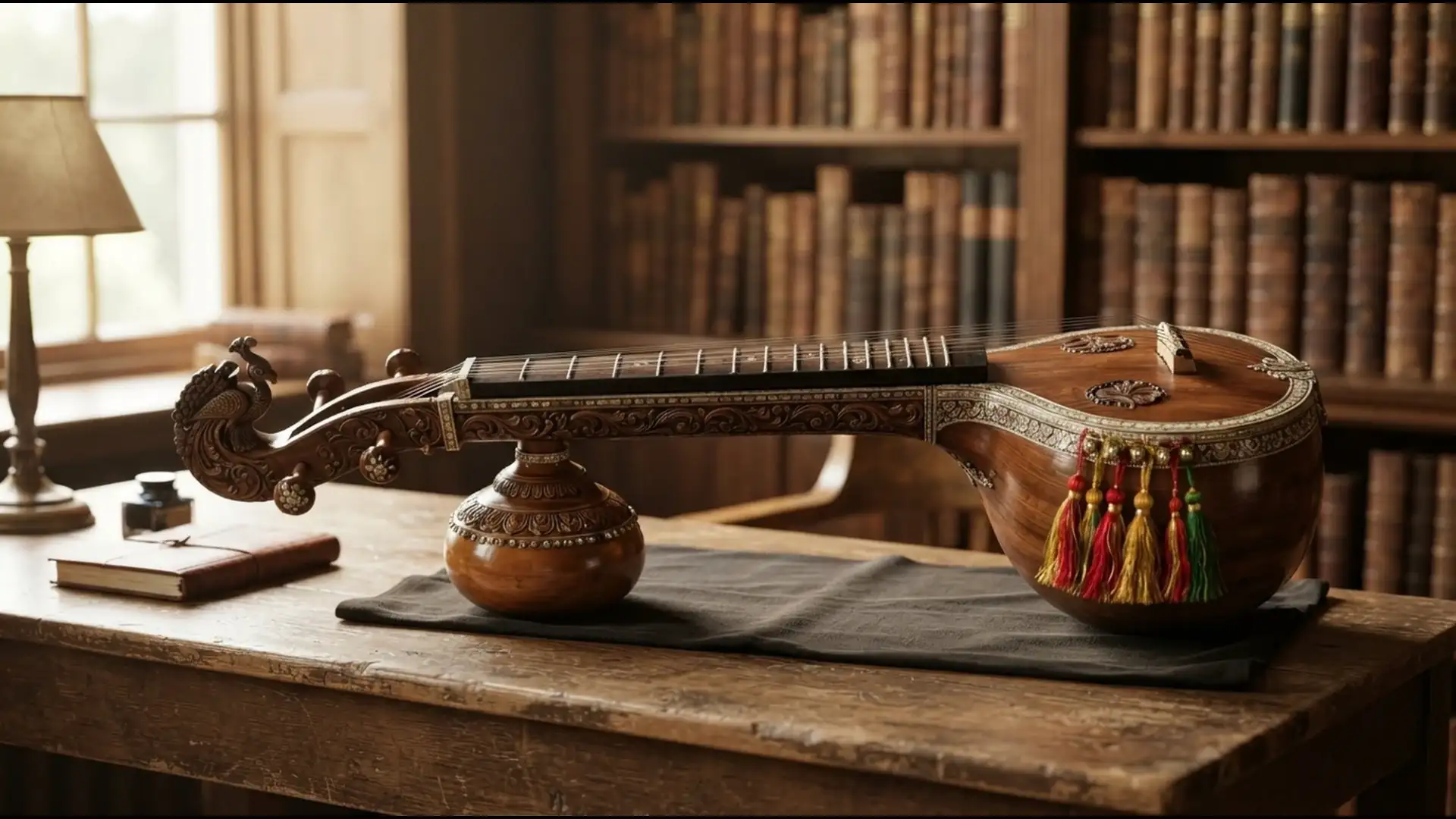
The bridge is curved rather than flat, which allows the string to buzz against it in a controlled way, producing the characteristic jawari tone, a rich, slightly nasal resonance that no Western instrument replicates.
Indian classical music also divides the octave into intervals smaller than the Western semitone. A skilled sitarist bends a string mid-phrase to land on a pitch that does not exist on a piano keyboard. To ears raised on rock and jazz, that bending sounded like emotion made audible.
He insisted on proper listening conditions, no talking, no casual atmosphere, and he explained the structure of a raga before playing it, so audiences understood they were hearing an architecture, not improvisation in the Western sense.
His partnership with violinist Yehudi Menuhin, which produced recordings and public conversations between two traditions, gave Western critics a frame: here was a peer exchange between equals, not an import from the margins. That framing mattered enormously. It allowed serious musicians to engage with the sitar without feeling they were stepping outside their own world.
Harrison then sought out Ravi Shankar for proper instruction, a decision that deepened his engagement from novelty to genuine study. That progression mattered. Because Harrison treated the instrument seriously, the sitar's presence in Western pop carried a different weight than a simple sound effect would have. Other musicians followed: the Rolling Stones, the Byrds, and dozens of studio session players began incorporating the instrument's texture into recordings.
The sitar became the sound of a particular kind of searching, music that wanted to reach past its own edges.
Indian classical music provided all three. A raga has a strict framework, specific notes permitted, a prescribed emotional character, a time of day it belongs to, but within that framework the performer has enormous latitude. Western jazz musicians recognised something in this: the tension between a given structure and what the player does inside it.
The drone of the tanpura underneath the sitar also offered something Western harmony did not: a continuous tonal centre that did not resolve, did not move, did not demand a chord change. For musicians who were beginning to find Western harmonic progression constraining, that stillness was a revelation.
The idea that a non-Western tradition could be engaged with seriously, rather than borrowed from superficially, also changed how musicians thought about influence. Ravi Shankar spent much of his later career insisting on that distinction: there is a difference between hearing something and understanding it.
The musicians who understood it best carried something durable back into their own work. The ones who only heard it produced a sound that dated quickly. That distinction, between genuine encounter and passing fashion, is what the 1960s sitar moment ultimately taught.
The Sound Itself
The sitar is built for complexity that unfolds slowly. Its main playing strings, usually six or seven, sit above a second set of sympathetic strings that are never plucked directly. When a note rings, those lower strings vibrate in response, adding a shimmer that sustains long after the note should have died.The bridge is curved rather than flat, which allows the string to buzz against it in a controlled way, producing the characteristic jawari tone, a rich, slightly nasal resonance that no Western instrument replicates.
Indian classical music also divides the octave into intervals smaller than the Western semitone. A skilled sitarist bends a string mid-phrase to land on a pitch that does not exist on a piano keyboard. To ears raised on rock and jazz, that bending sounded like emotion made audible.
Ravi Shankar and the Bridge He Built
Ravi Shankar had been performing and teaching Indian classical music for decades before Western audiences found him. What changed in the early 1960s was his deliberate decision to tour concert halls in Europe and North America, not as an exotic curiosity but as a serious classical musician presenting a complete tradition.He insisted on proper listening conditions, no talking, no casual atmosphere, and he explained the structure of a raga before playing it, so audiences understood they were hearing an architecture, not improvisation in the Western sense.
His partnership with violinist Yehudi Menuhin, which produced recordings and public conversations between two traditions, gave Western critics a frame: here was a peer exchange between equals, not an import from the margins. That framing mattered enormously. It allowed serious musicians to engage with the sitar without feeling they were stepping outside their own world.
George Harrison and the Studio Door
The moment the sitar entered popular music is documented precisely. In 1965, George Harrison picked up a sitar on the set of the film Help! and began experimenting with it. The sound appeared on a Beatles recording that same year, and within months other rock musicians were asking where to find one.Harrison then sought out Ravi Shankar for proper instruction, a decision that deepened his engagement from novelty to genuine study. That progression mattered. Because Harrison treated the instrument seriously, the sitar's presence in Western pop carried a different weight than a simple sound effect would have. Other musicians followed: the Rolling Stones, the Byrds, and dozens of studio session players began incorporating the instrument's texture into recordings.
You may also like
- 'People over billionaires': Protesters target Elon Musk's Austin home after midterms
- Who is Alice Huang? Chinese businesswoman at centre of Nvidia spy scandal
- Stalemate in U.S.-Iran Talks, Rubio Declares Tehrans Demands Unacceptable
- She started a handbag business to earn $50 a week; Lillian Vernon turned her kitchen-table venture into a multimillion-dollar empire that made American history
- NVIDIA to probe CEO Jensen Huang's relationship with possible Chinese spy
The sitar became the sound of a particular kind of searching, music that wanted to reach past its own edges.
What Western Musicians Were Looking For
The 1960s counterculture was already questioning the assumptions of Western culture when the sitar arrived. Musicians and listeners were drawn to traditions that offered different relationships between performer and audience, between structure and freedom, between the individual note and the continuous drone.Indian classical music provided all three. A raga has a strict framework, specific notes permitted, a prescribed emotional character, a time of day it belongs to, but within that framework the performer has enormous latitude. Western jazz musicians recognised something in this: the tension between a given structure and what the player does inside it.
The drone of the tanpura underneath the sitar also offered something Western harmony did not: a continuous tonal centre that did not resolve, did not move, did not demand a chord change. For musicians who were beginning to find Western harmonic progression constraining, that stillness was a revelation.
What the Exchange Left Behind
The sitar's moment in Western pop was relatively brief as a direct sonic presence, but its influence did not leave when the instrument itself faded from studio use. The modal experiments it encouraged, music built on a single scale held for long stretches rather than moving through chord progressions, became central to psychedelic rock, ambient music, and later to minimalist composition.The idea that a non-Western tradition could be engaged with seriously, rather than borrowed from superficially, also changed how musicians thought about influence. Ravi Shankar spent much of his later career insisting on that distinction: there is a difference between hearing something and understanding it.
The musicians who understood it best carried something durable back into their own work. The ones who only heard it produced a sound that dated quickly. That distinction, between genuine encounter and passing fashion, is what the 1960s sitar moment ultimately taught.






Loving Newspoint? Download the app now
