
Why Chopsticks Are Never Left Standing Upright in Rice in Japan

A bowl of rice sitting on a Japanese table will almost never have chopsticks standing straight up in it. Not in a home, not in a restaurant, not at a school lunch. The rule is observed so consistently that most Japanese people follow it without thinking, the way someone might automatically take off shoes at a door.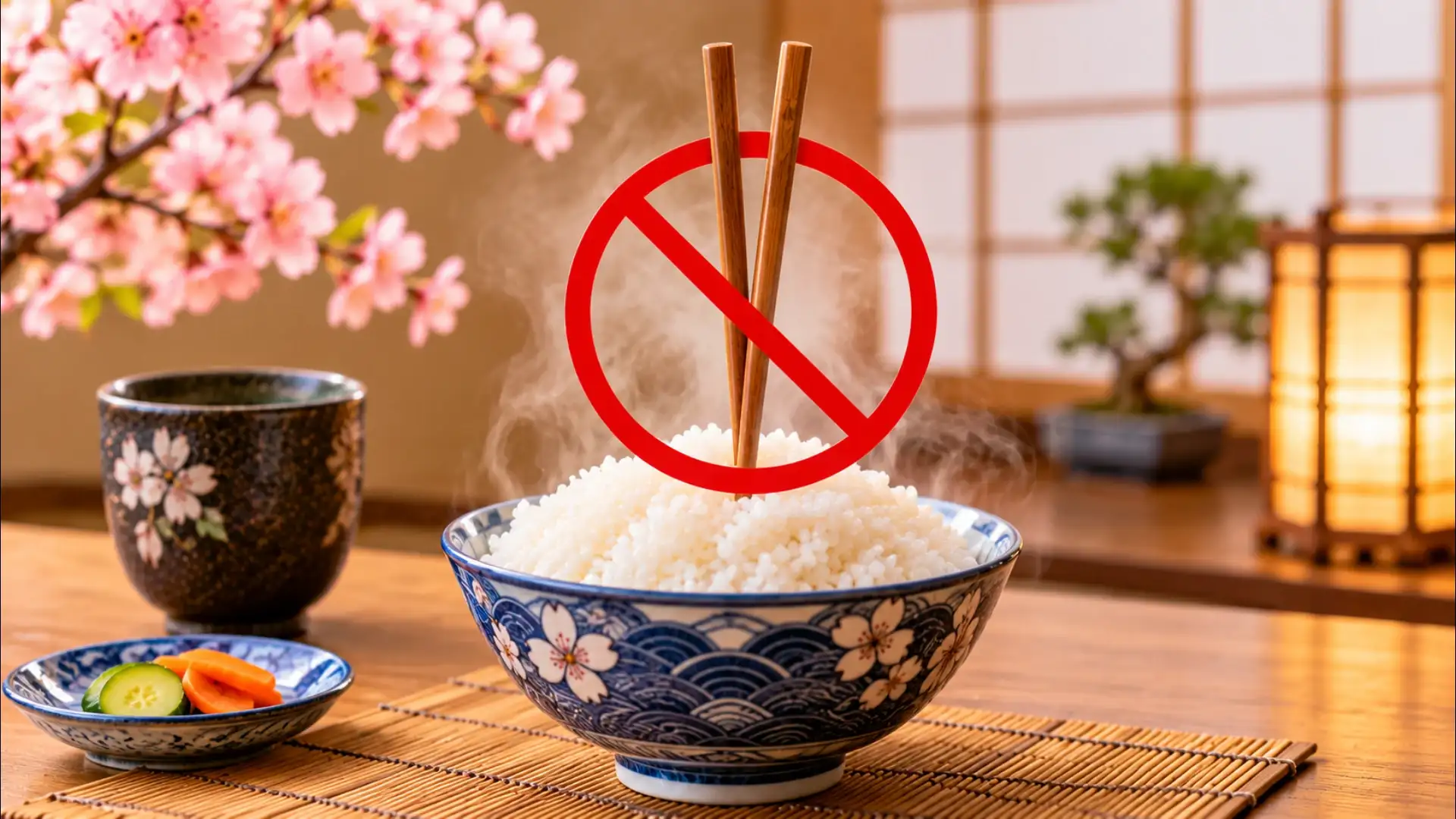
The reason behind it reaches back to Buddhist funeral rites and a boundary that Japanese culture draws carefully between the world of the living and the world of the dead.
Incense sticks are also burned upright in sand or ash during mourning ceremonies, and the two images, upright chopsticks and upright incense, have become fused in the cultural imagination as symbols of death and the passage of the spirit.
This is not a vague or distant association. Japanese Buddhist funerary practice is still widely observed, and most people have attended enough memorial services to recognise the image immediately. When chopsticks appear upright in rice at an ordinary meal, the resemblance is not subtle. It reads, to a Japanese eye, the way a black wreath on a front door reads to someone familiar with that tradition.
The dining table is a space for the living, and objects or gestures associated with funerary practice are kept out of it. Upright chopsticks in rice cross that boundary visibly.
The rule sits alongside other chopstick customs that share the same logic. Passing food directly from chopsticks to chopsticks is also avoided, because at a cremation ceremony, the bones of the deceased are passed between family members using chopsticks in exactly that way.
Both gestures are avoided at meals not out of superstition exactly, but out of a felt sense that the wrong frame has been put around an ordinary moment.
The explanation is not frightening, just matter-of-fact. The correction happens once and it tends to stick, because the image is vivid and the reasoning is clear.
Visitors to Japan sometimes discover the rule by breaking it and watching the reaction at the table. The response is rarely dramatic, a quiet word, a gentle correction, sometimes just a look, but it is consistent. The rule holds across generations and across regions, which is notable in a country where food customs can vary considerably from one prefecture to the next.
In Korea, chopsticks are made of metal and traditionally set flat beside the bowl rather than placed in food at all.
What these customs share is the idea that eating tools are not neutral objects. The way they are held, rested, and set down reflects something about the occasion and the people at the table.
Chopstick etiquette, wherever it exists, tends to encode the distinction between a shared meal and a solemn ritual, keeping each in its proper place.
The upright chopstick rule is, in the end, a piece of cultural grammar. It does not require belief in any particular afterlife to make sense of. It simply marks a line between two kinds of moments, the ordinary and the ceremonial, and asks that they not be confused. Most rules at a well-set table are doing exactly the same thing.
The reason behind it reaches back to Buddhist funeral rites and a boundary that Japanese culture draws carefully between the world of the living and the world of the dead.
The Funeral Connection
At a Japanese Buddhist funeral, a bowl of rice is placed before the deceased with chopsticks standing upright in the centre. The gesture is called tatebashi, and the funerary rice offering itself known as makura-meshi is part of a specific ritual offering made to the dead.Incense sticks are also burned upright in sand or ash during mourning ceremonies, and the two images, upright chopsticks and upright incense, have become fused in the cultural imagination as symbols of death and the passage of the spirit.
This is not a vague or distant association. Japanese Buddhist funerary practice is still widely observed, and most people have attended enough memorial services to recognise the image immediately. When chopsticks appear upright in rice at an ordinary meal, the resemblance is not subtle. It reads, to a Japanese eye, the way a black wreath on a front door reads to someone familiar with that tradition.
A Boundary Between Meals and Mourning
Japanese culture maintains a strong sense of separation between everyday life and the rituals surrounding death. This shows up in language, in architecture, and in table manners.The dining table is a space for the living, and objects or gestures associated with funerary practice are kept out of it. Upright chopsticks in rice cross that boundary visibly.
The rule sits alongside other chopstick customs that share the same logic. Passing food directly from chopsticks to chopsticks is also avoided, because at a cremation ceremony, the bones of the deceased are passed between family members using chopsticks in exactly that way.
Both gestures are avoided at meals not out of superstition exactly, but out of a felt sense that the wrong frame has been put around an ordinary moment.
You may also like
- Two Ohio island golf-cart rental companies paid $37,500 in disputed 2024 licence fees for 375 vehicles, although they operated outside the village taxing them; November 20 judges revived their challenge to the tax
- Fears Nvidia CEO Huang could have gone to China drove Trump's lobbying for him
- Houthi Rebels Claim to Shoot Down Chinese Drone Amid Intensifying Conflict in Yemen
- Russia claims strikes on Starlink terminals, drone sites in Ukraine's Sumy
- 'Fly me back': Sheikh Hasina sets her return date: December 16; asks Bangladesh to send a plane, Dhaka says no papers
How the Rule Is Taught and Kept
Children in Japan learn chopstick etiquette early, and the upright-in-rice rule is among the first things corrected. Parents and grandparents explain it plainly: that is for funerals, not for dinner.The explanation is not frightening, just matter-of-fact. The correction happens once and it tends to stick, because the image is vivid and the reasoning is clear.
Visitors to Japan sometimes discover the rule by breaking it and watching the reaction at the table. The response is rarely dramatic, a quiet word, a gentle correction, sometimes just a look, but it is consistent. The rule holds across generations and across regions, which is notable in a country where food customs can vary considerably from one prefecture to the next.
The Wider World of Chopstick Etiquette
Japan is not alone in attaching meaning to how chopsticks are handled. In China, Korea, and Vietnam, chopstick customs also carry social weight, though the specific rules differ. In China, upright chopsticks in rice carry a similar funeral association and are similarly avoided.In Korea, chopsticks are made of metal and traditionally set flat beside the bowl rather than placed in food at all.
What these customs share is the idea that eating tools are not neutral objects. The way they are held, rested, and set down reflects something about the occasion and the people at the table.
Chopstick etiquette, wherever it exists, tends to encode the distinction between a shared meal and a solemn ritual, keeping each in its proper place.
The upright chopstick rule is, in the end, a piece of cultural grammar. It does not require belief in any particular afterlife to make sense of. It simply marks a line between two kinds of moments, the ordinary and the ceremonial, and asks that they not be confused. Most rules at a well-set table are doing exactly the same thing.






Loving Newspoint? Download the app now
