
The tiny country with 40,000 residents and a ruling prince: What life is really like in one of the world's richest countries


Hidden among the Alps, surrounded by larger neighbours and home to roughly 40,000 people, Liechtenstein is one of the world's richest and least-known countries. Despite its small population, the nation attracts travellers interested in royalty, European microstates , hidden destinations, luxury economies , cultural heritage and off-the-beaten-path travel experiences. Many visitors arrive expecting grand palaces, political power and royal intrigue. Yet the true story of Liechtenstein often lies beyond its monarchy. From its strong sense of community and unique traditions to encounters with local residents and the country's ruling family, this tiny nation offers a fascinating glimpse into life in one of Europe's most overlooked destinations.
Why Liechtenstein remains one of Europe's least-known countries
Despite being situated at the heart of Europe, Liechtenstein does not find many references in standard travel routes. The principality of Liechtenstein covers an area of only 160 sq. km. between Switzerland and Austria. Though small in size, it is consistently amongst the richest nations in the world owing to its very sophisticated financial market and well-developed manufacturing industry.
Liechtenstein functions as a constitutional monarchy with the ruling family headed by Prince Hans-Adam II . As mentioned in the official information available on the website of the Princely House of Liechtenstein, the monarchy remains actively involved with the functioning of the nation in conjunction with democratic processes.
According to the Department of Foreign Affairs and Trade, Australia Government, "The Prince is the Head of State and represents the country externally." However, tourists usually come across the pleasant realisation that life in the principality of Liechtenstein can be very laid-back and informal in nature.
The reality of life in a tiny European monarchy
Unlike some other destinations which offer royal experiences, what makes Liechtenstein stand out for tourists is its distinctive lifestyle. The capital, Vaduz, offers an interesting combination of modern affluence and a very small-town feel.
According to the official Liechtenstein Tourist Board, there is much to see when it comes to the Alpine landscape, culture and activities. People in the country live comfortable lives in safe environments with strong communities, something that can be hard to achieve in other countries.
One of the things that stands out in the life of Liechtensteiners is accessibility. Contrary to what happens in many countries, the feeling is that here, the people of high standing do not create barriers and distance themselves from their community.
This may help to understand why tourists talk less about the royal places and more about the people they encountered in their visits.
Meeting the real king: Understanding Liechtenstein’s monarchy
As per the US Department of State, visitors to this country arrive at Liechtenstein intrigued about the country's royal family. Though the country doesn’t have a king, Liechtenstein happens to be one of the few nations in Europe ruled by a prince.
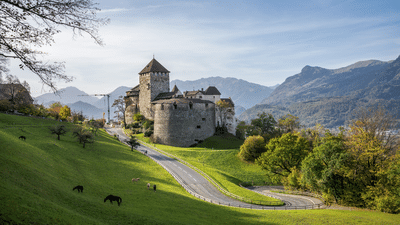
Vaduz Castle is the official palace that sits atop a hillock overlooking the city. Even though the palace cannot be visited by tourists, it symbolises the rich heritage of the principality.
As quoted on the US Department of State’s official website:
"The Principality of Liechtenstein has existed as an independent state since 1719."
This historical continuity has been a major factor responsible for ensuring that Liechtenstein maintains its unique identity despite its small stature.
Those hoping to see some pomp and splendour will be surprised to find a monarchy that is very much integrated into national life and culture.
Culture, community and the people who define the country
Not money or kings, but rather the hospitality of the people and their culture are most memorable. Festivals, food, and social activities remain at the heart of Liechtenstein's culture.
According to the government-sponsored tourism organisation of the country, Liechtenstein offers the visitor an interesting blend of both ancient Alpine traditions and comfortable modern living. Walking tours, vineyards, museums, and villages create a vibrant culture that most tourists ignore when visiting this beautiful Alpine region.
When one travels to Liechtenstein, however, the real excitement usually begins with conversations with locals. From tour guides, coffee-shop owners, to locals, these friendly people have much to tell tourists that no king could ever teach them.
A small nation with a big story
Although Liechtenstein is small and not well known to many people in the world, there is much more that it has to offer than meets the eye. The blend of wealth, heritage, monarchy, and community in this country is like no other place in Europe.
People visit this country in search of kings, castles, and money, but they end up gaining a better understanding of what makes the country tick. In today's world, where most travellers head to congested tourist spots, Liechtenstein shows that there is plenty to see even in obscure places in the world.
Why Liechtenstein remains one of Europe's least-known countries
Despite being situated at the heart of Europe, Liechtenstein does not find many references in standard travel routes. The principality of Liechtenstein covers an area of only 160 sq. km. between Switzerland and Austria. Though small in size, it is consistently amongst the richest nations in the world owing to its very sophisticated financial market and well-developed manufacturing industry.
Liechtenstein functions as a constitutional monarchy with the ruling family headed by Prince Hans-Adam II . As mentioned in the official information available on the website of the Princely House of Liechtenstein, the monarchy remains actively involved with the functioning of the nation in conjunction with democratic processes.
According to the Department of Foreign Affairs and Trade, Australia Government, "The Prince is the Head of State and represents the country externally." However, tourists usually come across the pleasant realisation that life in the principality of Liechtenstein can be very laid-back and informal in nature.
The reality of life in a tiny European monarchy
Unlike some other destinations which offer royal experiences, what makes Liechtenstein stand out for tourists is its distinctive lifestyle. The capital, Vaduz, offers an interesting combination of modern affluence and a very small-town feel.
According to the official Liechtenstein Tourist Board, there is much to see when it comes to the Alpine landscape, culture and activities. People in the country live comfortable lives in safe environments with strong communities, something that can be hard to achieve in other countries.
One of the things that stands out in the life of Liechtensteiners is accessibility. Contrary to what happens in many countries, the feeling is that here, the people of high standing do not create barriers and distance themselves from their community.
This may help to understand why tourists talk less about the royal places and more about the people they encountered in their visits.
Meeting the real king: Understanding Liechtenstein’s monarchy
As per the US Department of State, visitors to this country arrive at Liechtenstein intrigued about the country's royal family. Though the country doesn’t have a king, Liechtenstein happens to be one of the few nations in Europe ruled by a prince.
Vaduz Castle is the official palace that sits atop a hillock overlooking the city. Even though the palace cannot be visited by tourists, it symbolises the rich heritage of the principality.
As quoted on the US Department of State’s official website:
"The Principality of Liechtenstein has existed as an independent state since 1719."
This historical continuity has been a major factor responsible for ensuring that Liechtenstein maintains its unique identity despite its small stature.
Those hoping to see some pomp and splendour will be surprised to find a monarchy that is very much integrated into national life and culture.
Culture, community and the people who define the country
Not money or kings, but rather the hospitality of the people and their culture are most memorable. Festivals, food, and social activities remain at the heart of Liechtenstein's culture.
According to the government-sponsored tourism organisation of the country, Liechtenstein offers the visitor an interesting blend of both ancient Alpine traditions and comfortable modern living. Walking tours, vineyards, museums, and villages create a vibrant culture that most tourists ignore when visiting this beautiful Alpine region.
When one travels to Liechtenstein, however, the real excitement usually begins with conversations with locals. From tour guides, coffee-shop owners, to locals, these friendly people have much to tell tourists that no king could ever teach them.
A small nation with a big story
Although Liechtenstein is small and not well known to many people in the world, there is much more that it has to offer than meets the eye. The blend of wealth, heritage, monarchy, and community in this country is like no other place in Europe.
People visit this country in search of kings, castles, and money, but they end up gaining a better understanding of what makes the country tick. In today's world, where most travellers head to congested tourist spots, Liechtenstein shows that there is plenty to see even in obscure places in the world.
Next Story