
Why the Great Wall of China Cannot Be Seen from Space with the Naked Eye

The Great Wall of China stretches across mountains, deserts, and plains for thousands of kilometres. It took centuries to build, involved millions of workers, and stands as one of the largest construction projects in human history. None of that makes it visible from space with the naked eye. The claim is wrong, and the reason it is wrong comes down to a straightforward fact about how eyes work.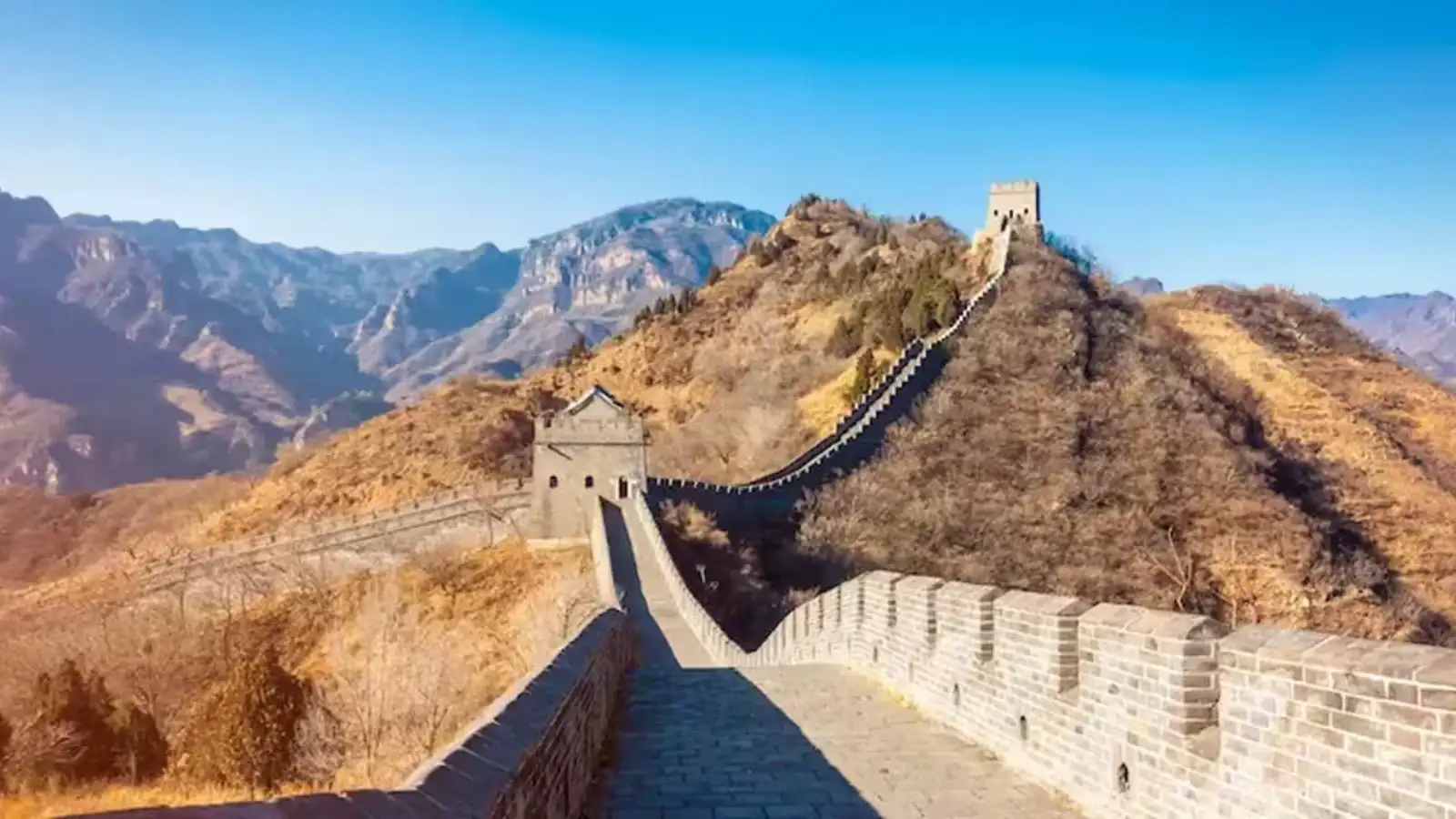
The Problem Is Width, Not Length
The wall is long, but length is not what the eye resolves at a distance. What matters is angular size, how wide an object appears from a given point. At the altitude of the International Space Station, roughly 400 kilometres above Earth, the Great Wall is between five and nine metres wide at its widest point. A human hair held at arm's length is about the same angular size as the wall would appear from that height. The human eye cannot resolve an object that thin. It does not matter how long the object is. A thread stretched across a room is still a thread.What Astronauts Actually Reported
Chinese astronaut Yang Liwei, the first person China sent to space, looked for the wall during his 2003 mission and could not find it. He said so directly. American astronaut Ed Lu, aboard the International Space Station around the same period, confirmed the same: the wall is not visible to the unaided eye from orbital altitude. Astronaut William Pogue thought he had spotted it once, but later identified what he had actually seen as the Grand Canal of China. The honest record from people who were actually up there is consistent: no one has reliably seen the wall with the naked eye from orbit. A few astronauts have reported seeing it through binoculars or camera lenses under ideal conditions, which is a very different claim.Where the Myth Came From
The claim predates spaceflight by more than a century. A letter written in 1932, published in a popular magazine, stated that the wall would be the one human-made object visible from the moon. The moon is roughly 384,000 kilometres away. From that distance, the wall would be many thousands of times too small to see. The statement was never grounded in optics. It was a rhetorical flourish about the wall's scale, and it found its way into guidebooks, encyclopaedias, and eventually school curricula before anyone thought to check the geometry. Once a fact sounds impressive and fits what people want to believe about something genuinely impressive, it tends to travel without a visa.What You Can Actually See from Space
Highways, airports, cities, large reservoirs, and agricultural grids are all visible from low Earth orbit under the right conditions, because they are wide enough to meet the eye's resolution threshold. The Pyramids at Giza are reportedly visible from orbit on a clear day, because they cover a large enough footprint. The Great Wall does not. Its extraordinary quality is its length and its engineering in difficult terrain, not its width. Those are things you appreciate standing on it, not from 400 kilometres above it.Why Getting This Right Matters
The wall does not need the myth. It is already one of the most ambitious things human beings have ever built, constructed across centuries by workers who hauled stone up slopes that were difficult to climb empty-handed. The real story, the logistics, the terrain, the scale of the labour, is more interesting than a claim about visibility that falls apart the moment someone checks the arithmetic. Myths about famous things tend to flatten them. The wall is more impressive, not less, once you understand what it actually required.Next Story