
The United States launched a controversial mission in 2004 to exterminate every feral pig on California's Channel Islands after they attracted golden eagles that nearly wiped out endangered island foxes; by 2006, the pigs were gone, and the foxes began a remarkable recovery


The activities of humans have historically had varied and often devastating impacts on fragile ecosystems. One of the most complex and significant undertakings in modern conservation history took place in the Channel Islands of California. As stated in the National Park Service information about restoring the islands, a severe ecological imbalance arose due to the historical introduction of feral pigs to the islands. This introduction fundamentally altered the native habitat by changing the existing food chain entirely.
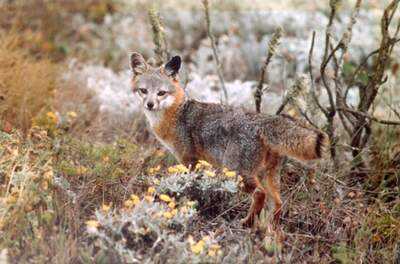
As per official documents, this explosion in the pig population led to the unprecedented arrival of huge golden eagles to these islands, who were drawn across the channel to feed on the numerous piglets. Unfortunately, these top predators did not confine themselves to the pigs alone. In no time, they discovered an even easier target: the native, critically endangered island fox. Because the island fox had evolved without large aerial predators, it lacked the instincts to avoid them. Soon after, the fox population began declining dramatically and was pushed to the absolute brink of extinction. To solve this compounded environmental problem, conservationists knew they needed to execute a drastic mission. And so, finally, in 2004, the United States embarked on a very controversial mission to get rid of all the feral pigs on the islands, which by 2006 had been successfully achieved through intensive eradication efforts.
The balancing act on the islands
Conservation is often not just a simple matter of getting rid of one undesirable organism. Ecosystems are highly interconnected webs, and pulling a single thread can cause unforeseen collapses. This conservation crisis has been comprehensively explored in a research paper published in the journal PLoS ONE. This paper highlighted the intricate dynamics associated with such a large-scale removal project, and crucially showed that restoring the fox population had a lot to do with impeccable timing.
The paper reports that the entire success of the project hinged on understanding the behavioural shifts of the predators. For instance, the absolute risk was demonstrated by one specific pair of eagles that managed to escape initial capture. By using nest data and analysing prey remains from nests collected before and after the pig eradication, the authors found undeniable proof that those birds dramatically shifted their diet toward foxes once the pigs were gone. In their view, that meant removing the predatory golden eagles before the pigs was the only way to reduce the predators’ pressure on the island fox, thereby making extinction far less likely.
Furthermore, the ecological puzzle was complicated by the historical role of bald eagles. As indicated by the study, simply killing off the wild boars without a broader strategy would have been disastrous for the overall island recovery, particularly regarding the native bald eagles. Historically, native bald eagles ate fish and kept golden eagles away through territorial competition. Without addressing the golden eagle presence first, the immediate removal of the boars' offspring would cause the remaining golden eagles to heavily exploit the island foxes, leaving them devastatingly vulnerable to predation before they even had a chance to reach breeding age.
As per official documents, this explosion in the pig population led to the unprecedented arrival of huge golden eagles to these islands, who were drawn across the channel to feed on the numerous piglets. Unfortunately, these top predators did not confine themselves to the pigs alone. In no time, they discovered an even easier target: the native, critically endangered island fox. Because the island fox had evolved without large aerial predators, it lacked the instincts to avoid them. Soon after, the fox population began declining dramatically and was pushed to the absolute brink of extinction. To solve this compounded environmental problem, conservationists knew they needed to execute a drastic mission. And so, finally, in 2004, the United States embarked on a very controversial mission to get rid of all the feral pigs on the islands, which by 2006 had been successfully achieved through intensive eradication efforts.
The balancing act on the islands
Conservation is often not just a simple matter of getting rid of one undesirable organism. Ecosystems are highly interconnected webs, and pulling a single thread can cause unforeseen collapses. This conservation crisis has been comprehensively explored in a research paper published in the journal PLoS ONE. This paper highlighted the intricate dynamics associated with such a large-scale removal project, and crucially showed that restoring the fox population had a lot to do with impeccable timing.
The paper reports that the entire success of the project hinged on understanding the behavioural shifts of the predators. For instance, the absolute risk was demonstrated by one specific pair of eagles that managed to escape initial capture. By using nest data and analysing prey remains from nests collected before and after the pig eradication, the authors found undeniable proof that those birds dramatically shifted their diet toward foxes once the pigs were gone. In their view, that meant removing the predatory golden eagles before the pigs was the only way to reduce the predators’ pressure on the island fox, thereby making extinction far less likely.
Furthermore, the ecological puzzle was complicated by the historical role of bald eagles. As indicated by the study, simply killing off the wild boars without a broader strategy would have been disastrous for the overall island recovery, particularly regarding the native bald eagles. Historically, native bald eagles ate fish and kept golden eagles away through territorial competition. Without addressing the golden eagle presence first, the immediate removal of the boars' offspring would cause the remaining golden eagles to heavily exploit the island foxes, leaving them devastatingly vulnerable to predation before they even had a chance to reach breeding age.
Next Story