
Trump says US team will meet Iran in Doha


The TOI correspondent from Washington: US President Donald Trump said on Monday that American representatives will meet Iranian officials in Doha on Tuesday in a renewed attempt to salvage a peace process that was jolted by a weekend of fighting in the Persian Gulf, as both sides seek to project a sketchy MOU they have signed as a victory to their domestic audiences despite continuing differences.
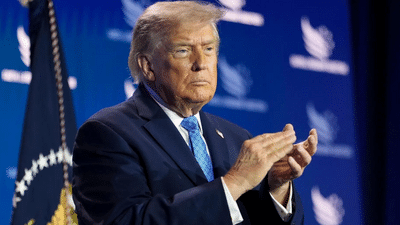
"Iran has requested a meeting. It will take place tomorrow in Doha!" Trump declared Monday in a Truth Social post, portraying Tehran as having sought the latest round of talks. The White House later confirmed that senior envoys Steve Witkoff and Jared Kushner would participate in the discussions alongside technical teams working to implement the June 17 MoU.
Iran, however, offered a markedly different account, with senior officials denying that such a meeting had been finalized, continuing a familiar pattern in which the two sides offer conflicting accounts of every development. The latest diplomatic push from Washington follows a dangerous weekend in which the ceasefire effectively frayed after fresh attacks around the Strait of Hormuz.
According to US officials, Iranian strikes on commercial shipping and military targets prompted American retaliation, while Tehran argued it was responding to what it considers continued violations of understandings reached earlier this month. Mediators from Qatar and Oman subsequently worked to establish emergency de-escalation channels to prevent the confrontation from spiraling into a broader regional conflict.
At the heart of the dispute remains the strategic Strait of Hormuz, through which roughly one-fifth of globally traded oil passes. Washington insists on unrestricted international navigation, while Iran continues to assert an expansive security role over shipping routes near its coastline. That disagreement has become the most immediate obstacle to implementing the broader political agreement.
Other differences remain equally consequential, with Washington wanting durable guarantees against further attacks on commercial shipping and US interests and a nuclear wind-down, while Tehran continues to seek tangible sanctions relief and access to frozen financial assets before complying. Both sides also differ over sequencing: Washington argues that security commitments must come first, whereas Tehran maintains that economic concessions cannot remain a vague promise.
Despite the renewed violence, both governments are attempting to sell the MoU as evidence that their respective strategies have produced results. Trump has emphasized lower oil prices, freer navigation through the Gulf and what he characterizes as Iran's willingness to return to negotiations, presenting the talks as proof that sustained military pressure has forced Tehran back to the table. "WTI CRUDE - $69, and heading down. This is less than it was prior to the start of the Denuclearization of Iran!" the US President declared in one post.
"Iran has requested a meeting. It will take place tomorrow in Doha!" Trump declared Monday in a Truth Social post, portraying Tehran as having sought the latest round of talks. The White House later confirmed that senior envoys Steve Witkoff and Jared Kushner would participate in the discussions alongside technical teams working to implement the June 17 MoU.
Iran, however, offered a markedly different account, with senior officials denying that such a meeting had been finalized, continuing a familiar pattern in which the two sides offer conflicting accounts of every development. The latest diplomatic push from Washington follows a dangerous weekend in which the ceasefire effectively frayed after fresh attacks around the Strait of Hormuz.
According to US officials, Iranian strikes on commercial shipping and military targets prompted American retaliation, while Tehran argued it was responding to what it considers continued violations of understandings reached earlier this month. Mediators from Qatar and Oman subsequently worked to establish emergency de-escalation channels to prevent the confrontation from spiraling into a broader regional conflict.
At the heart of the dispute remains the strategic Strait of Hormuz, through which roughly one-fifth of globally traded oil passes. Washington insists on unrestricted international navigation, while Iran continues to assert an expansive security role over shipping routes near its coastline. That disagreement has become the most immediate obstacle to implementing the broader political agreement.
Other differences remain equally consequential, with Washington wanting durable guarantees against further attacks on commercial shipping and US interests and a nuclear wind-down, while Tehran continues to seek tangible sanctions relief and access to frozen financial assets before complying. Both sides also differ over sequencing: Washington argues that security commitments must come first, whereas Tehran maintains that economic concessions cannot remain a vague promise.
Despite the renewed violence, both governments are attempting to sell the MoU as evidence that their respective strategies have produced results. Trump has emphasized lower oil prices, freer navigation through the Gulf and what he characterizes as Iran's willingness to return to negotiations, presenting the talks as proof that sustained military pressure has forced Tehran back to the table. "WTI CRUDE - $69, and heading down. This is less than it was prior to the start of the Denuclearization of Iran!" the US President declared in one post.
Next Story