
Ukraine deploys combat robot via sea drone in unprecedented assault on Russian-held Kinburn Spit


Ukraine has reportedly carried out what is being described as the world's first fully unmanned amphibious combat raid against Russian-held positions on the strategically important Kinburn Split in southern Ukraine. The operation, announced by Ukraine's 123rd Territorial Defence Brigade on July 13, involved an unmanned surface vessel transporting a ground combat drone to the shoreline while an aerial drone monitored the mission, marking what officials called a new approach to modern warfare.
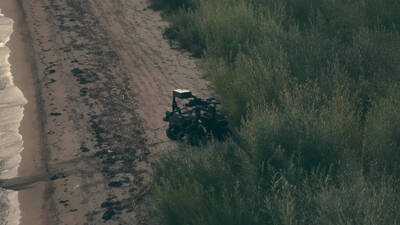
The brigade said a sea drone delivered a ground-based robotic combat vehicle onto Russian-held territory, where it carried out a combat mission without Ukrainian troops setting foot on the beach.
"A ground-based robotic complex was delivered to the enemy shore by an unmanned sea platform, landed on the occupied territory and used to perform a combat mission," the brigade said in a post on social media.
"This is a new approach to war, where the most dangerous tasks are performed by a machine, and the Ukrainian military creates new rules of modern combat," it added.
Video released by the brigade shows an unmanned surface vessel carrying what is believed to be a Ukrainian-made Rys unmanned ground vehicle (UGV) armed with a 7. 62mm PKT machine gun. After the vessel lowered its ramps, the UGV rolled onto the beach, moved into nearby vegetation and took up a firing position before the sea drone departed.
Footage recorded by an unmanned aerial vehicle captured the deployment from above. In later scenes, the ground drone is seen firing towards a distant target from the shoreline. While it appears to fire at least three rounds, no official details have been released about damage inflicted, casualties or whether the target was occupied by Russian forces at the time.
No footage has been released showing the recovery of the ground drone, leaving it unclear whether a retrieval mission took place. Analysts have also suggested the raid may have been intended to test Russian defences and demonstrate a new operational concept rather than seize territory.
If confirmed, the mission would mark the first known wartime amphibious assault conducted entirely by unmanned systems operating across the sea, land and air domains. The sea drone transported the combat vehicle, the ground drone carried out the assault, and the aerial drone provided reconnaissance and oversight throughout the operation.
The Kinburn Split has become an increasingly contested area in recent weeks. On June 25, Ukrainian forces raised the national flag on the peninsula after Russian troops reportedly withdrew from some positions, according to Ukraine's Southern Defence Forces.
Russian military bloggers have also speculated about the possibility of a Ukrainian amphibious operation as logistical problems have reportedly worsened for Russian troops in the area.
According to the Ukrainian partisan movement ATESH, units of Russia's 337th Regiment withdrew from northern and western parts of the Kinburn Split because food, ammunition and fuel supplies could no longer reach them. Reuters could not independently verify the claim.
Ukraine has also intensified drone strikes targeting Russian logistics in southern Ukraine and occupied Crimea, reportedly hitting supply routes used to transport fuel and ammunition to frontline forces.
The brigade said a sea drone delivered a ground-based robotic combat vehicle onto Russian-held territory, where it carried out a combat mission without Ukrainian troops setting foot on the beach.
"A ground-based robotic complex was delivered to the enemy shore by an unmanned sea platform, landed on the occupied territory and used to perform a combat mission," the brigade said in a post on social media.
"This is a new approach to war, where the most dangerous tasks are performed by a machine, and the Ukrainian military creates new rules of modern combat," it added.
Video released by the brigade shows an unmanned surface vessel carrying what is believed to be a Ukrainian-made Rys unmanned ground vehicle (UGV) armed with a 7. 62mm PKT machine gun. After the vessel lowered its ramps, the UGV rolled onto the beach, moved into nearby vegetation and took up a firing position before the sea drone departed.
Footage recorded by an unmanned aerial vehicle captured the deployment from above. In later scenes, the ground drone is seen firing towards a distant target from the shoreline. While it appears to fire at least three rounds, no official details have been released about damage inflicted, casualties or whether the target was occupied by Russian forces at the time.
No footage has been released showing the recovery of the ground drone, leaving it unclear whether a retrieval mission took place. Analysts have also suggested the raid may have been intended to test Russian defences and demonstrate a new operational concept rather than seize territory.
If confirmed, the mission would mark the first known wartime amphibious assault conducted entirely by unmanned systems operating across the sea, land and air domains. The sea drone transported the combat vehicle, the ground drone carried out the assault, and the aerial drone provided reconnaissance and oversight throughout the operation.
The Kinburn Split has become an increasingly contested area in recent weeks. On June 25, Ukrainian forces raised the national flag on the peninsula after Russian troops reportedly withdrew from some positions, according to Ukraine's Southern Defence Forces.
Russian military bloggers have also speculated about the possibility of a Ukrainian amphibious operation as logistical problems have reportedly worsened for Russian troops in the area.
According to the Ukrainian partisan movement ATESH, units of Russia's 337th Regiment withdrew from northern and western parts of the Kinburn Split because food, ammunition and fuel supplies could no longer reach them. Reuters could not independently verify the claim.
Ukraine has also intensified drone strikes targeting Russian logistics in southern Ukraine and occupied Crimea, reportedly hitting supply routes used to transport fuel and ammunition to frontline forces.
Next Story