
Why Flamingos Are Pink: The Science Behind Their Striking Color

A flamingo hatches grey. The pink that makes it one of the most photographed birds on earth is not inherited, it is eaten, processed, and deposited one meal at a time. That single fact changes how you see the bird entirely.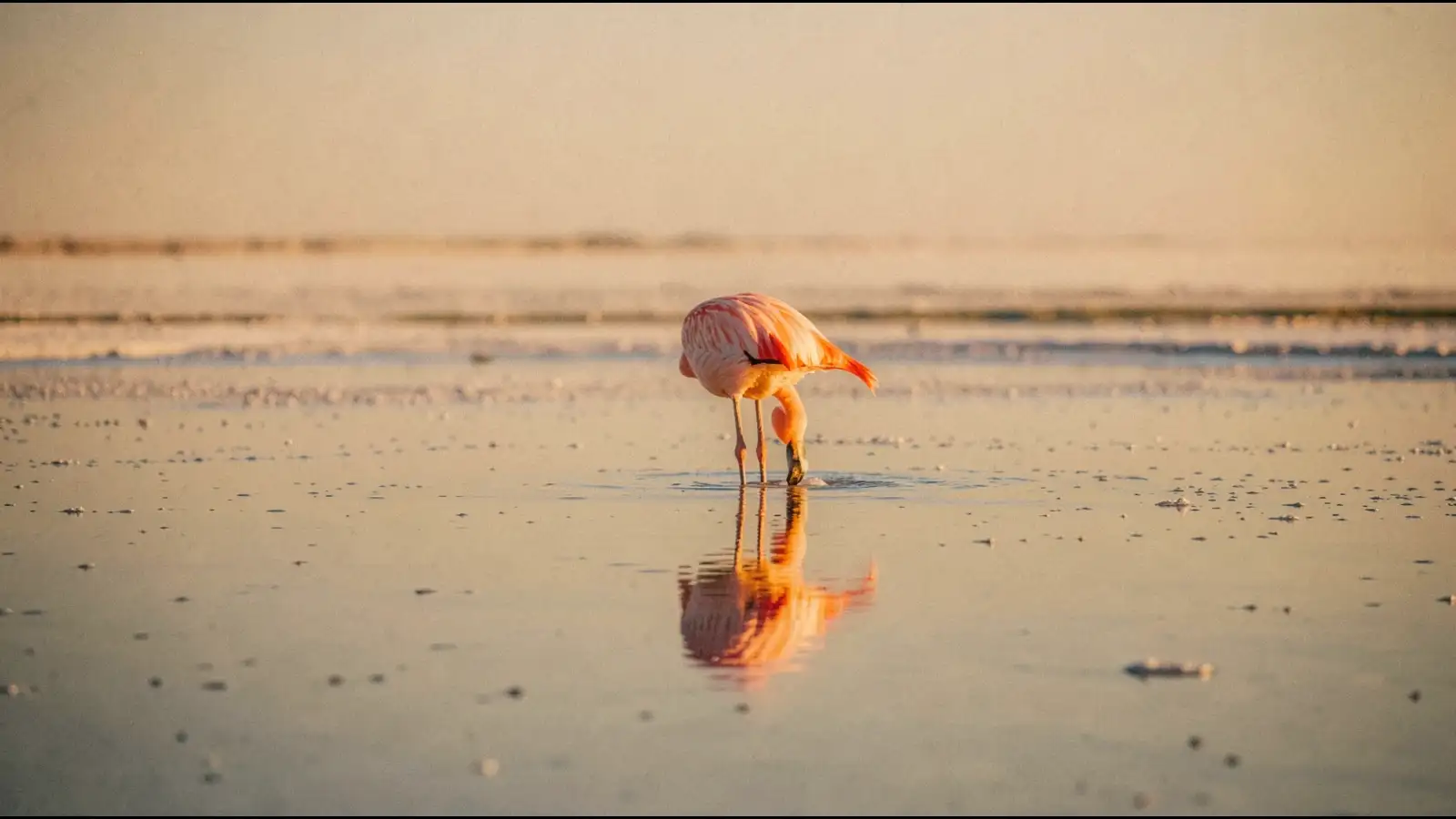
The specific carotenoids flamingos consume include beta-carotene and canthaxanthin. On their own, these molecules appear orange or red. Inside the flamingo's body, they begin a short journey that ends in the feathers.
The shade is not fixed. A flamingo eating a carotenoid-rich diet in a productive lake turns a deep coral-pink. One in a habitat with sparse food turns pale, sometimes almost white. Flamingos in zoos were famously pale for decades until keepers understood the mechanism and began adding carotenoid supplements to their feed.
The legs and beak follow the same logic. The pink-orange of the legs comes from carotenoids deposited in the skin. The bent beak, which filters food from water, carries the same pigment at its base.
Flamingos also smear a pinkish oil from a gland near the base of their tail across their feathers during preening. This oil contains carotenoids too, and it intensifies the colour of the plumage beyond what the feathers alone carry. During breeding season, the smearing increases, the bird is, in effect, applying its own pigment to look its best.
The flamingo makes the principle visible because the contrast is so stark. A white bird eating the right food in the right lake turns coral-pink over weeks. The colour is not decoration, it is a record of every meal the bird has eaten since its last moult. Strip away the diet, and the pink fades with the next set of feathers. Restore it, and the colour comes back. The bird is, quite literally, what it eats.
The Pigment Hidden in Their Food
Flamingos feed on algae, brine shrimp, and other small aquatic organisms that thrive in the shallow, salty, and often alkaline lakes they call home. These organisms are rich in carotenoids, a family of pigments that also colour carrots orange, tomatoes red, and autumn leaves yellow.The specific carotenoids flamingos consume include beta-carotene and canthaxanthin. On their own, these molecules appear orange or red. Inside the flamingo's body, they begin a short journey that ends in the feathers.
How the Body Converts and Deposits the Colour
When a flamingo digests its food, enzymes in the liver break carotenoids down into pigment molecules. These molecules enter the bloodstream and travel to the feather follicles, where they bind to the proteins in growing feathers. The result is the pink and coral that covers the bird's wings, neck, and body.The shade is not fixed. A flamingo eating a carotenoid-rich diet in a productive lake turns a deep coral-pink. One in a habitat with sparse food turns pale, sometimes almost white. Flamingos in zoos were famously pale for decades until keepers understood the mechanism and began adding carotenoid supplements to their feed.
The legs and beak follow the same logic. The pink-orange of the legs comes from carotenoids deposited in the skin. The bent beak, which filters food from water, carries the same pigment at its base.
Why the Colour Matters Beyond Appearance
The depth of a flamingo's pink is a reliable signal of its health and diet quality. A brighter bird has been eating well in a productive habitat. This matters during breeding: flamingos in better condition display more vivid colour, and studies on wild populations show that more intensely coloured individuals tend to attract mates more readily and breed earlier in the season.Flamingos also smear a pinkish oil from a gland near the base of their tail across their feathers during preening. This oil contains carotenoids too, and it intensifies the colour of the plumage beyond what the feathers alone carry. During breeding season, the smearing increases, the bird is, in effect, applying its own pigment to look its best.
The Broader Principle at Work
Flamingos are the most dramatic example of a wider biological rule: carotenoid pigments cannot be made by animals, they can only be obtained from food. Salmon are pink for the same reason, eating krill and small crustaceans that carry astaxanthin. Canaries deepen in colour when fed red peppers. Even the yellow in human skin has a carotenoid contribution from vegetables.The flamingo makes the principle visible because the contrast is so stark. A white bird eating the right food in the right lake turns coral-pink over weeks. The colour is not decoration, it is a record of every meal the bird has eaten since its last moult. Strip away the diet, and the pink fades with the next set of feathers. Restore it, and the colour comes back. The bird is, quite literally, what it eats.