
Why Giraffes Have Such Long Necks: The Real Reason

The giraffe carries the longest neck of any living animal, stretching up to two metres on its own, supported by the same seven vertebrae every mammal has, including you. Each of those bones can be as long as 28 centimetres. The engineering alone is remarkable. But the more interesting question is why evolution kept pushing the neck longer across millions of years, and the answer is not as simple as most people assume.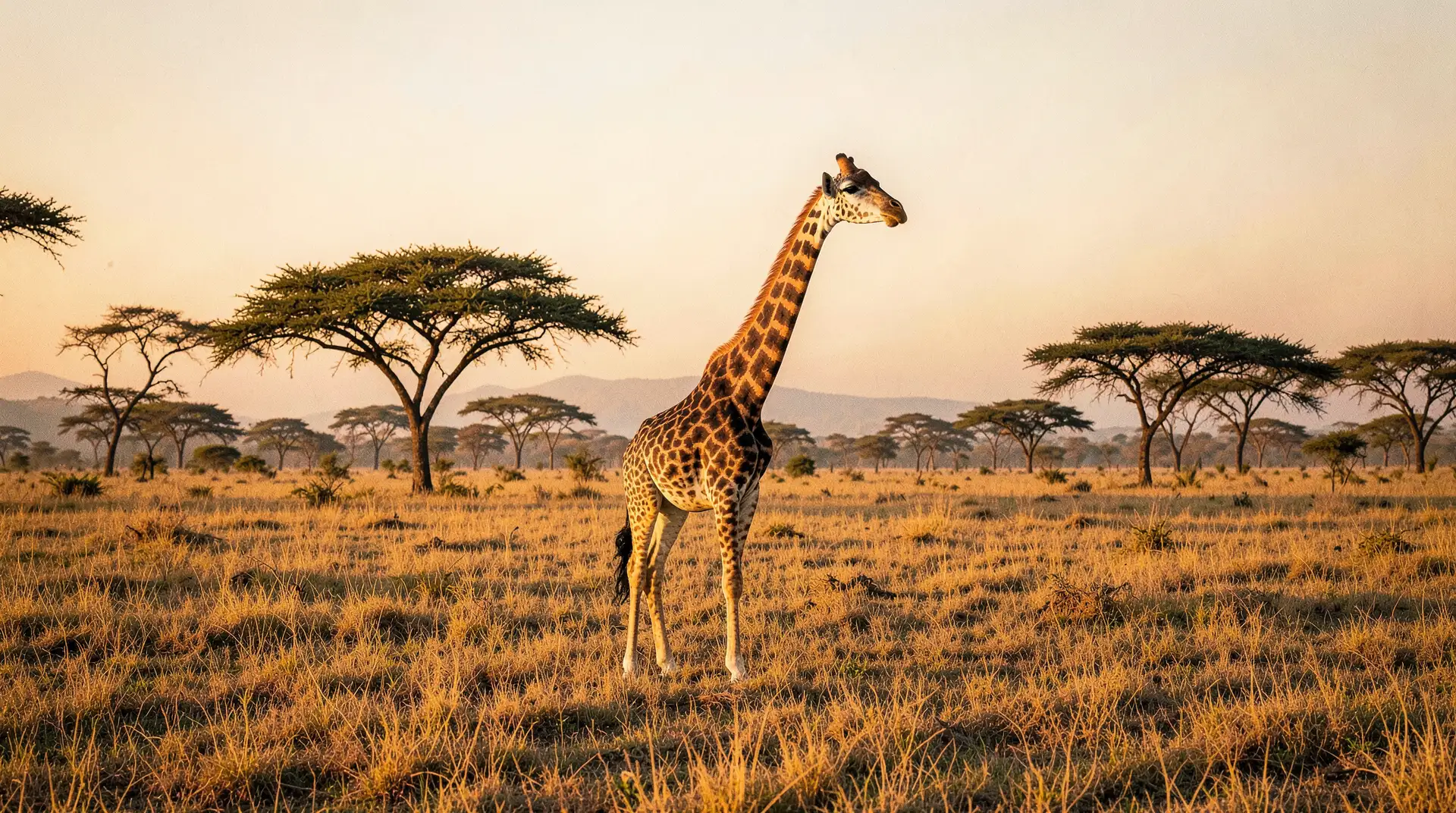
But the feeding argument has a problem. Researchers watching giraffes in the wild noticed something unexpected: when food is plentiful and competition is low, giraffes often feed at shoulder height or below, bending their long necks down to reach shrubs and grass. If the neck evolved purely for high browsing, you would expect the animal to use it that way most of the time. It does not. This observation pushed biologists to look for a second explanation.
This is sexual selection at work, the same force that gave peacocks their tails and stags their antlers. A neck that makes you better at fighting passes to more offspring. Over many generations, the males who survived and reproduced were disproportionately the ones with longer, more powerful necks. Female giraffes also have long necks, shorter than males on average, which suggests the feeding advantage kept both sexes' necks growing even as competition between males drove the males' necks longer still.
Special valves and elastic blood vessels prevent that pressure from destroying the brain when the animal lowers its head to drink, a vulnerable moment that requires the giraffe to splay its front legs wide just to reach the water.
The neck also has its own set of nerves that travel a remarkable distance. The recurrent laryngeal nerve, which connects the brain to the larynx, loops down the neck, around the aorta, and back up again, a detour of several metres that exists because the nerve's path was set early in vertebrate evolution, long before necks grew this long. Every adaptation the giraffe carries is a solution to a problem the long neck itself created.
The fossil record shows a gradual lengthening over time, with different lineages experimenting with different neck lengths before the modern giraffe's form became dominant on the open savanna.
One fossil relative, Sivatherium, was heavily built with short neck and large antler-like ossicones. Another, Samotherium, sat partway between the okapi and the modern giraffe.
The progression is not a straight line, evolution rarely is, but it shows that the long neck was not inevitable. It emerged because on the open savanna, with its particular mix of tall trees, dry seasons, and competing males, longer consistently won.
The giraffe's neck is the outcome of several pressures working at once: food access during lean seasons, competition between males for mates, and the cascade of physiological problems each extra centimetre of neck created and then had to solve. No single cause explains it. The animal is the sum of all of them working across an enormous stretch of time.
The Feeding Argument, and Its Limits
The most familiar explanation is that a longer neck lets a giraffe browse leaves that shorter animals cannot reach, particularly the canopy of acacia trees on the African savanna. There is real truth in this. A giraffe can graze at heights between two and six metres, well beyond the reach of zebras, wildebeest, or even elephants browsing at the same tree. When food is scarce and competition is high, that vertical advantage keeps an animal fed.But the feeding argument has a problem. Researchers watching giraffes in the wild noticed something unexpected: when food is plentiful and competition is low, giraffes often feed at shoulder height or below, bending their long necks down to reach shrubs and grass. If the neck evolved purely for high browsing, you would expect the animal to use it that way most of the time. It does not. This observation pushed biologists to look for a second explanation.
Necks as Weapons
Male giraffes fight using a behaviour called necking. Two males stand side by side and swing their necks like pendulums, landing the bony base of their skull against the opponent's flanks and neck. These are not glancing blows, a well-landed strike can knock a rival off balance or drop him to his knees. Males with longer, heavier necks deliver harder strikes and win more contests. Winners get access to females.This is sexual selection at work, the same force that gave peacocks their tails and stags their antlers. A neck that makes you better at fighting passes to more offspring. Over many generations, the males who survived and reproduced were disproportionately the ones with longer, more powerful necks. Female giraffes also have long necks, shorter than males on average, which suggests the feeding advantage kept both sexes' necks growing even as competition between males drove the males' necks longer still.
The Problem Evolution Had to Solve
A two-metre neck creates engineering challenges that the giraffe's body has spent millions of years solving. The heart must pump blood roughly two and a half metres upward to reach the brain. To do this, a giraffe's heart is enormous, around 60 centimetres long and weighing close to 11 kilograms, and generates blood pressure roughly twice as high as a human's.Special valves and elastic blood vessels prevent that pressure from destroying the brain when the animal lowers its head to drink, a vulnerable moment that requires the giraffe to splay its front legs wide just to reach the water.
The neck also has its own set of nerves that travel a remarkable distance. The recurrent laryngeal nerve, which connects the brain to the larynx, loops down the neck, around the aorta, and back up again, a detour of several metres that exists because the nerve's path was set early in vertebrate evolution, long before necks grew this long. Every adaptation the giraffe carries is a solution to a problem the long neck itself created.
What the Fossil Record Shows
Giraffe ancestors were not always long-necked. Early relatives from millions of years ago had proportions closer to a modern okapi, the giraffe's only living relative, which has a short neck and lives in dense Central African forest.The fossil record shows a gradual lengthening over time, with different lineages experimenting with different neck lengths before the modern giraffe's form became dominant on the open savanna.
One fossil relative, Sivatherium, was heavily built with short neck and large antler-like ossicones. Another, Samotherium, sat partway between the okapi and the modern giraffe.
The progression is not a straight line, evolution rarely is, but it shows that the long neck was not inevitable. It emerged because on the open savanna, with its particular mix of tall trees, dry seasons, and competing males, longer consistently won.
The giraffe's neck is the outcome of several pressures working at once: food access during lean seasons, competition between males for mates, and the cascade of physiological problems each extra centimetre of neck created and then had to solve. No single cause explains it. The animal is the sum of all of them working across an enormous stretch of time.
Next Story