
The Midnight India Became Independent: What Actually Happened on August 14-15, 1947?

India celebrates Independence Day every year on August 15, but the story of how freedom actually arrived is more complicated than a single date on the calendar. The transfer of power unfolded through a carefully planned constitutional process, a historic midnight sitting of the Constituent Assembly, celebrations across Delhi and, at the same time, the enormous human tragedy accompanying Partition.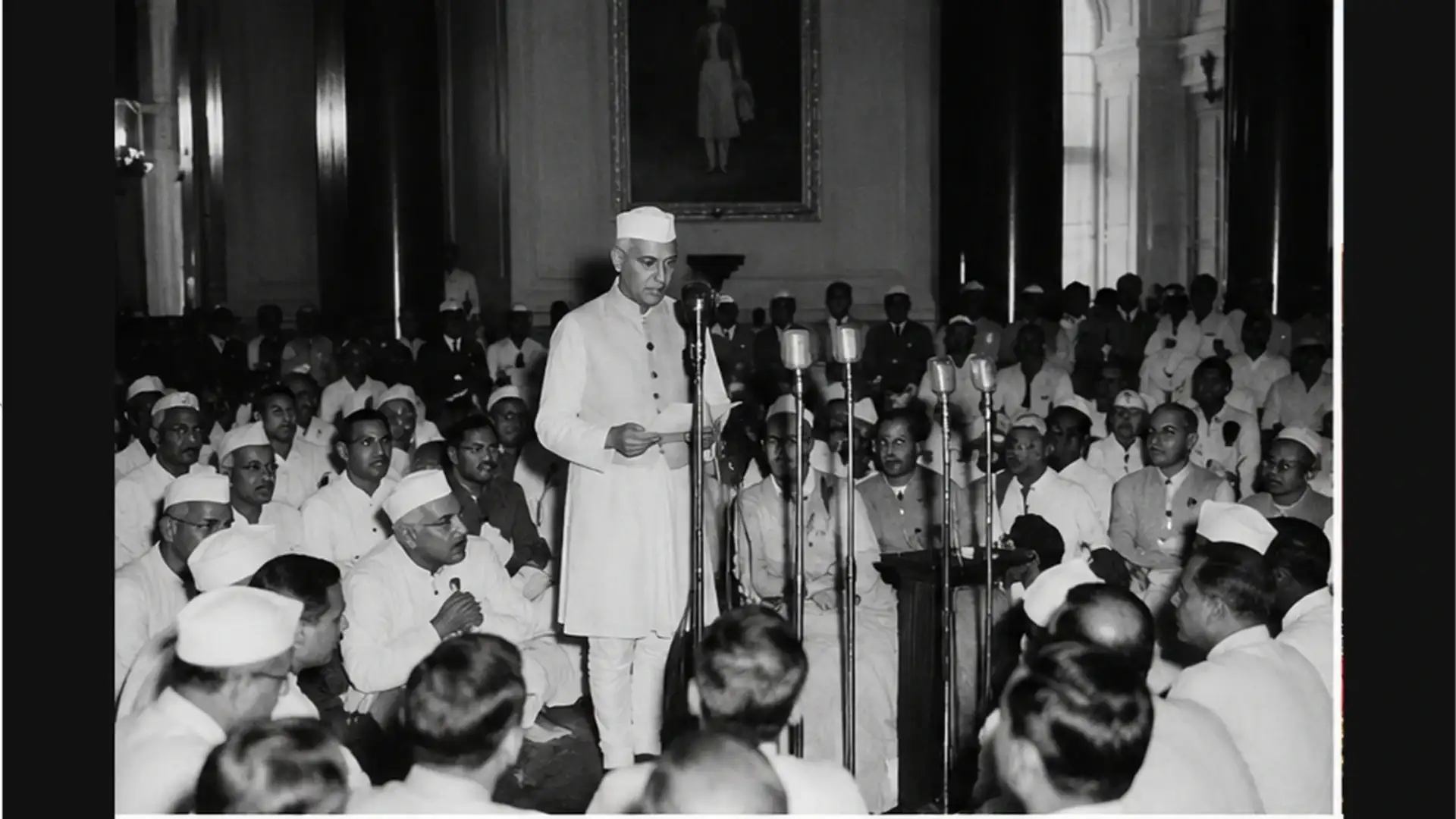
The most famous moment came at midnight between August 14 and 15, 1947, when Jawaharlal Nehru delivered his celebrated “Tryst with Destiny” speech to the Constituent Assembly. As the clock moved into August 15, British rule formally gave way to independent India. Nehru described the moment as a rare point in history when “an age ends” and a nation moves from the old to the new.
But independence was not simply a grand celebration. Millions were facing uncertainty, violence and displacement as British India was being divided into India and Pakistan. Even Nehru's Independence Day message acknowledged that India was entering freedom while surrounded by sorrow and difficult problems.
The Indian Independence Act 1947 created the two new Dominions of India and Pakistan and designated August 15 as the appointed day. As that date arrived, the Constituent Assembly met in New Delhi for a special session.
The proceedings were carefully planned. Nehru's correspondence from August 1947 shows that the programme included Vande Mataram, a presidential speech, a period of silence in memory of those who had died during the freedom struggle, a resolution and speeches before midnight. Immediately after midnight, members were scheduled to take a pledge dedicating themselves to the service of India and its people.
The symbolism was powerful. India was not merely celebrating a holiday. Its representatives were formally taking responsibility for governing a sovereign nation.
Before midnight, members participated in patriotic and solemn proceedings. After the clock crossed midnight, the Assembly took the independence pledge. The transfer of authority was marked through constitutional resolutions, speeches and the assumption of responsibility by India's new political leadership.
Nehru then delivered the speech that became one of the defining moments of modern Indian history.
His famous opening captured the atmosphere:
“At the stroke of the midnight hour, when the world sleeps, India will awake to life and freedom.”
The speech was not simply a declaration of victory. Nehru warned that independence brought responsibility. He spoke about poverty, ignorance, disease and inequality and argued that the real work of freedom would begin after independence.
That message is important because it reveals how India's leaders viewed August 15. Political freedom was considered the beginning of a much larger national project.
India became independent at the same time that Partition was dividing British India into India and Pakistan. Communal violence had already erupted in several areas, and millions of people would soon be displaced from their homes.
Nehru's message on August 15 reflected this tension. He described India as free and awake, but acknowledged that clouds still surrounded the country and that many people were sorrow-stricken.
Mahatma Gandhi was notably absent from the grand celebrations in Delhi. He was in Bengal, working amid communal tensions and trying to restore peace.
This contrast is one of the most striking aspects of India's independence story: while political leaders were announcing freedom in Delhi, ordinary families were experiencing fear, uncertainty and upheaval elsewhere.
The familiar image of Jawaharlal Nehru raising the Tricolour at the Red Fort is strongly associated with August 15, 1947 . However, historical records indicate that the Red Fort ceremony took place on August 16, 1947, rather than August 15.
The Nehru Archive records Nehru's speech at the Red Fort on August 16. In that speech, he described the occasion as a historic moment at the ancient fort and connected the flag with India's long struggle for freedom.
Archival material from the Nehru Memorial Museum and Library also records the unfurling of the national flag by Nehru at the Red Fort on August 16.
On August 15 itself, Nehru participated in several ceremonies in Delhi, including events around India Gate and the formal celebrations marking the new nation's independence.
This distinction matters because the midnight independence ceremony, the August 15 celebrations and the Red Fort flag ceremony were not one single event.
He did not portray independence as the end of India's struggle. Instead, he described it as an opportunity to build a country where poverty, inequality and suffering could be confronted.
One of the speech's most enduring ideas was that India's freedom carried obligations beyond its own borders. Nehru linked India's future with peace, prosperity and humanity more broadly.
That is why the speech remains closely associated with India's Independence Day even decades later.
India had to build institutions, integrate territories, manage refugee movements, deal with communal violence and create a democratic constitutional system.
Nehru's August 15 message made this clear. He called on Indians to work towards ending poverty and ignorance and to create a democratic and prosperous nation.
That makes the story of India's independence more meaningful than a simple account of flags and celebrations. The midnight of August 15 was the moment India became politically free. The decades that followed were the story of what Indians did with that freedom.
The most famous moment came at midnight between August 14 and 15, 1947, when Jawaharlal Nehru delivered his celebrated “Tryst with Destiny” speech to the Constituent Assembly. As the clock moved into August 15, British rule formally gave way to independent India. Nehru described the moment as a rare point in history when “an age ends” and a nation moves from the old to the new.
But independence was not simply a grand celebration. Millions were facing uncertainty, violence and displacement as British India was being divided into India and Pakistan. Even Nehru's Independence Day message acknowledged that India was entering freedom while surrounded by sorrow and difficult problems.
Why Was India’s Independence Celebrated at Midnight?
The choice of midnight was closely connected to the constitutional transfer of power.The Indian Independence Act 1947 created the two new Dominions of India and Pakistan and designated August 15 as the appointed day. As that date arrived, the Constituent Assembly met in New Delhi for a special session.
The proceedings were carefully planned. Nehru's correspondence from August 1947 shows that the programme included Vande Mataram, a presidential speech, a period of silence in memory of those who had died during the freedom struggle, a resolution and speeches before midnight. Immediately after midnight, members were scheduled to take a pledge dedicating themselves to the service of India and its people.
The symbolism was powerful. India was not merely celebrating a holiday. Its representatives were formally taking responsibility for governing a sovereign nation.
What Happened During the Midnight Session?
The Constituent Assembly assembled for the historic sitting on the night of August 14.Before midnight, members participated in patriotic and solemn proceedings. After the clock crossed midnight, the Assembly took the independence pledge. The transfer of authority was marked through constitutional resolutions, speeches and the assumption of responsibility by India's new political leadership.
Nehru then delivered the speech that became one of the defining moments of modern Indian history.
His famous opening captured the atmosphere:
“At the stroke of the midnight hour, when the world sleeps, India will awake to life and freedom.”
The speech was not simply a declaration of victory. Nehru warned that independence brought responsibility. He spoke about poverty, ignorance, disease and inequality and argued that the real work of freedom would begin after independence.
That message is important because it reveals how India's leaders viewed August 15. Political freedom was considered the beginning of a much larger national project.
Was Everyone Celebrating?
No. The image of an entire country celebrating together can hide the complicated reality of August 1947.India became independent at the same time that Partition was dividing British India into India and Pakistan. Communal violence had already erupted in several areas, and millions of people would soon be displaced from their homes.
Nehru's message on August 15 reflected this tension. He described India as free and awake, but acknowledged that clouds still surrounded the country and that many people were sorrow-stricken.
Mahatma Gandhi was notably absent from the grand celebrations in Delhi. He was in Bengal, working amid communal tensions and trying to restore peace.
This contrast is one of the most striking aspects of India's independence story: while political leaders were announcing freedom in Delhi, ordinary families were experiencing fear, uncertainty and upheaval elsewhere.
Where Was the Indian Flag First Unfurled?
Another popular misconception concerns the Red Fort.The familiar image of Jawaharlal Nehru raising the Tricolour at the Red Fort is strongly associated with August 15, 1947 . However, historical records indicate that the Red Fort ceremony took place on August 16, 1947, rather than August 15.
The Nehru Archive records Nehru's speech at the Red Fort on August 16. In that speech, he described the occasion as a historic moment at the ancient fort and connected the flag with India's long struggle for freedom.
Archival material from the Nehru Memorial Museum and Library also records the unfurling of the national flag by Nehru at the Red Fort on August 16.
On August 15 itself, Nehru participated in several ceremonies in Delhi, including events around India Gate and the formal celebrations marking the new nation's independence.
This distinction matters because the midnight independence ceremony, the August 15 celebrations and the Red Fort flag ceremony were not one single event.
Why Is the “Tryst with Destiny” Speech Still Remembered?
Nehru's speech has survived because it transformed a political event into a statement about national responsibility.He did not portray independence as the end of India's struggle. Instead, he described it as an opportunity to build a country where poverty, inequality and suffering could be confronted.
One of the speech's most enduring ideas was that India's freedom carried obligations beyond its own borders. Nehru linked India's future with peace, prosperity and humanity more broadly.
That is why the speech remains closely associated with India's Independence Day even decades later.
August 15, 1947 Was a Beginning, Not an Ending
The midnight of August 14-15, 1947 marked the end of British colonial rule, but it did not solve the problems facing the new country.India had to build institutions, integrate territories, manage refugee movements, deal with communal violence and create a democratic constitutional system.
Nehru's August 15 message made this clear. He called on Indians to work towards ending poverty and ignorance and to create a democratic and prosperous nation.
That makes the story of India's independence more meaningful than a simple account of flags and celebrations. The midnight of August 15 was the moment India became politically free. The decades that followed were the story of what Indians did with that freedom.
Next Story