
Why Does India Have Three Colours in Its National Flag? The Meaning Behind Each One

The Indian national flag is instantly recognisable: a horizontal band of deep saffron at the top, white in the middle and dark green at the bottom, with a navy-blue Ashoka Chakra at the centre.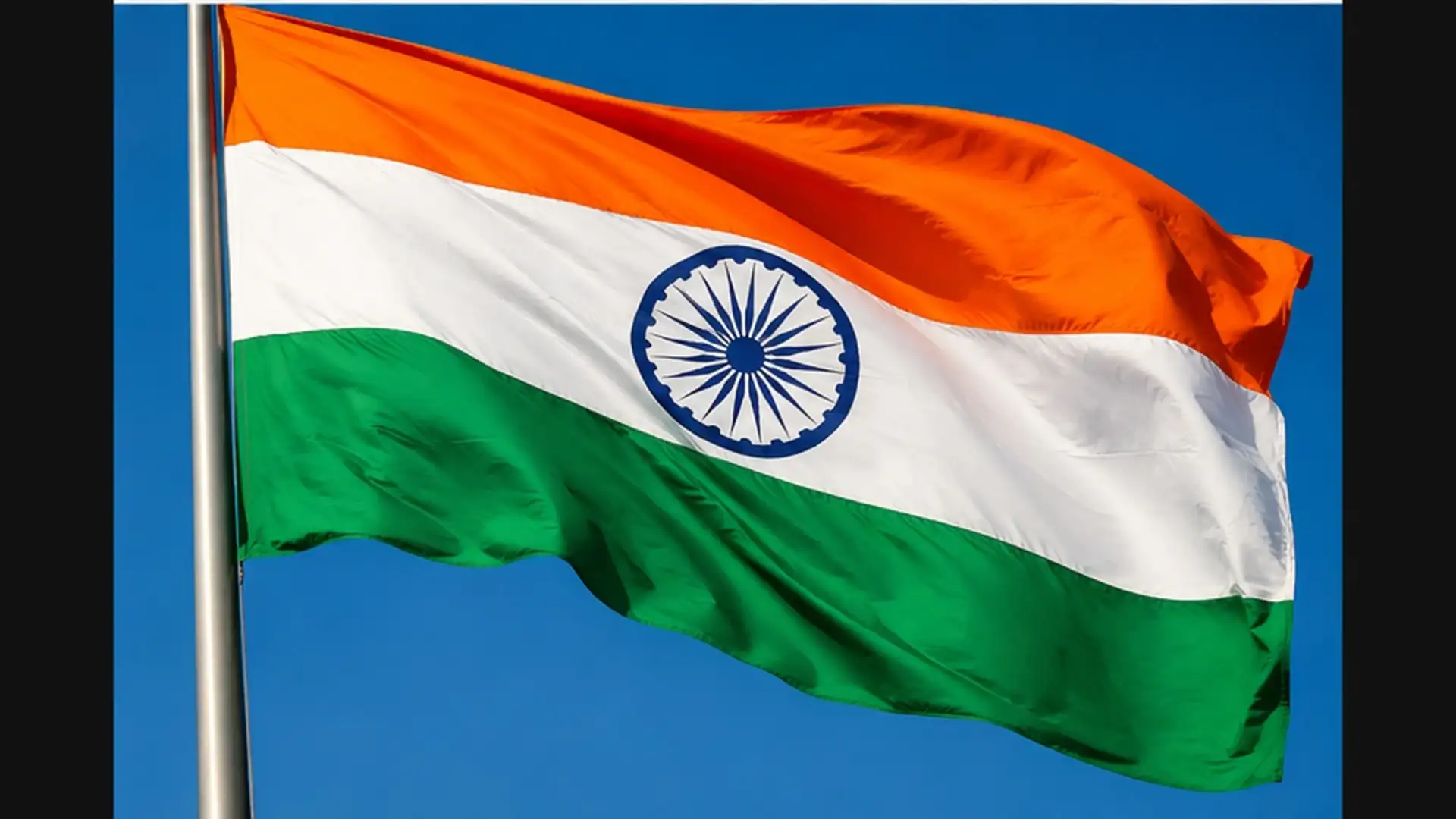
But these colours are not merely a visual design.
The Indian national flag represents ideals that the country adopted at the moment of independence. Its design was formally adopted by the Constituent Assembly on July 22, 1947, only weeks before India became independent.
The three colours have also generated many interpretations over the years. One important historical point is that they were deliberately presented as national rather than communal symbols.
The official explanation gives each colour a particular meaning: saffron represents strength and courage, white represents peace and truth, and green represents fertility, growth and auspiciousness of the land.
Jawaharlal Nehru moved the resolution describing the national flag as a horizontal tricolour of deep saffron, white and dark green in equal proportions, with a navy-blue wheel in the centre.
The decision was made just weeks before independence.
The design therefore became one of the first major visual symbols of the new Indian state.
According to the Government of India's National Portal, saffron represents strength and courage.
The colour also had a deeper philosophical meaning during the Constituent Assembly discussions.
Dr Sarvepalli Radhakrishnan explained saffron in terms of renunciation and dedication. He argued that the colour should remind leaders that public responsibility required selflessness rather than personal gain.
This interpretation is particularly significant because it shows that the flag's colours were intended to communicate values.
Saffron was not designed to represent a particular religious community.
The Constituent Assembly debate included explicit arguments against treating the colours as communal markers. Members emphasised that the flag belonged to all Indians.
The official explanation associates white with peace and truth, alongside the Dharma Chakra.
The placement of white between saffron and green also gives the flag a visual balance, but its symbolism goes beyond aesthetics.
During the Constituent Assembly debate, white was repeatedly associated with peace, purity and truth. Radhakrishnan connected the colour with truth and ethical conduct.
This makes the central position of white especially meaningful. At the heart of the flag is an ideal of truth and peace, represented alongside the Ashoka Chakra.
The Government of India's National Portal explains that green represents fertility, growth and auspiciousness of the land.
The colour naturally evokes India's agricultural landscape and the importance of land and plant life.
During the Constituent Assembly debate, Radhakrishnan also connected green with the soil and plant life on which other forms of life depend.
Again, the historical debate is important because it demonstrates that the colours were intended to carry broad national meanings rather than fixed religious identities.
This is one of the most common misconceptions about the Indian national flag.
There have been interpretations suggesting that saffron, white and green represent different religious communities. However, the official design and Constituent Assembly discussions do not establish the colours as religious representatives.
During the debate on July 22, 1947, members explicitly discussed the danger of giving the colours communal meanings. The resolution adopted the colours as symbols of the nation as a whole.
The flag therefore belongs equally to every Indian.
When the Constituent Assembly adopted the final national flag, the charkha was replaced by the Ashoka Chakra.
Nehru explained during the debate that the new wheel was based on the Dharma Chakra seen on the abacus of the Sarnath Lion Capital of Ashoka.
The change was not intended to erase the history of the freedom struggle. Instead, the Chakra gave the national flag a symbol that could represent the broader Indian state.
It has 24 spokes and is based on the Dharma Chakra associated with the Lion Capital of Ashoka at Sarnath.
The official explanation connects the Chakra with the idea that there is life in movement and death in stagnation.
The wheel therefore represents movement, progress and the continuous journey of the nation.
Its position in the centre also gives the flag a strong visual and symbolic balance.
The official design specifies deep saffron at the top, white in the middle and dark green at the bottom. The flag's width-to-length ratio is 2:3.
The equal bands reinforce the idea that the colours work together rather than forming a hierarchy of communities or identities.
The flag is therefore not simply three colours placed together. It is a single national symbol made from multiple elements.
Its colours communicate courage, peace, truth, growth and national responsibility. The Ashoka Chakra adds the idea of movement and progress.
The Constituent Assembly's decision to adopt the design on July 22, 1947, just weeks before independence, gave the Tricolour a direct connection with the birth of modern India.
That is why the Indian flag remains much more than a national emblem.
Every time the Tricolour rises, its three colours and the Ashoka Chakra bring together a story of freedom, responsibility, unity and the country's continuing journey forward.
But these colours are not merely a visual design.
The Indian national flag represents ideals that the country adopted at the moment of independence. Its design was formally adopted by the Constituent Assembly on July 22, 1947, only weeks before India became independent.
The three colours have also generated many interpretations over the years. One important historical point is that they were deliberately presented as national rather than communal symbols.
The official explanation gives each colour a particular meaning: saffron represents strength and courage, white represents peace and truth, and green represents fertility, growth and auspiciousness of the land.
When Was the Indian National Flag Adopted?
The Constituent Assembly adopted the present design on July 22, 1947.Jawaharlal Nehru moved the resolution describing the national flag as a horizontal tricolour of deep saffron, white and dark green in equal proportions, with a navy-blue wheel in the centre.
The decision was made just weeks before independence.
The design therefore became one of the first major visual symbols of the new Indian state.
What Does the Saffron Colour Represent?
Saffron forms the top band of the Indian national flag.According to the Government of India's National Portal, saffron represents strength and courage.
The colour also had a deeper philosophical meaning during the Constituent Assembly discussions.
Dr Sarvepalli Radhakrishnan explained saffron in terms of renunciation and dedication. He argued that the colour should remind leaders that public responsibility required selflessness rather than personal gain.
This interpretation is particularly significant because it shows that the flag's colours were intended to communicate values.
Saffron was not designed to represent a particular religious community.
The Constituent Assembly debate included explicit arguments against treating the colours as communal markers. Members emphasised that the flag belonged to all Indians.
What Does the White Colour Represent?
White occupies the middle band.The official explanation associates white with peace and truth, alongside the Dharma Chakra.
The placement of white between saffron and green also gives the flag a visual balance, but its symbolism goes beyond aesthetics.
During the Constituent Assembly debate, white was repeatedly associated with peace, purity and truth. Radhakrishnan connected the colour with truth and ethical conduct.
This makes the central position of white especially meaningful. At the heart of the flag is an ideal of truth and peace, represented alongside the Ashoka Chakra.
What Does the Green Colour Represent?
Green forms the bottom band.The Government of India's National Portal explains that green represents fertility, growth and auspiciousness of the land.
The colour naturally evokes India's agricultural landscape and the importance of land and plant life.
During the Constituent Assembly debate, Radhakrishnan also connected green with the soil and plant life on which other forms of life depend.
Again, the historical debate is important because it demonstrates that the colours were intended to carry broad national meanings rather than fixed religious identities.
Does Each Colour Represent a Religion?
No.This is one of the most common misconceptions about the Indian national flag.
There have been interpretations suggesting that saffron, white and green represent different religious communities. However, the official design and Constituent Assembly discussions do not establish the colours as religious representatives.
During the debate on July 22, 1947, members explicitly discussed the danger of giving the colours communal meanings. The resolution adopted the colours as symbols of the nation as a whole.
The flag therefore belongs equally to every Indian.
Why Was the Charkha Replaced by the Ashoka Chakra?
The earlier nationalist flag had featured the charkha, or spinning wheel, which had become strongly associated with Mahatma Gandhi, self-reliance and the freedom movement.When the Constituent Assembly adopted the final national flag, the charkha was replaced by the Ashoka Chakra.
Nehru explained during the debate that the new wheel was based on the Dharma Chakra seen on the abacus of the Sarnath Lion Capital of Ashoka.
The change was not intended to erase the history of the freedom struggle. Instead, the Chakra gave the national flag a symbol that could represent the broader Indian state.
What Does the Ashoka Chakra Mean?
The Ashoka Chakra is the navy-blue wheel in the centre of the white band.It has 24 spokes and is based on the Dharma Chakra associated with the Lion Capital of Ashoka at Sarnath.
The official explanation connects the Chakra with the idea that there is life in movement and death in stagnation.
The wheel therefore represents movement, progress and the continuous journey of the nation.
Its position in the centre also gives the flag a strong visual and symbolic balance.
Why Are the Three Bands Equal?
The Indian national flag has three horizontal bands of equal proportion.The official design specifies deep saffron at the top, white in the middle and dark green at the bottom. The flag's width-to-length ratio is 2:3.
The equal bands reinforce the idea that the colours work together rather than forming a hierarchy of communities or identities.
The flag is therefore not simply three colours placed together. It is a single national symbol made from multiple elements.
The Tricolour Is More Than Its Colours
The Indian national flag emerged at a moment when the country was moving from colonial rule to independence.Its colours communicate courage, peace, truth, growth and national responsibility. The Ashoka Chakra adds the idea of movement and progress.
The Constituent Assembly's decision to adopt the design on July 22, 1947, just weeks before independence, gave the Tricolour a direct connection with the birth of modern India.
That is why the Indian flag remains much more than a national emblem.
Every time the Tricolour rises, its three colours and the Ashoka Chakra bring together a story of freedom, responsibility, unity and the country's continuing journey forward.






Loving Newspoint? Download the app now
