
Monsoon Road Safety: 5 Tips For Two-Wheeler Riders

The arrival of the monsoon brings cooler weather, lush greenery and much-needed relief from the summer heat. However, it also makes commuting on two-wheelers more challenging. Wet roads, poor visibility, potholes and waterlogging can significantly increase the risk of accidents.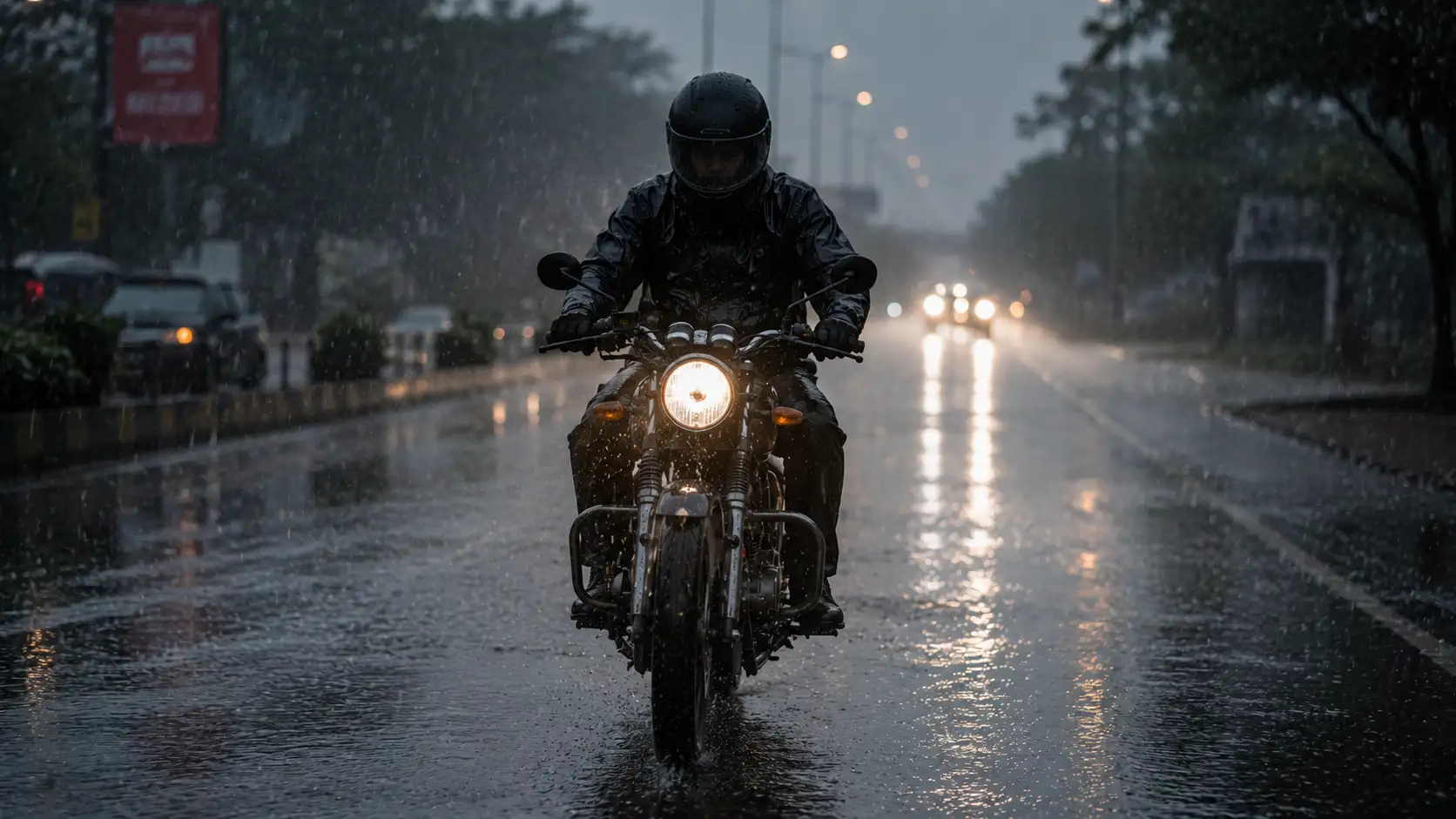
Whether you ride a motorcycle or a scooter, following a few monsoon bike riding tips can help you stay safe throughout the rainy season. Here are five essential precautions every rider should keep in mind.
To maintain better control of your vehicle:
Also Read: Volkswagen Tayron Life Arrives In India: Check Price, Features And Engine
To stay visible and improve safety:
Water beneath the tyres can also lead to aquaplaning, where the tyres lose contact with the road surface.
For safer monsoon road safety :
Whether you ride a motorcycle or a scooter, following a few monsoon bike riding tips can help you stay safe throughout the rainy season. Here are five essential precautions every rider should keep in mind.
1. Slow Down on Slippery Roads
One of the biggest hazards during the monsoon is the slippery road surface. The first spell of rain mixes with dust, oil and dirt, creating a thin layer that reduces tyre grip.To maintain better control of your vehicle:
- Ride at a moderate speed.
- Avoid sudden acceleration or sharp turns.
- Maintain a safe distance from vehicles ahead.
- Wear a certified full-face helmet along with gloves, knee guards and other protective gear.
Also Read: Volkswagen Tayron Life Arrives In India: Check Price, Features And Engine
2. Improve Visibility During Heavy Rain
Reduced visibility is another major challenge while bike riding in rain . Heavy showers, mist and splashing water from other vehicles can make it difficult to see the road ahead.To stay visible and improve safety:
- Switch on your headlights, even during daytime.
- Use a helmet with an anti-fog visor.
- Wear reflective jackets or clothing.
- Reduce your speed whenever visibility becomes poor.
3. Avoid Waterlogged Roads and Aquaplaning
Riding through standing water can be risky. Deep puddles often hide potholes, debris or uneven surfaces that may cause accidents.Water beneath the tyres can also lead to aquaplaning, where the tyres lose contact with the road surface.
For safer monsoon road safety :
- Avoid flooded roads whenever possible.
- Ride at a steady, moderate speed.
- Do not apply sudden brakes while crossing wet patches.
- If water levels are high, consider walking your bike through the flooded section instead of riding.
4. Watch Out for Potholes and Uneven Roads
Monsoon rains often expose or enlarge potholes, making daily commutes more hazardous.Next Story