
Electric Cars Take Centre Stage: Tata & MG Shine As New Players Step In!

India’s electric vehicle (EV) market is experiencing rapid expansion, with leading carmakers battling for dominance. In 2024, electric car sales saw a significant 20 percent increase, edging close to the 1 lakh-unit mark. This upward trajectory indicates a growing consumer shift towards EVs, despite infrastructure challenges. Tata Motors, long the market leader, faces increasing competition from brands like JSW MG Motor, Hyundai, and Mahindra, which are aggressively expanding their EV portfolios. With new launches, innovative pricing strategies, and expanding charging networks, India’s EV landscape is evolving faster than ever.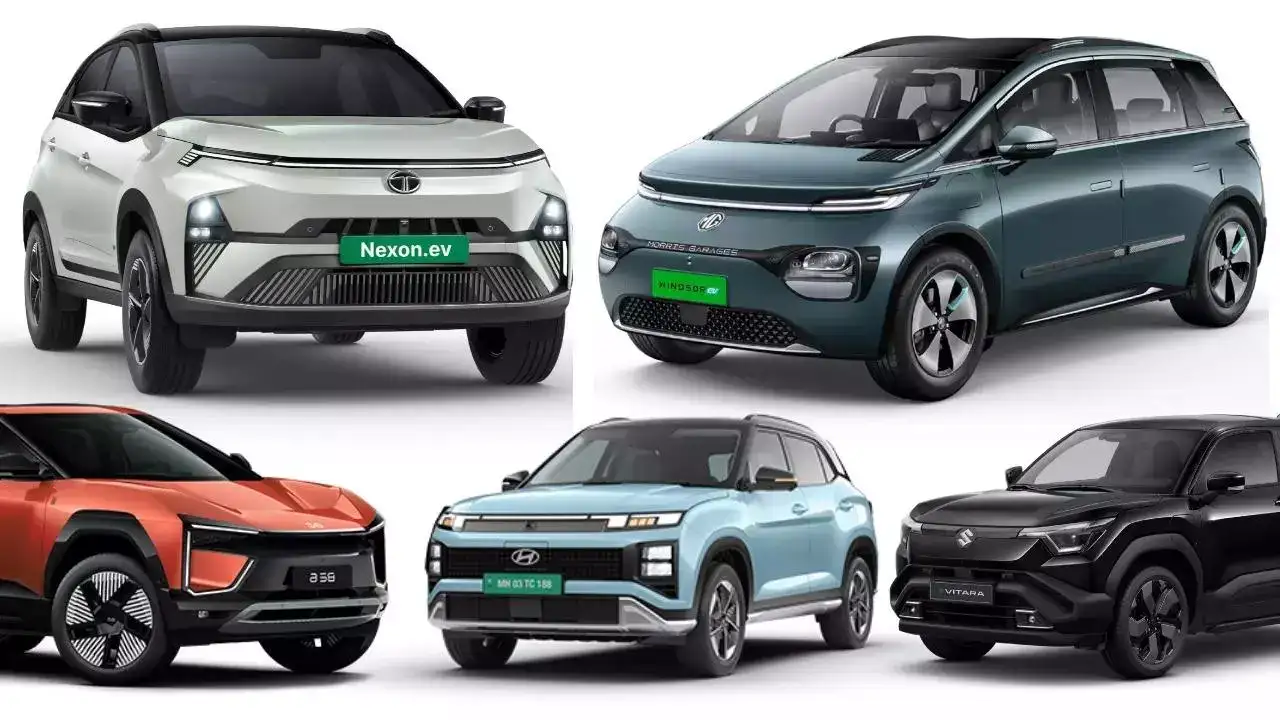
One of the key drivers of the EV boom in India has been JSW MG Motor, which recorded a staggering 125 percent growth in 2024. The brand sold 21,484 electric vehicles last year, nearly doubling its 2023 figures. A major factor behind this success has been the Windsor EV, which became the country’s best-selling electric car, crossing 10,000 units within three months of its launch. JSW MG also introduced a battery rental model that significantly lowered the initial cost of EV ownership, making electric cars more accessible to a wider audience. The success of this strategy prompted the company to roll out similar subscription plans for its other models, including the Comet and ZS EV. With these moves, JSW MG has cemented its position as one of the strongest challengers in the mass-market EV space.
Despite being the most established EV player in India, Tata Motors has seen its market share shrink to 38 percent. While it still offers the most extensive lineup—including the Tiago EV, Tigor EV, Nexon EV, Punch EV, and the upcoming Curvv EV—the company is facing stiff competition. In January 2025 alone, JSW MG Motor sold 4,455 EVs, with electric models now accounting for 70 percent of its total sales. This surge has given the company a 29 percent market share, tightening the gap with Tata Motors. MG is also expanding its portfolio by introducing premium EVs such as the Cyberster electric roadster and the M9 MPV under its new high-end brand, MG Select.
Mahindra & Mahindra is another brand making waves in the electric SUV space. With a market share of 16 percent in January 2025, Mahindra has capitalised on the growing demand for electric SUVs. The company’s aggressive push with the BE6 and XEV 9e models, alongside the XUV400 EV, has helped it carve out a strong position in the segment. These new models reflect Mahindra’s commitment to sustainable mobility while ensuring high performance and modern features.
Hyundai, a relative newcomer to India’s mass-market EV space, has made an immediate impact. The launch of the Creta Electric on January 17, 2025, has been a game-changer. The electrified version of the brand’s best-selling SUV has already secured an 11 percent market share in the EV segment. The overall sales performance of the Creta nameplate has also benefited, with January 2025 marking its best month ever—18,522 units sold, breaking the previous record set in October 2024. This impressive performance underscores the growing appeal of electric SUVs among Indian consumers.
Meanwhile, Maruti Suzuki is preparing to make its long-awaited entry into the EV segment with the upcoming e-Vitara. Unveiled at the Bharat Mobility Global Expo, this model is expected to be a game-changer. While its immediate impact on market dynamics remains to be seen, the addition of a Maruti-branded EV will undoubtedly intensify competition. Given Maruti’s dominant position in the overall car market, its foray into electric mobility could significantly shift market share among existing players.
Other brands such as Kia, Citroën, and BYD have maintained a smaller but notable presence, collectively holding a 4 percent market share as of January 2025. However, with the expected launch of several new models in the coming months, their contribution to the growing EV ecosystem could increase.
India’s EV market is now entering an exciting new phase. With manufacturers expanding their lineups, offering innovative financial models, and increasing the availability of charging infrastructure, consumer adoption is likely to accelerate. While Tata Motors continues to lead, the rise of MG Motor, Mahindra, Hyundai, and Maruti Suzuki signals an increasingly competitive landscape. The coming months will be crucial in determining whether Tata can maintain its dominance or if a new leader will emerge in the race for electric supremacy.
One of the key drivers of the EV boom in India has been JSW MG Motor, which recorded a staggering 125 percent growth in 2024. The brand sold 21,484 electric vehicles last year, nearly doubling its 2023 figures. A major factor behind this success has been the Windsor EV, which became the country’s best-selling electric car, crossing 10,000 units within three months of its launch. JSW MG also introduced a battery rental model that significantly lowered the initial cost of EV ownership, making electric cars more accessible to a wider audience. The success of this strategy prompted the company to roll out similar subscription plans for its other models, including the Comet and ZS EV. With these moves, JSW MG has cemented its position as one of the strongest challengers in the mass-market EV space.
Despite being the most established EV player in India, Tata Motors has seen its market share shrink to 38 percent. While it still offers the most extensive lineup—including the Tiago EV, Tigor EV, Nexon EV, Punch EV, and the upcoming Curvv EV—the company is facing stiff competition. In January 2025 alone, JSW MG Motor sold 4,455 EVs, with electric models now accounting for 70 percent of its total sales. This surge has given the company a 29 percent market share, tightening the gap with Tata Motors. MG is also expanding its portfolio by introducing premium EVs such as the Cyberster electric roadster and the M9 MPV under its new high-end brand, MG Select.
You may also like
- Jeep Celebrates 85 Years with Exclusive Meridian Anniversary Edition, Only 85 Units to Be Sold in India
- Hyundai i20 Crosses 15 Lakh Sales in India, Strengthens Its Position in the Premium Hatchback Segment
- New Renault Duster Adventure Edition Launched at ₹12.99 Lakh: Special SUV Built for Off-Road Lovers
- Car Flooded During Monsoon? Don't Panic—Follow These Steps to Prevent Expensive Damage
- Nissan Tekton SUV Launched at ₹10.49 Lakh: Premium Features, Powerful Engines, and Creta Rivalry
Mahindra & Mahindra is another brand making waves in the electric SUV space. With a market share of 16 percent in January 2025, Mahindra has capitalised on the growing demand for electric SUVs. The company’s aggressive push with the BE6 and XEV 9e models, alongside the XUV400 EV, has helped it carve out a strong position in the segment. These new models reflect Mahindra’s commitment to sustainable mobility while ensuring high performance and modern features.
Hyundai, a relative newcomer to India’s mass-market EV space, has made an immediate impact. The launch of the Creta Electric on January 17, 2025, has been a game-changer. The electrified version of the brand’s best-selling SUV has already secured an 11 percent market share in the EV segment. The overall sales performance of the Creta nameplate has also benefited, with January 2025 marking its best month ever—18,522 units sold, breaking the previous record set in October 2024. This impressive performance underscores the growing appeal of electric SUVs among Indian consumers.
Meanwhile, Maruti Suzuki is preparing to make its long-awaited entry into the EV segment with the upcoming e-Vitara. Unveiled at the Bharat Mobility Global Expo, this model is expected to be a game-changer. While its immediate impact on market dynamics remains to be seen, the addition of a Maruti-branded EV will undoubtedly intensify competition. Given Maruti’s dominant position in the overall car market, its foray into electric mobility could significantly shift market share among existing players.
Other brands such as Kia, Citroën, and BYD have maintained a smaller but notable presence, collectively holding a 4 percent market share as of January 2025. However, with the expected launch of several new models in the coming months, their contribution to the growing EV ecosystem could increase.
India’s EV market is now entering an exciting new phase. With manufacturers expanding their lineups, offering innovative financial models, and increasing the availability of charging infrastructure, consumer adoption is likely to accelerate. While Tata Motors continues to lead, the rise of MG Motor, Mahindra, Hyundai, and Maruti Suzuki signals an increasingly competitive landscape. The coming months will be crucial in determining whether Tata can maintain its dominance or if a new leader will emerge in the race for electric supremacy.






Loving Newspoint? Download the app now
