
How the Maruti 800 Put Middle-Class India Behind the Wheel

In 1983, the average wait for a car in India stretched past four years. A family put its name on a list, paid a deposit, and then watched the calendar. The car that finally arrived was often the same Ambassador or Premier Padmini that had been on the road since their parents were young. The Maruti 800 ended that world, not gradually but in roughly one decade.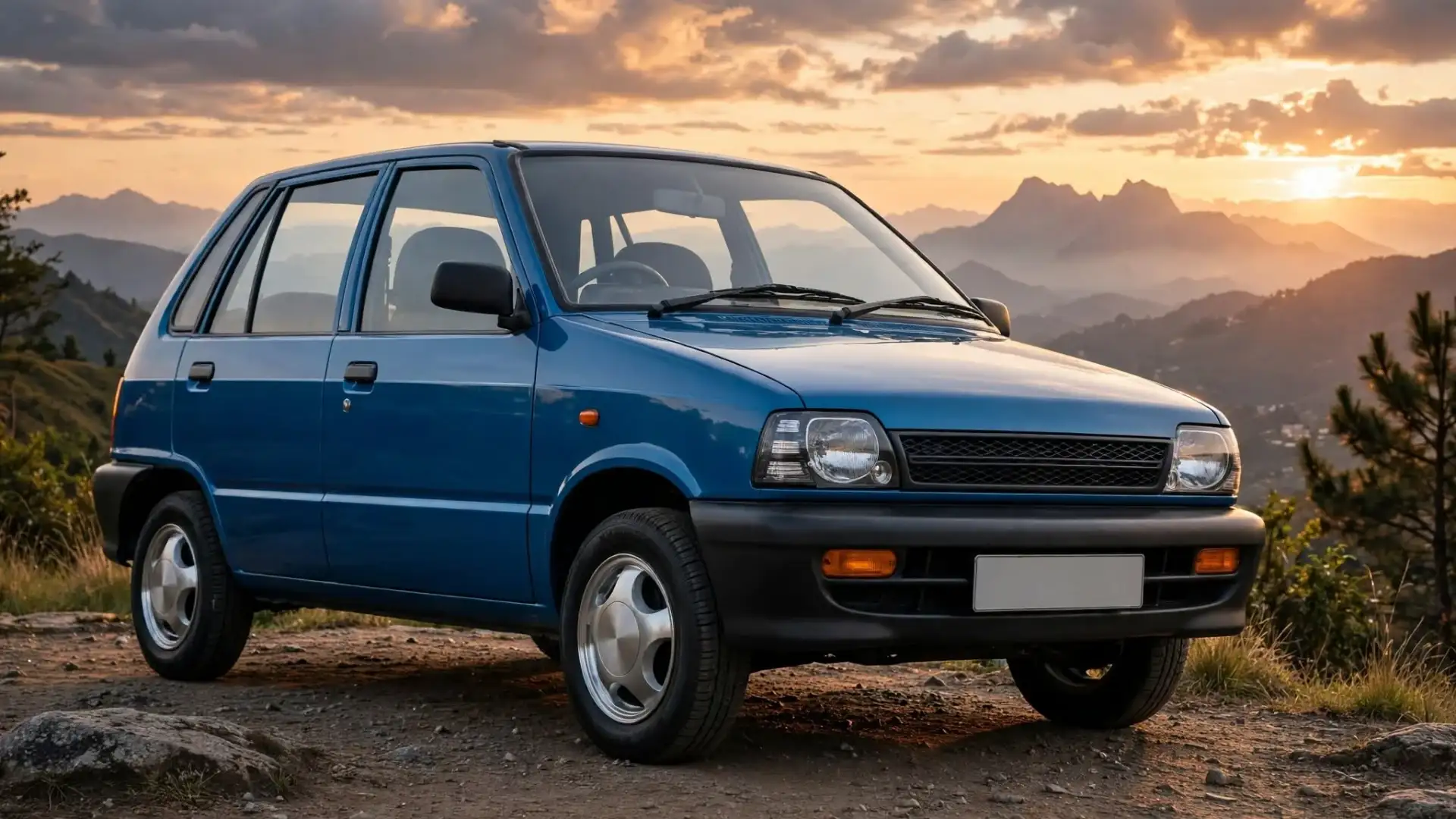
A Joint Venture India Almost Did Not Take
The partnership between the Indian government and Suzuki Motor Corporation was not inevitable. After Sanjay Gandhi's original Maruti project collapsed, the government held a tender for a collaborator. Suzuki, then a relatively modest Japanese manufacturer best known for small vehicles, bid against far larger names. It won partly because it was willing to accept majority Indian government ownership in the early years and partly because its engineering was already optimised for exactly the kind of small, fuel-efficient car a price-sensitive market needed. The Maruti Udyog plant at Gurgaon was built on a timeline that Indian industry at the time considered implausible. The first 800 rolled off the line in December 1983.What Made the 800 Different From Everything Before It
The cars that preceded it were heavy, mechanically simple in an old way, and expensive to run. The Ambassador was derived from a Morris Oxford design that dated to the 1950s. The Premier Padmini traced its lineage to a Fiat 1100. Both were robust in the sense that they could be repaired by a roadside mechanic with basic tools, but neither was engineered for economy. The Maruti 800 brought a then-modern 796cc three-cylinder engine, a unibody construction that was lighter than a body-on-frame design, and fuel consumption figures that made the arithmetic of daily use genuinely different for a salaried household. The car was also narrow enough to fit lanes and parking situations that the Ambassador simply could not manage in a city that had not been built for wide vehicles.You may also like
- Maserati Grecale: 2026 facelift launches at Rs 1.14 crore, but will the new V6 variant impress?
- Can You Drive at 144 kmph Without Getting a Challan? Nitin Gadkari's Highway Speeding Remark Explained
- Has Your Car Crossed 2 Lakh Kilometres? Don't Sell It Just Yet! Here's What Actually Determines a Car's Life
- 100% Ethanol-Powered Cars Get Government Approval, But Where Will the Fuel Come From? Supreme Court Raises Big Questions
- Maruti Suzuki e-Vitara Creates History in Global Markets! Exports Cross 50,000 Units as Indian EV Demand Grows
The Price Point That Changed the Calculation
At launch, the 800 was priced at roughly forty thousand rupees, which placed it well below the Ambassador and the Padmini. More important than the sticker price was what it cost to run. Lower fuel consumption per kilometre meant that a family which had calculated ownership as financially out of reach found the monthly numbers shifting. Maruti also built a service network with a speed and geographic spread that India had not seen in the automobile sector. A car that could be serviced predictably, in a city or a smaller town, for a known cost, was a fundamentally different proposition from one that depended on finding the right mechanic. The combination of purchase price, running cost, and service access was what moved the 800 from aspiration to transaction for a class of buyer that had never been in that conversation before.What It Did to the Idea of the Middle-Class Family
Before the 800, the visual markers of middle-class arrival in India were a telephone connection, a refrigerator, a scooter, and eventually a television. The car sat above all of these, in a category most households did not expect to reach. The 800 moved the car into the same mental tier as the refrigerator, still a significant purchase, still something to plan for, but no longer something reserved for the genuinely wealthy or the government-employed with access to a loan scheme. Photographs from Indian neighbourhoods through the late 1980s and 1990s show the 800 parked outside flats that would have had scooters in the same spot five years earlier. The car became part of what a family in a mid-tier government job or a small business expected to own within a working lifetime. That expectation, once formed, did not go back.The Legacy Inside the Industry
The 800's success did something to Indian manufacturing that outlasted the car itself. It demonstrated that volume was achievable if the price point was right, which pulled component suppliers into a scale of operation they had not needed to reach before. Localisation, the share of parts made in India rather than imported, rose steadily through the 800's production run, partly because Suzuki required it under the joint venture terms and partly because the volume made domestic supply economically sensible for vendors. The supplier ecosystem that grew around Maruti Udyog in Gurgaon and its surrounding districts became the foundation on which later Indian automotive manufacturing was built. Engineers who trained on the 800's production line moved into roles across the industry. The car was, in this sense, an education as much as a product.





Loving Newspoint? Download the app now
