
Why Scooters Have Smaller Wheels Than Motorcycles

Spin a scooter wheel next to a motorcycle wheel and the gap is striking. A typical scooter rolls on 10- to 12-inch wheels. A standard motorcycle runs on 17 inches at the rear, sometimes more. That difference is not a styling choice. It follows directly from how each machine is built and what it is built to do.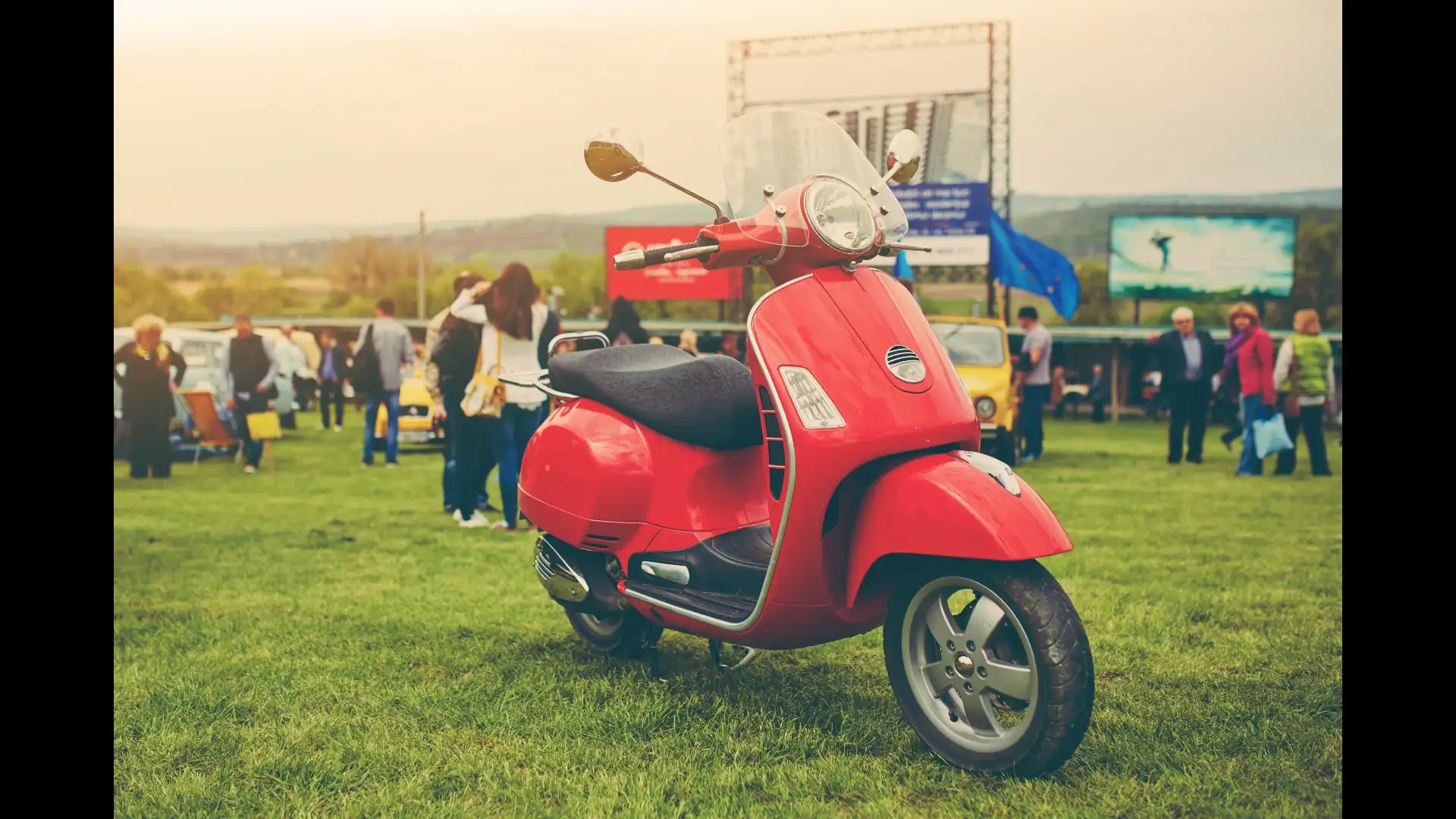
A scooter works on a different principle. The engine mounts directly at the rear axle, usually as a single swingarm unit that pivots with the wheel. There is no chain running to a separate wheel. Because the engine travels with the wheel, the whole drivetrain stays compact. A large wheel would make this swingarm unit heavy, long, and awkward to pivot. A small wheel keeps it light and tight.
This geometry also lowers the centre of gravity. A rider standing still at a traffic light can touch the ground easily. That quality matters in dense city traffic, where a scooter stops and starts dozens of times on a short commute.
Small wheels also have less rotational mass, which means they spin up faster. In stop-and-go city riding, that quick acceleration from rest is genuinely useful. The trade-off is stability at higher speeds. A larger wheel gyroscopes more strongly, resisting changes in direction and staying more planted in a straight line. This is why motorcycles feel more settled on a highway and scooters feel more nimble in a lane.
Motorcycle tyres, especially at the rear, are wide too, but they are engineered to work with the lean angles a longer, lower machine can achieve. A scooter rarely leans as far in a corner, so its tyre profile is tuned for upright grip rather than mid-corner grip.
The wheel size is not an accident of fashion. It is the physical signature of what each machine decided to be.
The Engine Sits in Different Places
On a motorcycle, the engine mounts low in a central frame, with a long chain or shaft connecting it to the rear wheel. That layout needs a large rear wheel to keep the chain geometry manageable and to put enough rubber on the road for the power going through it. The frame stretches long, the wheelbase grows, and big wheels fill the space naturally.A scooter works on a different principle. The engine mounts directly at the rear axle, usually as a single swingarm unit that pivots with the wheel. There is no chain running to a separate wheel. Because the engine travels with the wheel, the whole drivetrain stays compact. A large wheel would make this swingarm unit heavy, long, and awkward to pivot. A small wheel keeps it light and tight.
The Step-Through Frame Demands a Specific Geometry
The flat floorboard that defines a scooter is not just a comfort feature. It is a structural consequence. To create that low, flat platform between the handlebars and the seat, the frame dips down in the middle. Large wheels would push the frame up, killing the floorboard. Small wheels sit neatly under the bodywork and let the platform stay low.This geometry also lowers the centre of gravity. A rider standing still at a traffic light can touch the ground easily. That quality matters in dense city traffic, where a scooter stops and starts dozens of times on a short commute.
You may also like
- Maserati Grecale: 2026 facelift launches at Rs 1.14 crore, but will the new V6 variant impress?
- Can You Drive at 144 kmph Without Getting a Challan? Nitin Gadkari's Highway Speeding Remark Explained
- Has Your Car Crossed 2 Lakh Kilometres? Don't Sell It Just Yet! Here's What Actually Determines a Car's Life
- 100% Ethanol-Powered Cars Get Government Approval, But Where Will the Fuel Come From? Supreme Court Raises Big Questions
- Maruti Suzuki e-Vitara Creates History in Global Markets! Exports Cross 50,000 Units as Indian EV Demand Grows
What Small Wheels Give Up and What They Gain
A larger wheel rolls over surface irregularities more smoothly. The geometry is straightforward: a bigger circle bridges a pothole that a smaller circle falls into. Motorcycles with 17-inch wheels absorb road imperfections with less drama. Scooter riders feel more of what the road is doing, which is one reason scooters tend to have softer suspension tuned to compensate.Small wheels also have less rotational mass, which means they spin up faster. In stop-and-go city riding, that quick acceleration from rest is genuinely useful. The trade-off is stability at higher speeds. A larger wheel gyroscopes more strongly, resisting changes in direction and staying more planted in a straight line. This is why motorcycles feel more settled on a highway and scooters feel more nimble in a lane.
Tyre Width Plays a Role Too
Wheel diameter and tyre width are related but separate decisions. Scooters typically run wider tyres relative to their wheel diameter than motorcycles do, because the short wheelbase and upright riding position put more weight directly over the contact patch. A wider tyre spreads that load and gives the brakes more rubber to work with.Motorcycle tyres, especially at the rear, are wide too, but they are engineered to work with the lean angles a longer, lower machine can achieve. A scooter rarely leans as far in a corner, so its tyre profile is tuned for upright grip rather than mid-corner grip.
The City Tool and the Road Tool
Every dimension on a scooter points at one job: moving one person through a crowded city quickly, cheaply, and with the least possible effort. Small wheels are part of that answer. They make the machine lighter, more compact, and easier to handle at low speeds. A motorcycle trades some of that city ease for stability, range comfort, and the ability to carry its engine's power to the road at speed.The wheel size is not an accident of fashion. It is the physical signature of what each machine decided to be.






Loving Newspoint? Download the app now
