
Delhi-NCR Air Pollution in October: How to Read AQI and Reduce Exposure

Air quality in northern India can change considerably during October as the monsoon withdraws and weather conditions shift. Rain and stronger winds can temporarily disperse pollutants, while calmer conditions may allow emissions to accumulate closer to the ground.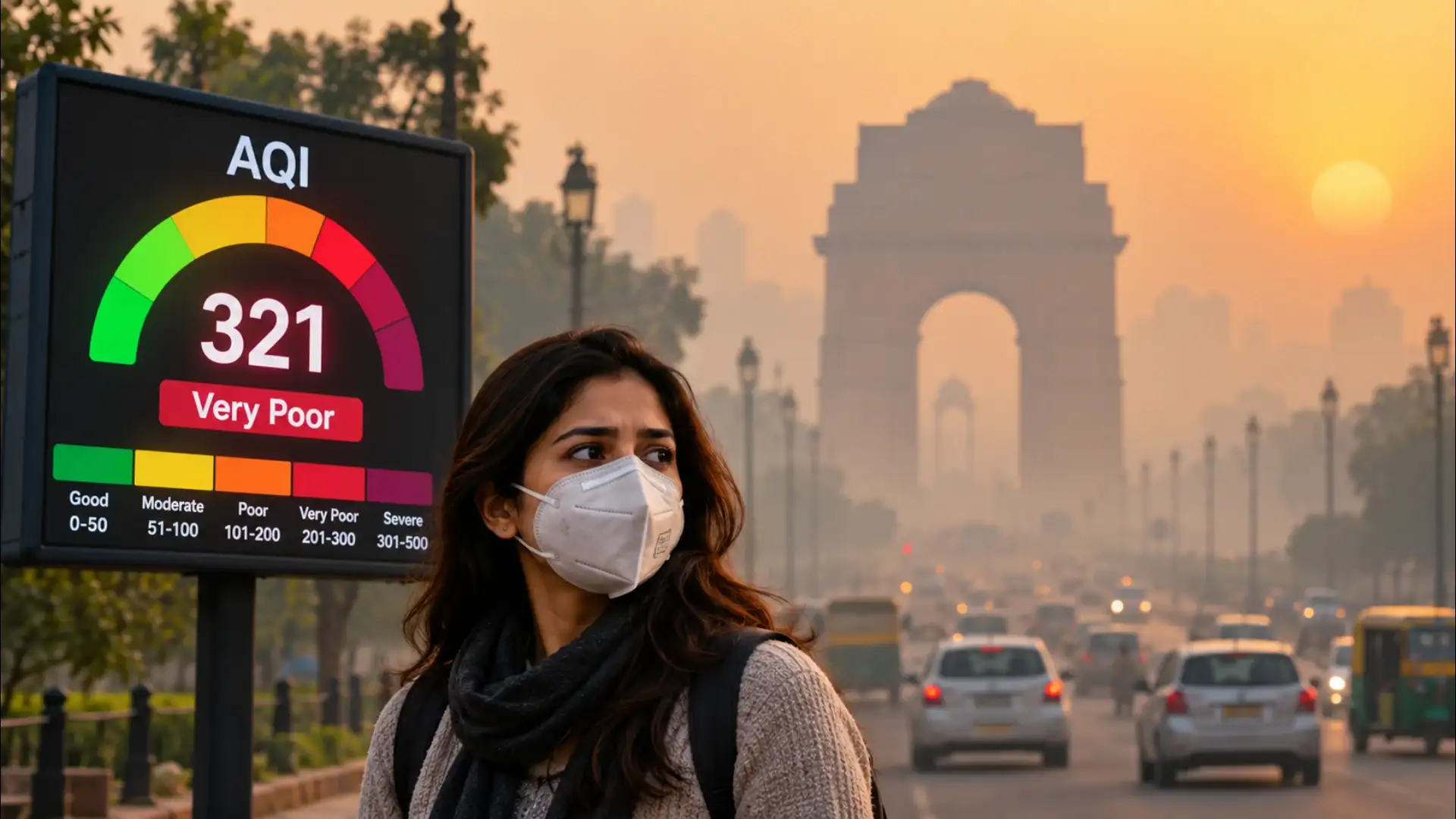
Delhi recorded an unusually polluted start to October 2026, according to reports based on official monitoring data. Subsequent rainfall brought temporary improvement. These changes illustrate why residents should check current air quality rather than rely on a single reading from an earlier day. Understanding the Air Quality Index can help people make more informed decisions about outdoor activities.
Vehicles, construction activity, industrial sources and other combustion processes contribute pollutants. Wind speed, rainfall and atmospheric conditions influence how quickly those pollutants disperse.
During the post-monsoon period, changes in wind and rainfall can affect pollution levels. Regional agricultural burning may also contribute to pollution episodes, although its contribution varies by place and time.
Delhi's average AQI was reported at 187 on 4 October, while rain later in the month temporarily improved conditions.
A change in weather can provide short-term relief, but it does not remove the underlying sources of pollution.
Under the Indian classification system, readings from 0 to 50 are categorised as good, 51 to 100 as satisfactory, 101 to 200 as moderate, 201 to 300 as poor, 301 to 400 as very poor and 401 to 500 as severe.
The category provides a useful overview, but individual pollutants and local monitoring stations can differ.
Check current readings from official monitoring sources and pay attention to changes throughout the day rather than relying on an old screenshot or a citywide average alone.
People with asthma or other respiratory and cardiovascular conditions should follow their clinician's advice and any relevant public health guidance.
Keep indoor spaces as free from smoke and dust as practical. Avoid burning waste, and ensure that cooking and ventilation arrangements do not create additional indoor pollution.
A well-fitting particulate respirator may reduce exposure to fine particles when used correctly, but it does not eliminate every pollutant or replace broader pollution-control measures.
Air quality can improve temporarily after rain and deteriorate again when weather conditions change. Regular monitoring is therefore more useful than assuming that one cleaner day signals the end of the seasonal problem.
Reducing pollution ultimately requires action on its sources, while informed daily decisions can help individuals manage exposure in the meantime.
Delhi recorded an unusually polluted start to October 2026, according to reports based on official monitoring data. Subsequent rainfall brought temporary improvement. These changes illustrate why residents should check current air quality rather than rely on a single reading from an earlier day. Understanding the Air Quality Index can help people make more informed decisions about outdoor activities.
Why Does Air Quality Change in October?
Air pollution depends on both emissions and weather.Vehicles, construction activity, industrial sources and other combustion processes contribute pollutants. Wind speed, rainfall and atmospheric conditions influence how quickly those pollutants disperse.
During the post-monsoon period, changes in wind and rainfall can affect pollution levels. Regional agricultural burning may also contribute to pollution episodes, although its contribution varies by place and time.
Delhi's average AQI was reported at 187 on 4 October, while rain later in the month temporarily improved conditions.
A change in weather can provide short-term relief, but it does not remove the underlying sources of pollution.
How Should You Read the AQI?
India's Air Quality Index converts measurements of several pollutants into a scale that communicates overall air quality.Under the Indian classification system, readings from 0 to 50 are categorised as good, 51 to 100 as satisfactory, 101 to 200 as moderate, 201 to 300 as poor, 301 to 400 as very poor and 401 to 500 as severe.
You may also like
- Car spins out of control, crashes into divider on Purvanchal Expressway; father, son killed
- Maharashtra's monsoon deficit raises concern as El Niño threatens warmer winter, rabi crops
- Astha Kunj files: The hidden crime corridor Delhi can't seem to fix
- Brajesh Pathak Inspects Moradabad Hospital, Orders Immediate Surgery on Mother's Plea
- CM Yogi Leads Sacred 3-Day Navratri Rituals and Vijayadashami Yatra in Gorakhpur
The category provides a useful overview, but individual pollutants and local monitoring stations can differ.
Check current readings from official monitoring sources and pay attention to changes throughout the day rather than relying on an old screenshot or a citywide average alone.
How Can Residents Reduce Exposure?
When pollution levels are elevated, consider moving strenuous outdoor exercise indoors or to a time and location with better air quality.People with asthma or other respiratory and cardiovascular conditions should follow their clinician's advice and any relevant public health guidance.
Keep indoor spaces as free from smoke and dust as practical. Avoid burning waste, and ensure that cooking and ventilation arrangements do not create additional indoor pollution.
A well-fitting particulate respirator may reduce exposure to fine particles when used correctly, but it does not eliminate every pollutant or replace broader pollution-control measures.
When Should You Seek Medical Advice?
Seek medical attention if you experience significant breathing difficulty, chest pain or other concerning symptoms. People with existing medical conditions should follow their individual care plans.Air quality can improve temporarily after rain and deteriorate again when weather conditions change. Regular monitoring is therefore more useful than assuming that one cleaner day signals the end of the seasonal problem.
Reducing pollution ultimately requires action on its sources, while informed daily decisions can help individuals manage exposure in the meantime.






Loving Newspoint? Download the app now
