
Why Mumbai's Marine Drive Is Called the Queen's Necklace

Mumbai has a habit of giving its landmarks two lives, one in daylight and one after dark. Marine Drive lives both, but it earned its famous nickname only after sunset, when the city stops moving long enough to see what it has built.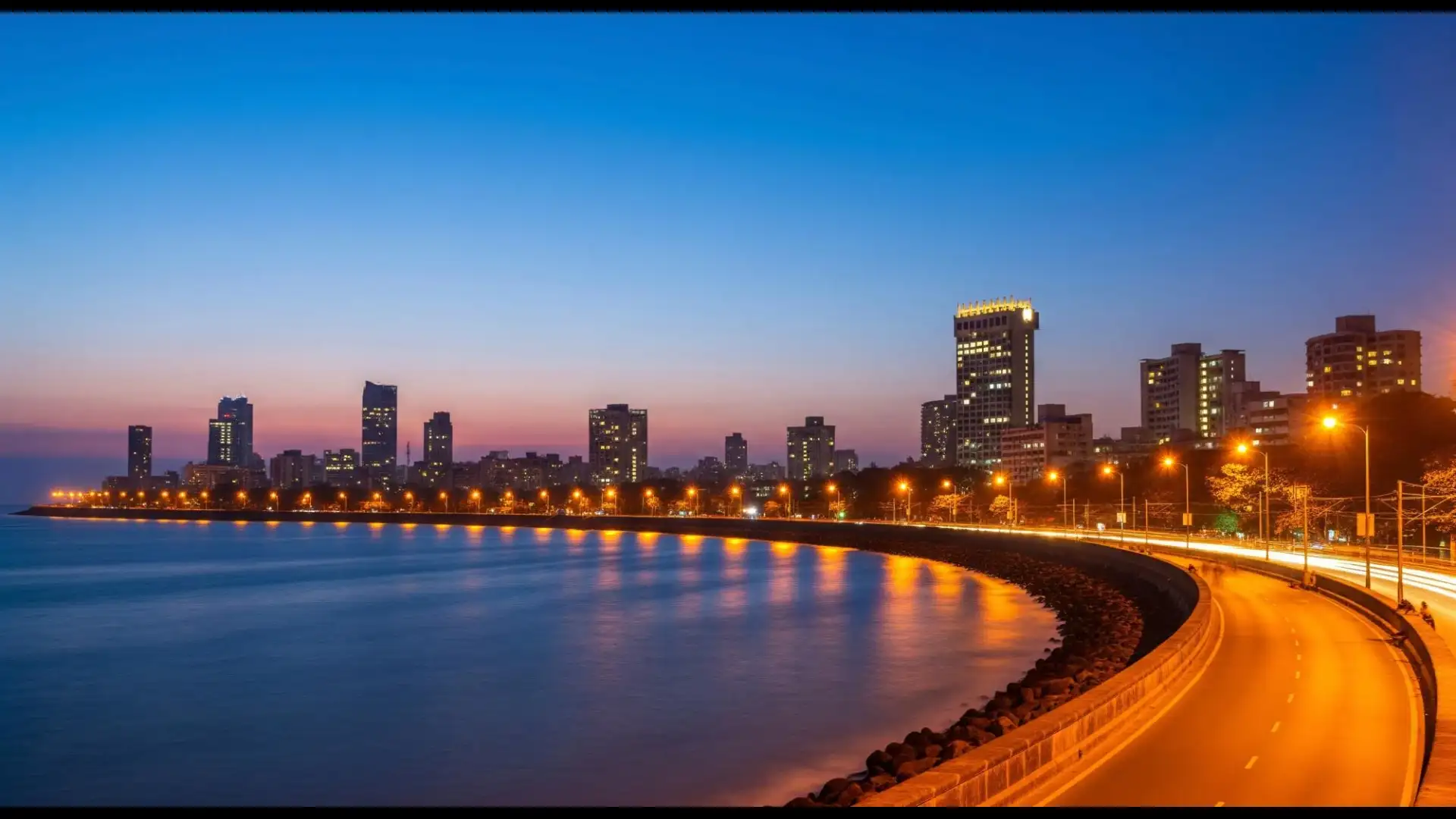
The road itself follows the western shoreline of South Mumbai in a sweeping C-shape, running roughly three and a half kilometres from the northern end near Chowpatty Beach down to Nariman Point. It was reclaimed from the sea in the 1920s and 1930s, part of the Backbay Reclamation Scheme that added a long, flat strip of land to the edge of the island city.
The construction was not without controversy, costs ran over, timelines slipped, and the sea pushed back in places it was not invited, but what emerged was one of the few genuinely wide, open roads in a city that has always been pressed for space.
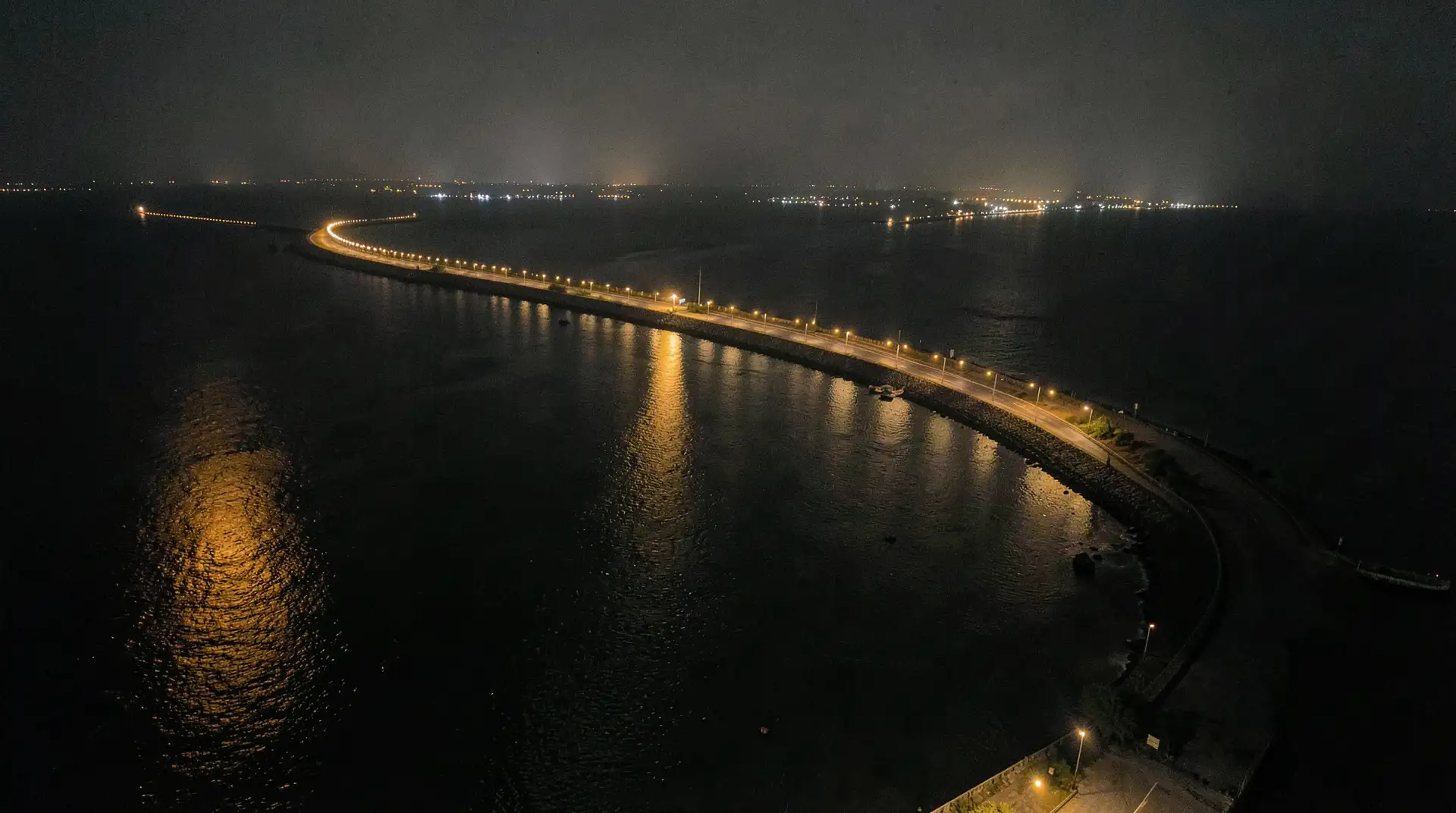
Seen from the upper floors of the buildings along the road, or from the hills of Malabar Hill to the north, the lights traced the exact shape of a necklace laid against dark velvet. The sea was the velvet. The lights were the stones. Nobody needed to explain the resemblance.
The name Queen's Necklace settled into common use over the decades following the road's completion. It was never official, no municipal resolution, no signboard, but it became the name that stuck, the one a taxi driver understood and a schoolchild knew.
The queen in the name is sometimes said to refer to the city itself, Mumbai as a queen of the western coast, wearing her lights as an ornament. Others simply mean the shape: a necklace, belonging to whoever is grand enough to wear it.
The promenade that runs along the sea wall is where the city comes to sit. There are no shops on the promenade side, no stalls, no hawkers permitted on the wall itself. It is one of the few stretches in Mumbai where the only thing to do is look at the water.
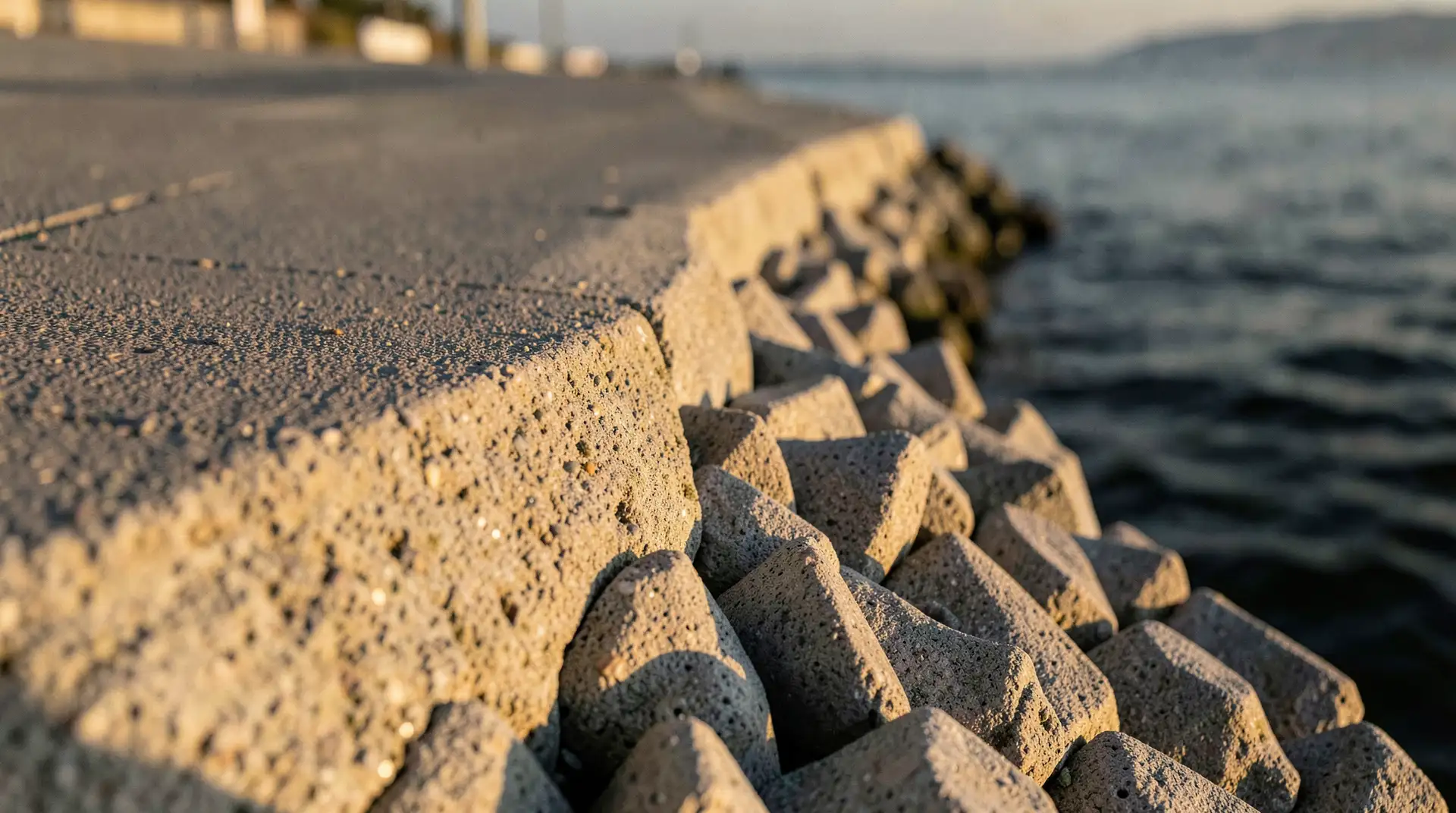
People come for that reason, and for the breeze, which arrives off the Arabian Sea with a consistency the rest of the city cannot offer. The tetrapods, those grey four-legged concrete forms piled along the base of the sea wall, are a fixture of the view.
They were placed to absorb wave energy and protect the reclaimed land behind them, and they have been there long enough that most people assume they were always part of the design.
By midday it is a commuter road, cars moving between Nariman Point's offices and the rest of the city. The evening brings a different crowd entirely: couples, families, old men with nowhere particular to be, vendors on the pavement side, and the particular quality of light that comes when the sun drops into the Arabian Sea directly ahead.
It is at night that the name reasserts itself. The arc of lights reads clearly from any elevation, and from the road itself the effect is different, you are inside the necklace, moving along one of its stones, the darkness of the sea on one side and the lit facades of the Art Deco buildings on the other. The stretch feels longer than its three-and-a-half-kilometre span because the curve of the road keeps the far end just out of sight.
Marine Drive connects these two Mumbais, the formal and the informal, without belonging entirely to either.
The road has appeared in Hindi cinema so many times that it functions as a shorthand for the city itself. A shot of Marine Drive at night tells an audience immediately where the story is set, what kind of city this is, and something about the mood of the scene, romantic, melancholy, restless, arriving. No other stretch of road in Mumbai carries that weight.
The Queen's Necklace is not a monument with a founding date or a plaque with a name. It is a road that became something else at night, and a name that arrived because the thing it described was too obvious to ignore. That is usually how the best names come.
The road itself follows the western shoreline of South Mumbai in a sweeping C-shape, running roughly three and a half kilometres from the northern end near Chowpatty Beach down to Nariman Point. It was reclaimed from the sea in the 1920s and 1930s, part of the Backbay Reclamation Scheme that added a long, flat strip of land to the edge of the island city.
The construction was not without controversy, costs ran over, timelines slipped, and the sea pushed back in places it was not invited, but what emerged was one of the few genuinely wide, open roads in a city that has always been pressed for space.
The View That Named It
The nickname came from the view available only from above. When the sodium-vapour streetlamps along the seafront switched on each evening, the curve of the road lit up in a continuous arc of amber and gold.Seen from the upper floors of the buildings along the road, or from the hills of Malabar Hill to the north, the lights traced the exact shape of a necklace laid against dark velvet. The sea was the velvet. The lights were the stones. Nobody needed to explain the resemblance.
The name Queen's Necklace settled into common use over the decades following the road's completion. It was never official, no municipal resolution, no signboard, but it became the name that stuck, the one a taxi driver understood and a schoolchild knew.
The queen in the name is sometimes said to refer to the city itself, Mumbai as a queen of the western coast, wearing her lights as an ornament. Others simply mean the shape: a necklace, belonging to whoever is grand enough to wear it.
What the Road Is Made Of
The architecture along Marine Drive is one of the more coherent stretches of Art Deco building in Asia. In the 1930s and 1940s, as the reclaimed land filled in with residential blocks and commercial buildings, developers and architects reached for the style that was then modern and aspirational: flat rooftops, curved balconies, geometric ornamentation, and a palette that ran from cream to pale yellow to the particular shade of off-white that the sea air slowly turns to grey. The buildings were designed to face the water, and most of them still do.The promenade that runs along the sea wall is where the city comes to sit. There are no shops on the promenade side, no stalls, no hawkers permitted on the wall itself. It is one of the few stretches in Mumbai where the only thing to do is look at the water.
You may also like
- Man's hand chopped off in sickle assault, 2 injured as assailants open fire outside Pune court
- Tricky tusk: Karnataka may seek SC nod for elephant contraception
- Bhopal car owner loses consumer case as commission upholds Rs 1 lakh insurance payout against Rs 8.22 lakh repair estimate
- Delhi man orders 4 silver coins on Amazon for Rs 5,996, gets 2 packets of rakhis instead; platform refunds money instead of replacement, consumer commission orders Rs 20,000 compensation
- Karkala Mahamastakabhisheka: Will discuss additional funds with CM, says Rizwan Arshad
People come for that reason, and for the breeze, which arrives off the Arabian Sea with a consistency the rest of the city cannot offer. The tetrapods, those grey four-legged concrete forms piled along the base of the sea wall, are a fixture of the view.
They were placed to absorb wave energy and protect the reclaimed land behind them, and they have been there long enough that most people assume they were always part of the design.
The Road at Different Hours
Marine Drive changes character through the day in a way few roads in any city manage. Early morning brings walkers and runners, the road quiet enough that the sound of the sea is audible from the footpath.By midday it is a commuter road, cars moving between Nariman Point's offices and the rest of the city. The evening brings a different crowd entirely: couples, families, old men with nowhere particular to be, vendors on the pavement side, and the particular quality of light that comes when the sun drops into the Arabian Sea directly ahead.
It is at night that the name reasserts itself. The arc of lights reads clearly from any elevation, and from the road itself the effect is different, you are inside the necklace, moving along one of its stones, the darkness of the sea on one side and the lit facades of the Art Deco buildings on the other. The stretch feels longer than its three-and-a-half-kilometre span because the curve of the road keeps the far end just out of sight.
A Walk Worth Taking
The southern end at Nariman Point is where the financial district meets the sea. The northern end at Chowpatty is where the city meets itself, the beach that fills during festivals, the food stalls that have been selling bhel puri and pav bhaji for generations, the open ground where political rallies and public gatherings have always found space.Marine Drive connects these two Mumbais, the formal and the informal, without belonging entirely to either.
The road has appeared in Hindi cinema so many times that it functions as a shorthand for the city itself. A shot of Marine Drive at night tells an audience immediately where the story is set, what kind of city this is, and something about the mood of the scene, romantic, melancholy, restless, arriving. No other stretch of road in Mumbai carries that weight.
The Queen's Necklace is not a monument with a founding date or a plaque with a name. It is a road that became something else at night, and a name that arrived because the thing it described was too obvious to ignore. That is usually how the best names come.






Loving Newspoint? Download the app now
