
Hydrogen Train Route Update: Indian Railways May Extend Jind-Sonipat Train to Delhi

India's first hydrogen-powered passenger train could soon get a route extension to Delhi. Indian Railways is examining the possibility of extending the existing Jind-Sonipat hydrogen train service to the national capital, according to reports citing railway officials.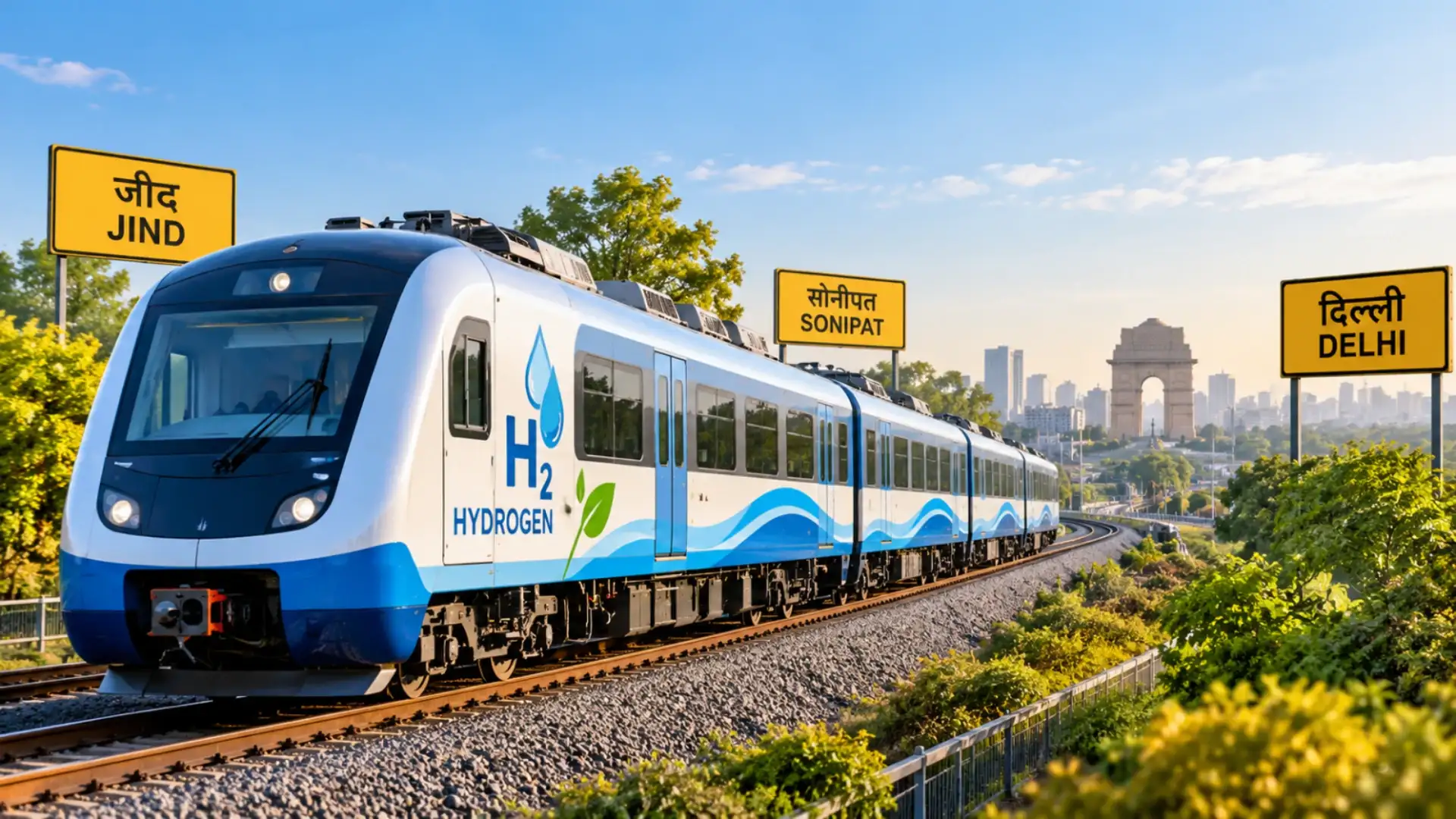
The development comes around two months after the train began commercial operations on the Jind-Sonipat section of Haryana. The proposed extension is being considered in the backdrop of relatively low passenger utilisation on the existing route.
The regular passenger service covers the route in around two hours. The train connects Jind Junction, Gohana and Sonipat, with several intermediate halts including Jind City, Pandu Pindara, Lalit Khera, Bhambhewa, Ishapur Kheri, Butana, Khandrai, Rabhra, Lath, Mohana and Barwasni.
The service operates as train numbers 74010 and 74009, with the morning service running from Jind towards Sonipat and the return service operating later from Sonipat to Jind.
Railway officials are therefore considering extending the service towards Delhi to improve its utilisation. One option being examined is an extension to Azadpur in Delhi.
The proposed Delhi extension would also give the hydrogen train access to a much larger commuter market. However, the plan is still under consideration and should not be treated as a confirmed new timetable or operational route.
At present, the hydrogen refuelling facility is located at Jind. This means the train's operational planning has to take refuelling infrastructure into account if the route is expanded.
One proposal involves extending the train from Sonipat to Panipat and then towards Safidon before returning to Jind, creating a circular route. The suggested circuit would cover around 180 km and could connect the hydrogen train with additional commuter and industrial areas.
This is a suggestion rather than an approved railway plan. The Delhi extension is the option currently being examined by railway authorities according to the reports.
The 10-coach train has two hydrogen driving power cars, with a combined power output of 2,400 kW. It can accommodate around 2,600 passengers and has a maximum operational speed of 75 kmph.
Indian Railways has also developed dedicated hydrogen storage and refuelling infrastructure at Jind. The system includes multiple safety mechanisms designed to detect hydrogen leaks, heat, flames and smoke, along with automatic shut-off systems and ventilation arrangements.
The proposed expansion would be another step in testing how hydrogen-powered trains can be integrated into India's wider passenger railway network. The existing Jind-Sonipat service is also serving as a technology demonstration for hydrogen-based rail mobility in the country.
The development comes around two months after the train began commercial operations on the Jind-Sonipat section of Haryana. The proposed extension is being considered in the backdrop of relatively low passenger utilisation on the existing route.
Hydrogen Train Currently Runs Between Jind and Sonipat
India's first hydrogen fuel cell train was officially flagged off from Jind, Haryana, on 17 July 2026. It currently operates on the approximately 89-km Jind-Sonipat section under Northern Railway's Delhi Division.The regular passenger service covers the route in around two hours. The train connects Jind Junction, Gohana and Sonipat, with several intermediate halts including Jind City, Pandu Pindara, Lalit Khera, Bhambhewa, Ishapur Kheri, Butana, Khandrai, Rabhra, Lath, Mohana and Barwasni.
The service operates as train numbers 74010 and 74009, with the morning service running from Jind towards Sonipat and the return service operating later from Sonipat to Jind.
Why Is the Hydrogen Train Route Being Extended to Delhi?
According to a PTI report published in September, the train has been carrying only around 40 to 60 passengers during its journey, despite having a capacity of approximately 2,600 passengers.Railway officials are therefore considering extending the service towards Delhi to improve its utilisation. One option being examined is an extension to Azadpur in Delhi.
The proposed Delhi extension would also give the hydrogen train access to a much larger commuter market. However, the plan is still under consideration and should not be treated as a confirmed new timetable or operational route.
How Far Can the Hydrogen Train Travel?
One factor supporting the possible Delhi extension is the train's operating range. Railway officials cited in the September report said the train can travel around 250 to 300 km on a full tank, while the distance between Delhi and Jind is roughly 130 km.You may also like
- 'Lover' Ashiq Ali in remand, gang-rape charges, homestay staffer who supplied alcohol detained: What we know about GU student Nimisha's death case
- Weather tomorrow: IMD warns of heavy rain in several regions; thunderstorms, gusty winds likely
- Two killed as pick up vehicle crashes into stationary lorry in Karnataka
- Come to Delhi for discussion instead of staging protest: Union Minister Pralhad Joshi to farmers
- High Court directs payment of Rs 2.8 crore compensation for injuries caused by falling tree branch
At present, the hydrogen refuelling facility is located at Jind. This means the train's operational planning has to take refuelling infrastructure into account if the route is expanded.
Another Route Option Is Also Being Discussed
Apart from Delhi, an alternative route within Haryana has also been suggested by local passengers.One proposal involves extending the train from Sonipat to Panipat and then towards Safidon before returning to Jind, creating a circular route. The suggested circuit would cover around 180 km and could connect the hydrogen train with additional commuter and industrial areas.
This is a suggestion rather than an approved railway plan. The Delhi extension is the option currently being examined by railway authorities according to the reports.
What Makes India's Hydrogen Train Different?
The train uses hydrogen fuel-cell technology to generate electricity onboard. Hydrogen reacts with oxygen inside the fuel cell to produce electricity that powers the train, with water vapour and heat as by-products.The 10-coach train has two hydrogen driving power cars, with a combined power output of 2,400 kW. It can accommodate around 2,600 passengers and has a maximum operational speed of 75 kmph.
Indian Railways has also developed dedicated hydrogen storage and refuelling infrastructure at Jind. The system includes multiple safety mechanisms designed to detect hydrogen leaks, heat, flames and smoke, along with automatic shut-off systems and ventilation arrangements.
Delhi Route Still Awaits Final Confirmation
For now, the Jind-Sonipat section remains the operational route for India's first hydrogen passenger train. Indian Railways is considering extending the service towards Delhi, with Azadpur mentioned as a possible destination, but a final timetable, stopping pattern and launch date for such an extension have not been officially announced.The proposed expansion would be another step in testing how hydrogen-powered trains can be integrated into India's wider passenger railway network. The existing Jind-Sonipat service is also serving as a technology demonstration for hydrogen-based rail mobility in the country.






Loving Newspoint? Download the app now
