
Amer or Amber: The Theories Behind the Name of Jaipur's Old Capital

The fort rises from a ridge above a narrow lake, its sandstone walls the colour of old honey in the late afternoon. Most visitors call it Amber Fort, the way guidebooks have for generations.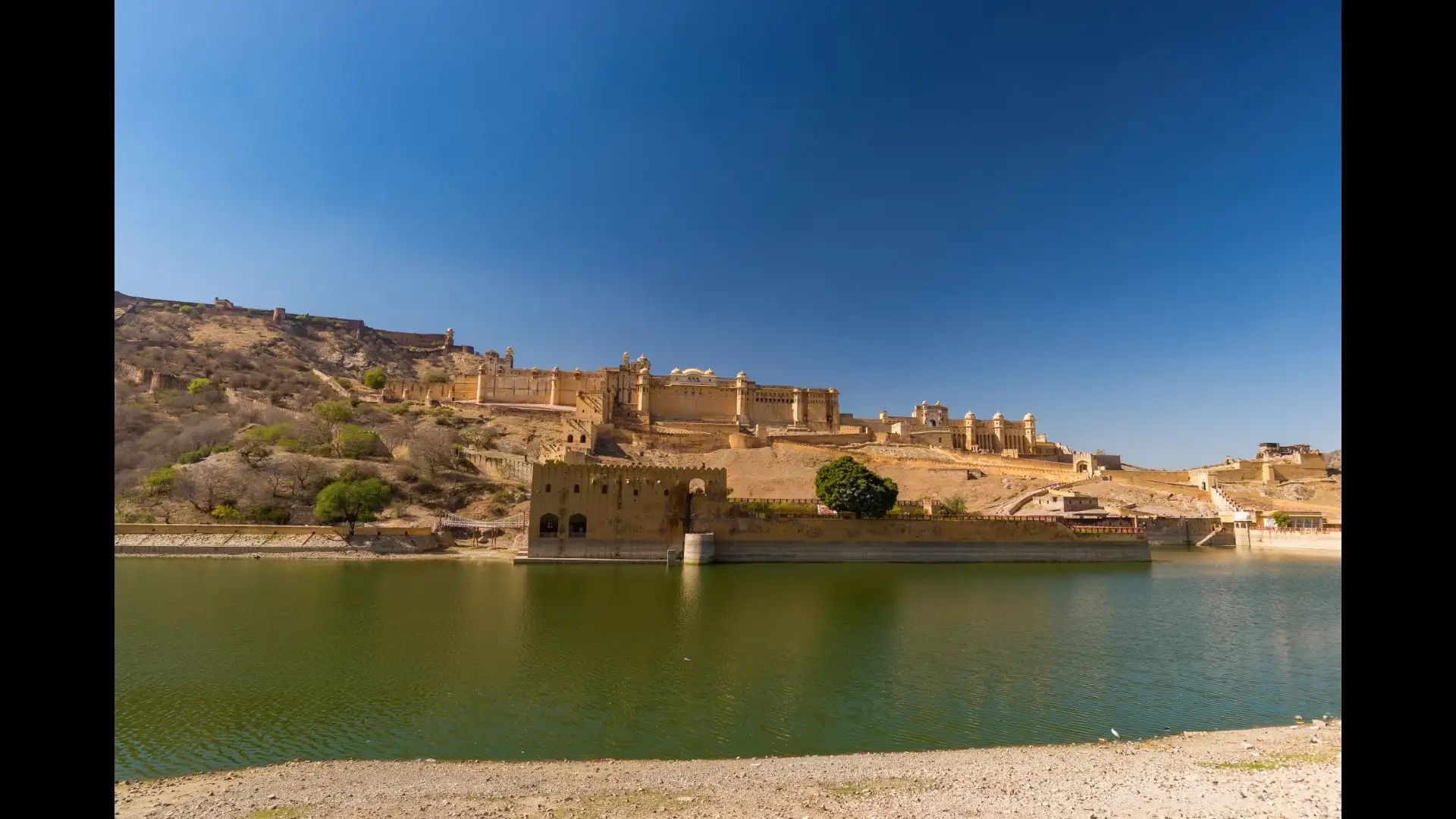
But the town below the fort, and the kingdom it once anchored, has always been Amer to those who live near it, and the gap between those two spellings hides a genuine argument about where the name came from.
In this reading, the settlement took its name from the deity at its centre, the way dozens of Indian towns carry a goddess's name folded inside their own. Amba became Amer through the ordinary drift of spoken language across centuries.
Some scholars connect the name to Ambarisha, a king from the Puranas associated with devotion and rulership, whose name the Minas may have carried into the place they settled. The argument is less about etymology and more about memory: the name as a trace of who was here first.
The Rajasthani vowel in Amer sits somewhere between the English short a and the long a, and Amber was the closest the Roman alphabet could get without a diacritic. This is not unusual: dozens of Indian place names carry colonial spellings that have since hardened into parallel official identities.
The Archaeological Survey of India uses Amber; the Rajasthan government's own heritage documents use both.
A fortified hilltop city named for its elevation is not a stretch, Rajasthan has several such etymologies. The weakness of this theory is that no inscription from the Kachwaha period has been found that spells the name in a way that clearly points to this root rather than to Amba.
Each theory reflects what the person telling it thought mattered most: the religious life of the place, its tribal history, the sound of its spoken name, or the Sanskrit vocabulary of its builders.
The fort on the ridge has been photographed from every angle. The name it carries has not been read nearly as carefully.
But the town below the fort, and the kingdom it once anchored, has always been Amer to those who live near it, and the gap between those two spellings hides a genuine argument about where the name came from.
The Goddess on the Hill
The most widely repeated origin traces the name to Amba, the mother goddess. A temple to Amba Mata sits within the fort complex itself, and the Mina tribe, who held this territory before the Kachhawahas arrived, are said to have worshipped her here long before any palace was built.In this reading, the settlement took its name from the deity at its centre, the way dozens of Indian towns carry a goddess's name folded inside their own. Amba became Amer through the ordinary drift of spoken language across centuries.
The Mina Clan and the Word Ambarisha
A second line of argument points not to the goddess but to the people. The Minas, one of the oldest communities in this part of Rajasthan, held Amer before the Kachwaha Rajputs established their capital here.You may also like
- Gangwar gets additional charge as BPSSC chairman
- DM sets 7-day deadline to clear Gaya roads of stray cattle
- PUC validity changed: What people of Delhi need to know about three-year certificates for newer BS-VI cars, six-month renewals for older vehicles, entry curbs and the crackdown on end-of-life vehicles
- Cyclone Akvan shifts towards Odisha, brings relief to Andhra Pradesh; only 3 districts remain under red alert
- Woman dies of burn injuries, ex-boyfriend held for abetment of suicide
Some scholars connect the name to Ambarisha, a king from the Puranas associated with devotion and rulership, whose name the Minas may have carried into the place they settled. The argument is less about etymology and more about memory: the name as a trace of who was here first.
Amber and the English Ear
The spelling Amber, which appears on most colonial-era maps and in most English-language accounts, is almost certainly a phonetic approximation by administrators and travellers who heard the local pronunciation and wrote down what it sounded like to them.The Rajasthani vowel in Amer sits somewhere between the English short a and the long a, and Amber was the closest the Roman alphabet could get without a diacritic. This is not unusual: dozens of Indian place names carry colonial spellings that have since hardened into parallel official identities.
The Archaeological Survey of India uses Amber; the Rajasthan government's own heritage documents use both.
Ambarikha and the Sanskrit Root
A fourth theory, favoured by some epigraphers who have worked on inscriptions from the region, connects the name to the Sanskrit ambarikha, meaning sky or atmosphere, with a secondary sense of height.A fortified hilltop city named for its elevation is not a stretch, Rajasthan has several such etymologies. The weakness of this theory is that no inscription from the Kachwaha period has been found that spells the name in a way that clearly points to this root rather than to Amba.
What the Ambiguity Tells Us
The honest answer is that no single theory has been settled by a document or an inscription that everyone accepts. What survives is a name that has been in use for at least a thousand years, that predates the Kachwaha kingdom, and that has accumulated explanations the way old cities accumulate layers.Each theory reflects what the person telling it thought mattered most: the religious life of the place, its tribal history, the sound of its spoken name, or the Sanskrit vocabulary of its builders.
The fort on the ridge has been photographed from every angle. The name it carries has not been read nearly as carefully.






Loving Newspoint? Download the app now
