
How Do Erasers Actually Work? The Hidden Science Behind Removing Pencil Marks Explained

Understanding how do erasers actually work reveals that something as simple as correcting a pencil mark is actually a fascinating mix of physics, chemistry, and material science. On the surface, erasing looks effortless - but under a microscope, it involves breaking microscopic bonds, transferring carbon particles, and even controlled surface wear.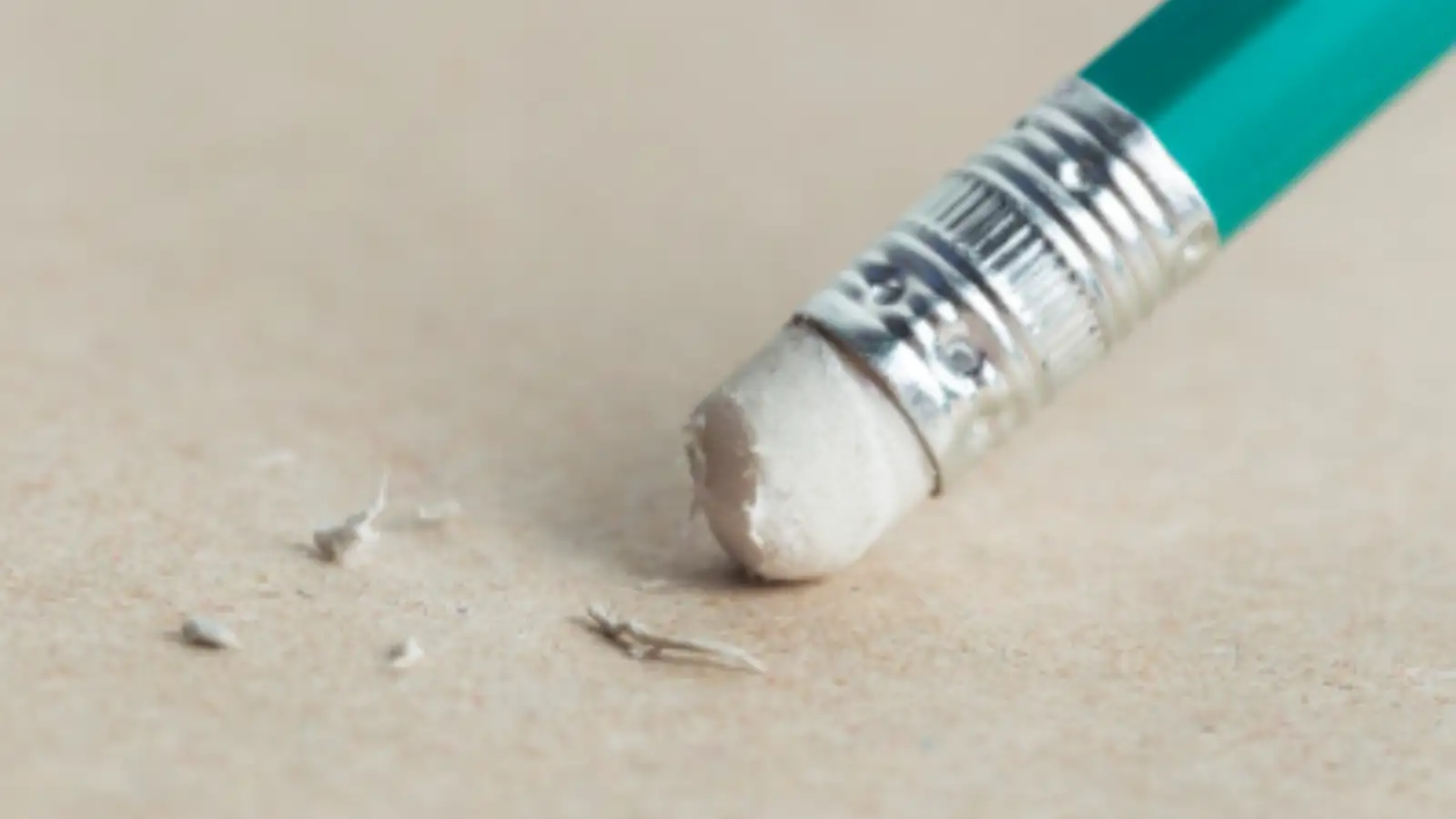
A pencil mark is not just “paint” sitting on paper. It is a layer of graphite particles lodged inside the tiny fibre network of paper. When you use an eraser, you are not wiping it away - you are engineering a microscopic cleanup process driven by friction and adhesion.
The hidden jungle inside paper
Paper may look smooth to the naked eye, but under magnification it resembles a dense forest of intertwined cellulose fibres. These fibres create countless tiny gaps and valleys.
When a pencil moves across the page, graphite particles get trapped in these spaces. Instead of forming a solid layer, the mark becomes embedded in the paper’s structure - almost like dust settling into fabric.
Why pencil marks aren’t “stuck” forever
Pencil “lead” is not actually lead at all. It is made of graphite, a crystalline form of carbon. Graphite is built from stacked layers that slide easily over one another.
When you write, pressure from your hand causes these layers to shear off into tiny flakes. These flakes settle lightly into the paper fibres, held only by weak surface attractions - not strong chemical bonds. This is why pencil marks can be removed in the first place.
Van der Waals forces : the invisible grip
The interaction between graphite and paper is mainly controlled by van der Waals forces—very weak electrical attractions that occur when molecules temporarily develop slight positive and negative charges.
These forces are extremely delicate. Think of them as a soft “sticky hint” rather than a strong glue. Because of this weak grip, graphite particles can be dislodged with the right amount of friction and a better adhesive surface.
How erasers actually lift pencil marks
When you rub an eraser across paper, two key things happen at once:
Modern erasers are made from soft rubber or synthetic polymers that are slightly “stickier” to graphite than paper is. So instead of the graphite staying on the page, it transfers into the eraser material.
In simple terms, the eraser doesn’t erase - it relocates the pencil dust.
Why erasers leave behind crumbs
Those tiny rubber bits left on your notebook are not a flaw - they are essential to the process.
As the eraser picks up graphite, its surface becomes overloaded. To avoid smearing the mark back onto the paper, the material breaks away in small fragments. These crumbs trap the lifted graphite safely, allowing you to brush them off cleanly.
This process also involves micro-abrasion, meaning the eraser gently removes a very thin layer of paper fibres to access deeper graphite particles.
The delicate balance of surface wear
Erasing is a controlled form of wear. Too soft, and the graphite just smears. Too hard, and the paper gets damaged.
Material scientists study this balance closely in the field of tribology - the science of interacting surfaces in motion. The ideal eraser is designed to maximise graphite pickup while minimising damage to the paper beneath.
Why ink behaves completely differently
Ink is far more stubborn than pencil marks. Unlike graphite, liquid ink seeps into the paper fibres and bonds within their structure.
When you try to erase ink using a standard rubber eraser, you are mostly just damaging the paper rather than removing the stain. That is because the ink isn’t sitting on the surface - it has already been absorbed inside.
Erasable pens: using heat instead of friction
Modern erasable pens take a smarter approach. Instead of physically removing ink, they rely on temperature-sensitive chemistry.
In these pens, friction from a special silicone eraser tip generates heat. When the temperature rises (around 60°C+), the ink’s molecular structure changes, becoming transparent instead of visible.
So the ink is still there - it simply disappears from sight.
A simple tool with complex science
The process of how do erasers actually work shows that even everyday stationery hides remarkable scientific principles. From weak molecular forces to controlled abrasion and heat-triggered chemistry, erasing is far more than just rubbing out mistakes.
What looks like a simple correction is actually a carefully balanced interaction between materials, physics, and microscopic structure - quietly cleaning up your page one stroke at a time.
A pencil mark is not just “paint” sitting on paper. It is a layer of graphite particles lodged inside the tiny fibre network of paper. When you use an eraser, you are not wiping it away - you are engineering a microscopic cleanup process driven by friction and adhesion.
The hidden jungle inside paper
Paper may look smooth to the naked eye, but under magnification it resembles a dense forest of intertwined cellulose fibres. These fibres create countless tiny gaps and valleys.
When a pencil moves across the page, graphite particles get trapped in these spaces. Instead of forming a solid layer, the mark becomes embedded in the paper’s structure - almost like dust settling into fabric.
Why pencil marks aren’t “stuck” forever
Pencil “lead” is not actually lead at all. It is made of graphite, a crystalline form of carbon. Graphite is built from stacked layers that slide easily over one another.
When you write, pressure from your hand causes these layers to shear off into tiny flakes. These flakes settle lightly into the paper fibres, held only by weak surface attractions - not strong chemical bonds. This is why pencil marks can be removed in the first place.
Van der Waals forces : the invisible grip
The interaction between graphite and paper is mainly controlled by van der Waals forces—very weak electrical attractions that occur when molecules temporarily develop slight positive and negative charges.
These forces are extremely delicate. Think of them as a soft “sticky hint” rather than a strong glue. Because of this weak grip, graphite particles can be dislodged with the right amount of friction and a better adhesive surface.
How erasers actually lift pencil marks
When you rub an eraser across paper, two key things happen at once:
- The friction breaks the weak attraction between graphite and paper fibres
- The eraser material attracts and captures the freed graphite particles
Modern erasers are made from soft rubber or synthetic polymers that are slightly “stickier” to graphite than paper is. So instead of the graphite staying on the page, it transfers into the eraser material.
In simple terms, the eraser doesn’t erase - it relocates the pencil dust.
Why erasers leave behind crumbs
Those tiny rubber bits left on your notebook are not a flaw - they are essential to the process.
As the eraser picks up graphite, its surface becomes overloaded. To avoid smearing the mark back onto the paper, the material breaks away in small fragments. These crumbs trap the lifted graphite safely, allowing you to brush them off cleanly.
This process also involves micro-abrasion, meaning the eraser gently removes a very thin layer of paper fibres to access deeper graphite particles.
You may also like
- New Anti-Hindu Hate Monitor platform launched in UK
- AIBE 21 admit card 2026 to be released tomorrow at allindiabarexamination.com: Direct link to download hall tickets
- SSC CGL 2026 notification out for 12,256 vacancies; registration begins at for Group B and C posts
- NEET UG 2026 Refund Portal Goes Live Today: Know How Much Fee You Will Get Back
- JEE Advanced response sheets released at jeeadv.ac.in: Direct link to download here
The delicate balance of surface wear
Erasing is a controlled form of wear. Too soft, and the graphite just smears. Too hard, and the paper gets damaged.
Material scientists study this balance closely in the field of tribology - the science of interacting surfaces in motion. The ideal eraser is designed to maximise graphite pickup while minimising damage to the paper beneath.
Why ink behaves completely differently
Ink is far more stubborn than pencil marks. Unlike graphite, liquid ink seeps into the paper fibres and bonds within their structure.
When you try to erase ink using a standard rubber eraser, you are mostly just damaging the paper rather than removing the stain. That is because the ink isn’t sitting on the surface - it has already been absorbed inside.
Erasable pens: using heat instead of friction
Modern erasable pens take a smarter approach. Instead of physically removing ink, they rely on temperature-sensitive chemistry.
In these pens, friction from a special silicone eraser tip generates heat. When the temperature rises (around 60°C+), the ink’s molecular structure changes, becoming transparent instead of visible.
So the ink is still there - it simply disappears from sight.
A simple tool with complex science
The process of how do erasers actually work shows that even everyday stationery hides remarkable scientific principles. From weak molecular forces to controlled abrasion and heat-triggered chemistry, erasing is far more than just rubbing out mistakes.
What looks like a simple correction is actually a carefully balanced interaction between materials, physics, and microscopic structure - quietly cleaning up your page one stroke at a time.






More from our partners


Loving Newspoint? Download the app now
