
Internships: Learning Opportunity or Just Free Labour?

A few years ago internships were something students mostly did near graduation. Today students start feeling pressure from their first year itself. LinkedIn posts, college discussions, and social media have created a culture where students constantly feel they are “behind” if they are not interning somewhere. Many students now juggle classes, assignments, part time work, and internships all at once, just to keep up with everyone else. Some are genuinely passionate about learning. Others simply feel scared of falling behind.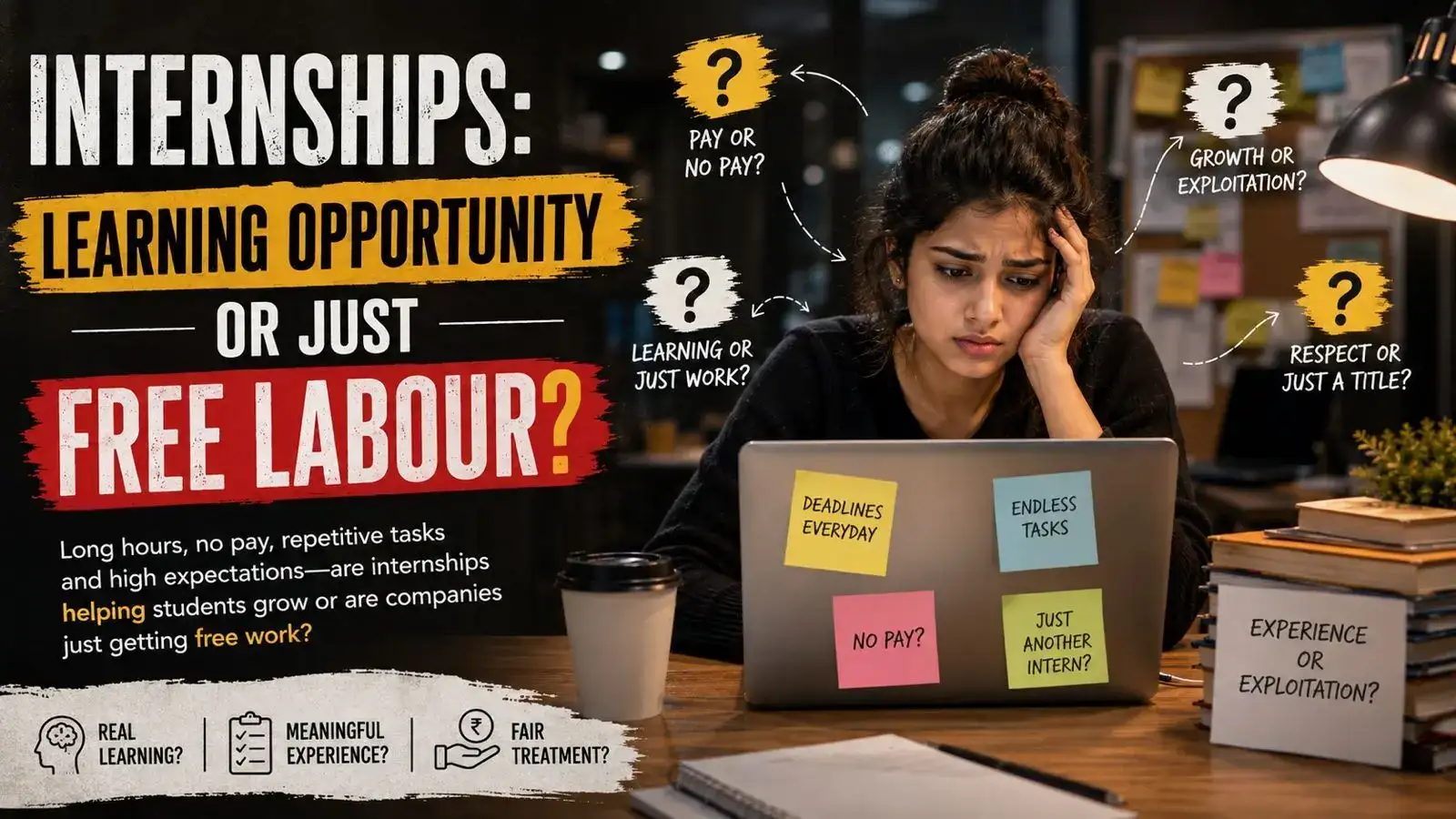
Internships are meant to teach students how industries work and sometimes, they truly do help. Many students gain confidence, communication skills, and valuable experience through good internships. But not every internship feels educational. A lot of students complain that their work mostly includes repetitive tasks like making spreadsheets, editing endless documents, sending emails, or handling social media without proper guidance. Instead of mentorship many interns receive workloads without learning opportunities.The biggest frustration? Some companies expect full time effort while offering little or no payment and that is where the “free labour” debate begins.
One of the biggest issues students talk about today is unpaid internships. Companies often justify unpaid work by calling it “exposure” or “experience.” But exposure does not pay travel costs, rent, food, or college expenses. Not every student can afford to work for free especially in big cities where even commuting becomes expensive. Because of this, unpaid internships often become easier only for students who already have financial support. This creates an unfair gap where opportunities are not equally accessible to everyone.
Internship culture today is heavily connected to social media. Platforms like LinkedIn have turned achievements into constant public updates. Students regularly see others posting:
And while there is nothing wrong with celebrating achievements, constantly seeing these updates can make others feel anxious or inadequate. Sometimes students apply for internships not because they truly want them, but because they feel everyone else is doing it.
At the same time, it is important to acknowledge that internships can genuinely help students when done properly. A good internship can teach practical skills that classrooms often cannot. Students get exposure to deadlines, teamwork, professional communication, and industry expectations. Some internships even lead to jobs, mentorships, or long-term opportunities. The problem is not internships themselves. The problem begins when companies treat interns like cheap workers instead of learners.
Today’s students are not rejecting hard work. Most young people understand that careers require effort and experience. What they are questioning is whether internships are becoming unhealthy, exploitative, and performative. Students do not just want certificates to post online. They want meaningful work, proper guidance, fair treatment, and opportunities that actually help them grow. Because learning should never feel like exploitation disguised as experience.
You may also like
- Dharmendra Pradhan reviews overhaul of CBSE payment gateway system with PSU banks
- Kerala Plus Two results 2026 announced with 77.97% pass percentage as girls outshine boys
- SSC GD Constable 2026 exam cancelled at overcrowded centres, rescheduled from May 27; check official notice here
- Uproar Over Major CBSE Blunder! Student Questions Low Scores; Board Forced to Admit Error
- Kerala Board DHSE Plus 2 result 2026: SAY exam, revaluation application process begins; check details here
Learning or Just Endless Work?
Internships are meant to teach students how industries work and sometimes, they truly do help. Many students gain confidence, communication skills, and valuable experience through good internships. But not every internship feels educational. A lot of students complain that their work mostly includes repetitive tasks like making spreadsheets, editing endless documents, sending emails, or handling social media without proper guidance. Instead of mentorship many interns receive workloads without learning opportunities.The biggest frustration? Some companies expect full time effort while offering little or no payment and that is where the “free labour” debate begins.
The Unpaid Internship Problem
One of the biggest issues students talk about today is unpaid internships. Companies often justify unpaid work by calling it “exposure” or “experience.” But exposure does not pay travel costs, rent, food, or college expenses. Not every student can afford to work for free especially in big cities where even commuting becomes expensive. Because of this, unpaid internships often become easier only for students who already have financial support. This creates an unfair gap where opportunities are not equally accessible to everyone.
Social Media Has Made the Pressure Worse
Internship culture today is heavily connected to social media. Platforms like LinkedIn have turned achievements into constant public updates. Students regularly see others posting:
- “Excited to announce”
- “Happy to begin my internship”
- “Thrilled to work with”
And while there is nothing wrong with celebrating achievements, constantly seeing these updates can make others feel anxious or inadequate. Sometimes students apply for internships not because they truly want them, but because they feel everyone else is doing it.
Not All Internships Are Bad
At the same time, it is important to acknowledge that internships can genuinely help students when done properly. A good internship can teach practical skills that classrooms often cannot. Students get exposure to deadlines, teamwork, professional communication, and industry expectations. Some internships even lead to jobs, mentorships, or long-term opportunities. The problem is not internships themselves. The problem begins when companies treat interns like cheap workers instead of learners.
Students Want Respect, Not Just Certificates
Today’s students are not rejecting hard work. Most young people understand that careers require effort and experience. What they are questioning is whether internships are becoming unhealthy, exploitative, and performative. Students do not just want certificates to post online. They want meaningful work, proper guidance, fair treatment, and opportunities that actually help them grow. Because learning should never feel like exploitation disguised as experience.






More from our partners


Loving Newspoint? Download the app now
