
Word Of The Day: Aporia - Meaning, Usage And Examples

Remember that state of confusion your mind enters after encountering a maths question in your textbook that you simply cannot solve? You stare at it for minutes, perhaps even hours, trying to make sense of it, yet every possible answer somehow feels wrong. The more you think about it, the more tangled your thoughts become.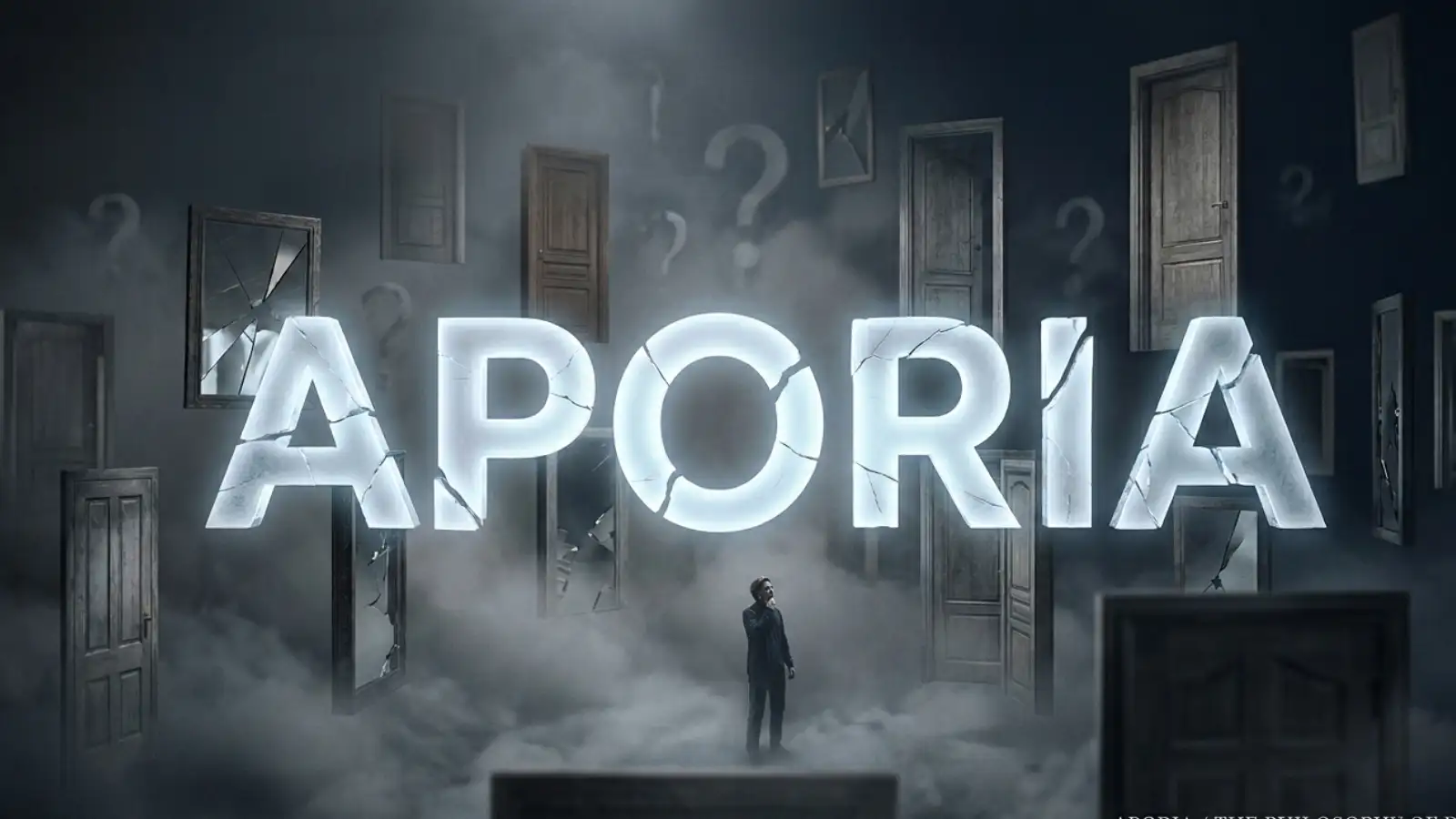
Interestingly, this feeling is not limited to classrooms or exams. People experience similar moments in everyday life while making difficult decisions, understanding complex emotions, navigating relationships, or questioning their own choices. This uncomfortable state of doubt and uncertainty is perfectly captured by the fascinating word ' aporia '.
Aporia is a noun that refers to a state of doubt, confusion, or uncertainty, especially when someone is confronted with a difficult question, contradiction, or emotional conflict. In literature and philosophy, it often describes a moment when certainty breaks down and deeper questioning begins.
Origin
The word comes from the French term aporie, which ultimately traces its roots to the Greek word aporia, meaning "difficulty" or "perplexity". It is derived from aporos, where the prefix a- means "without" and poros means "passage" or "path". The term was widely used in ancient Greek philosophy, particularly by thinkers such as Socrates and Plato, to describe a state of intellectual uncertainty reached after intense questioning or debate. Over time, it evolved into a concept representing doubt, contradiction, and situations where clear answers become difficult, or even impossible, to find.
Interestingly, this feeling is not limited to classrooms or exams. People experience similar moments in everyday life while making difficult decisions, understanding complex emotions, navigating relationships, or questioning their own choices. This uncomfortable state of doubt and uncertainty is perfectly captured by the fascinating word ' aporia '.
Aporia is a noun that refers to a state of doubt, confusion, or uncertainty, especially when someone is confronted with a difficult question, contradiction, or emotional conflict. In literature and philosophy, it often describes a moment when certainty breaks down and deeper questioning begins.
Origin
The word comes from the French term aporie, which ultimately traces its roots to the Greek word aporia, meaning "difficulty" or "perplexity". It is derived from aporos, where the prefix a- means "without" and poros means "passage" or "path". The term was widely used in ancient Greek philosophy, particularly by thinkers such as Socrates and Plato, to describe a state of intellectual uncertainty reached after intense questioning or debate. Over time, it evolved into a concept representing doubt, contradiction, and situations where clear answers become difficult, or even impossible, to find.Next Story