
Word Of The Day: Cynosure - Meaning, Usage And Examples

You might be familiar with that one person who immediately captures everyone’s attention the moment they walk into a room. They may not even be the loudest, yet they still remain in the spotlight somehow. Sometimes, it is their confidence, the way they speak, or simply the kind of presence they carry that makes others notice them instantly. “Cynosure” is a perfect word to describe such effortlessly charismatic individuals.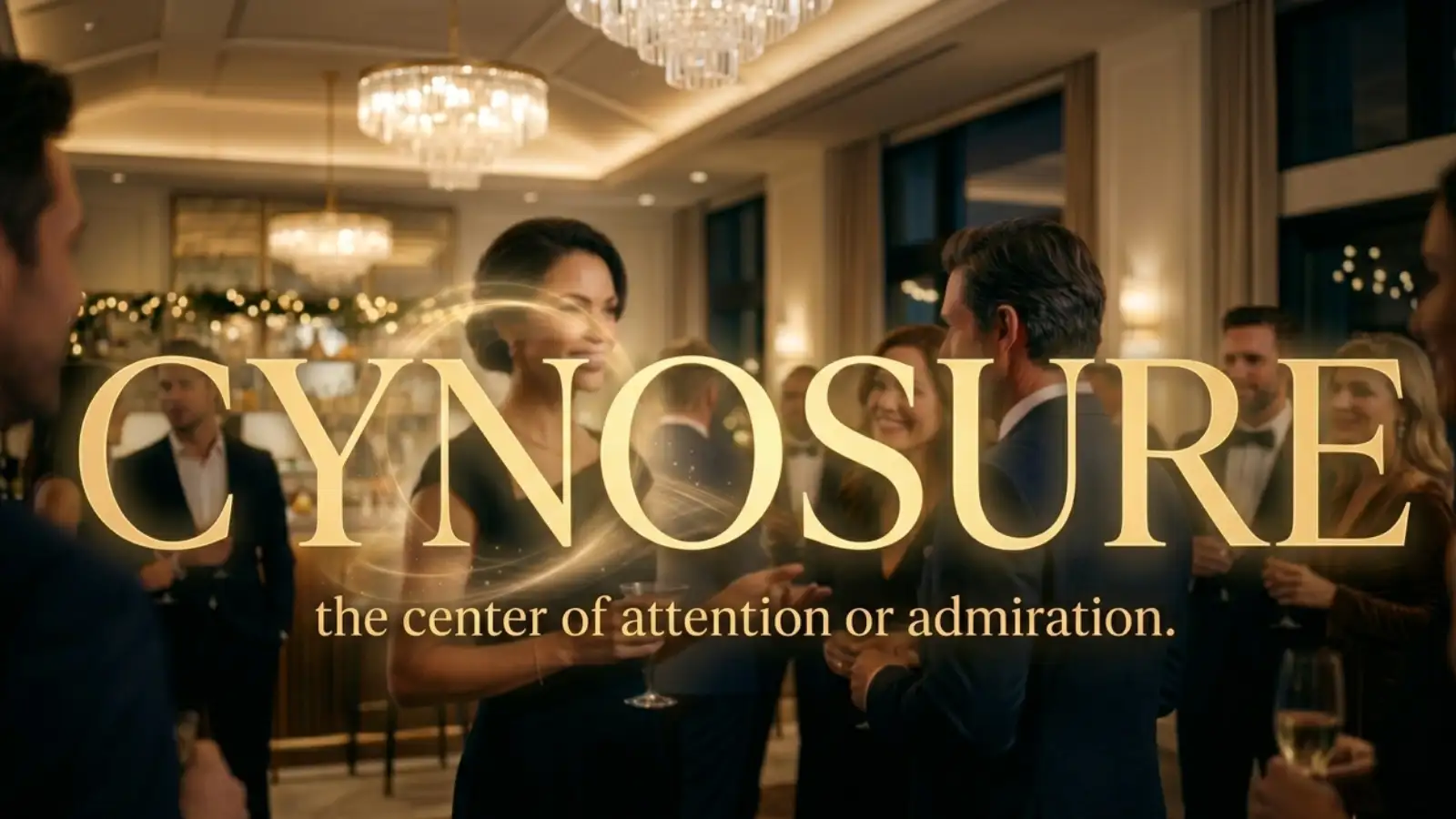
It is a noun that refers to a person or thing that becomes the center of attention, admiration, or fascination. The word also highlights the idea that attention is not always captured through loudness or dramatic behaviour. Some people’s presence alone is enough to make others notice and admire them.
Origin
The word Cynosure originates from the Greek word Kynósoura, which literally translates to “dog’s tail.” It later passed into Latin and Middle French before emerging as Cynosure. The term was first recorded in use around 1565.
Originally, it referred to the constellation Ursa Minor and specifically the North Star, which sailors used for navigation and guidance. Over time, its meaning expanded beyond astronomy. Today, cynosure refers to a person or thing that becomes the center of attention, admiration, or fascination, much like the North Star that naturally draws focus as a fixed point in the sky.
Pronunciation Of Cynosure
It is pronounced as SY-nuh-shoor.
The phonetic spelling is /ˈsaɪ.nə.ʃʊr/.
Synonyms Of Cynosure
Antonyms Of Cynosure
How Can You Use 'Cynosure' In A Sentence
This is a relatively formal and sophisticated term, so it should not be overused in casual contexts. It is generally used in a positive sense, so avoid applying it to negative attention unless the context clearly supports it. Additionally, do not use it for temporary attention that lacks genuine admiration or lasting interest.
It is a noun that refers to a person or thing that becomes the center of attention, admiration, or fascination. The word also highlights the idea that attention is not always captured through loudness or dramatic behaviour. Some people’s presence alone is enough to make others notice and admire them.
Origin
The word Cynosure originates from the Greek word Kynósoura, which literally translates to “dog’s tail.” It later passed into Latin and Middle French before emerging as Cynosure. The term was first recorded in use around 1565.Originally, it referred to the constellation Ursa Minor and specifically the North Star, which sailors used for navigation and guidance. Over time, its meaning expanded beyond astronomy. Today, cynosure refers to a person or thing that becomes the center of attention, admiration, or fascination, much like the North Star that naturally draws focus as a fixed point in the sky.
Pronunciation Of Cynosure
It is pronounced as SY-nuh-shoor.
The phonetic spelling is /ˈsaɪ.nə.ʃʊr/.
Synonyms Of Cynosure
- Attraction
- Star
- Showstopper
- Focal point
- Celebrity
Antonyms Of Cynosure
- Background figure
- Outcast
- Wallflower
- Obscurity
- Unknown
How Can You Use 'Cynosure' In A Sentence
- Her elegant appearance made her the cynosure of the entire evening.
- The young actor quickly became the cynosure of social media after the film’s release.
- With his calm confidence and charisma, he was the cynosure of the gathering.
- The beautifully decorated stage became the cynosure of the event.
- During the fashion show, the designer’s final creation was the cynosure of everyone’s attention.
Avoid These Mistakes
While using this word, avoid some common errors, such as applying it to someone who is merely popular but not truly an object of admiration or fascination. Also, do not confuse it with “leadership” or “authority,” as it primarily refers to attracting attention or admiration.This is a relatively formal and sophisticated term, so it should not be overused in casual contexts. It is generally used in a positive sense, so avoid applying it to negative attention unless the context clearly supports it. Additionally, do not use it for temporary attention that lacks genuine admiration or lasting interest.
Next Story