
Word Of The Day: Quixotic - Meaning, Usage And Examples

Have you ever come across people whose ideas seem completely impossible and overly imaginative? Human beings often chase unrealistic dreams and romantic ideals, even when they do not align with reality. Such people show that not every dream needs to be practical, as some are driven purely by hope and imagination. This sense of idealism is known as ‘Quixotic’.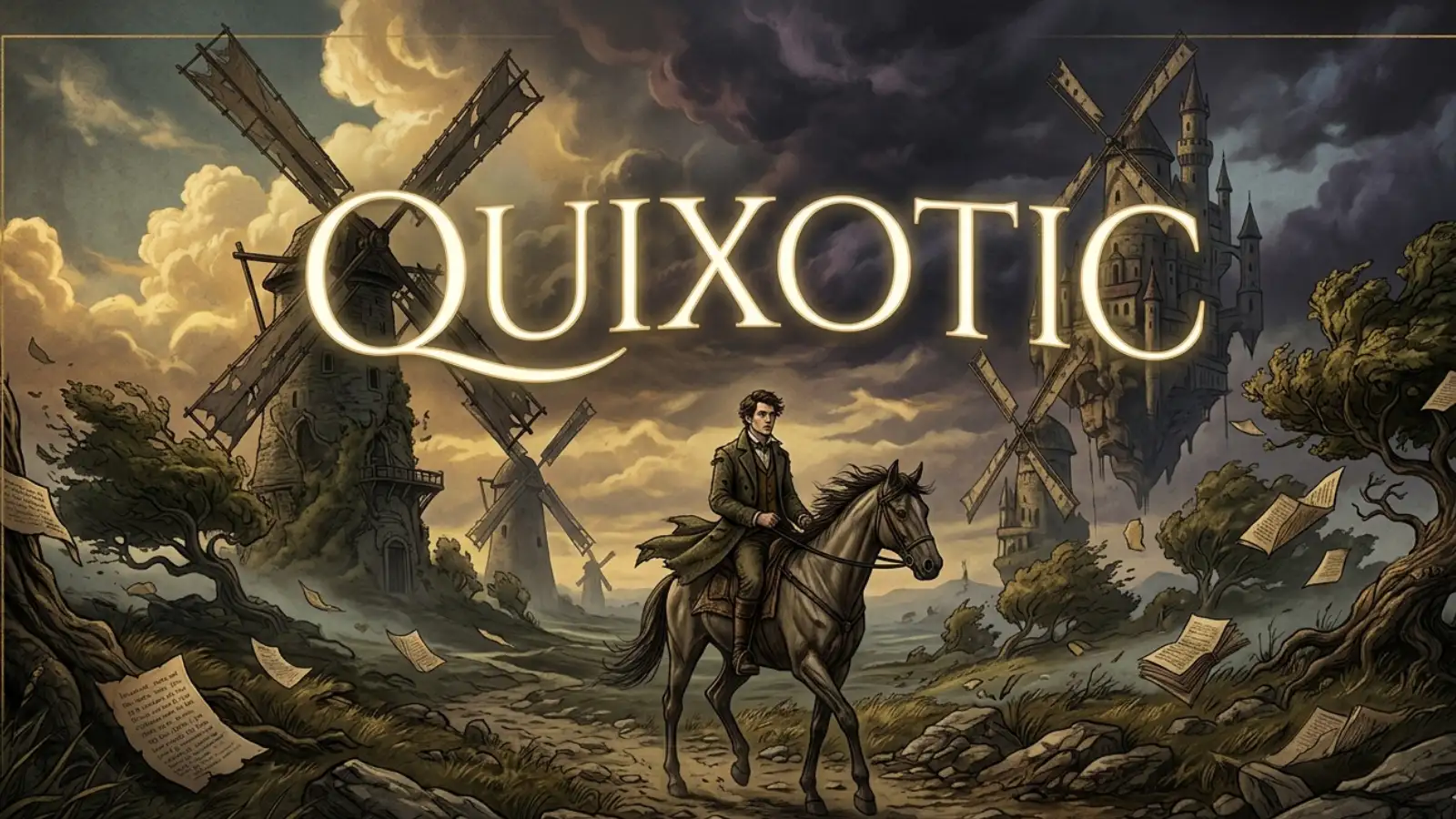
‘Quixotic’ is an adjective used to describe someone or something that is extremely idealistic, imaginative, or unrealistic in pursuing noble goals or romantic ideas. This word is inspired by one of literature’s most iconic fictional characters and continues to symbolise the beauty and challenges of dreaming beyond practical limitations .
By the early 18th century, the term was widely used to describe highly idealistic or impractical ambitions. The novel also inspired several other English words, including ‘Dulcinea’, meaning a beloved or sweetheart, and ‘Rosinante’, which refers to an old or worn-out horse.
It is pronounced as kwik-SOT-ik.
The phonetic spelling is /kwiˈzɒtɪk/.
Avoid These Mistakes
While using this word, avoid some common mistakes, such as using it only to describe “weird” or “strange” behaviour. Quixotic does not simply refer to odd actions; instead it describes unrealistic idealism or noble yet impractical ambitions.
Also, avoid confusing the word with fantasy or delusion. A quixotic person may pursue impossible ideals, but the term usually highlights noble intention rather than complete irrationality. It is important to use this word only in situations involving ambition or idealism.
Additionally, avoid using this word in a completely negative sense. Although it can imply impracticality, it often carries admiration for a person’s imagination, courage and idealism.
While such ambitions may sometimes seem unrealistic, this word also reflects a willingness to believe in something greater than logic alone. This unique balance between admiration and impracticality is what gives the word its lasting literary and emotional appeal.
‘Quixotic’ is an adjective used to describe someone or something that is extremely idealistic, imaginative, or unrealistic in pursuing noble goals or romantic ideas. This word is inspired by one of literature’s most iconic fictional characters and continues to symbolise the beauty and challenges of dreaming beyond practical limitations .
Origin
This word originated from the famous 17th-century Spanish novel named Don Quixote, written by Miguel de Cervantes. The novel’s protagonist, Don Quixote, became famous for chasing grand heroic ideals and impossible adventures, often blurring the line between imagination and reality. His unrealistic yet noble outlook on life eventually gave rise to the word ‘Quixotic’.By the early 18th century, the term was widely used to describe highly idealistic or impractical ambitions. The novel also inspired several other English words, including ‘Dulcinea’, meaning a beloved or sweetheart, and ‘Rosinante’, which refers to an old or worn-out horse.
Pronunciation Of Quixotic
It is pronounced as kwik-SOT-ik.
The phonetic spelling is /kwiˈzɒtɪk/.
Synonyms Of Quixotic
- Idealistic
- Romantic
- Visionary
- Impractical
- Dreamy
Antonyms Of Quixotic
- Practical
- Realistic
- Pragmatic
- Sensible
- Rational
How Can You Use 'Quixotic' In A Sentence
- His quixotic dream of changing the world inspired many people around him.
- She embarked on a quixotic mission to fix every problem in the city alone.
- The film portrays a quixotic hero driven by impossible ideals.
- Some viewed the project as visionary, while others dismissed it as quixotic.
- Their quixotic belief in perfect justice shaped every decision they made.
Avoid These Mistakes
While using this word, avoid some common mistakes, such as using it only to describe “weird” or “strange” behaviour. Quixotic does not simply refer to odd actions; instead it describes unrealistic idealism or noble yet impractical ambitions. Also, avoid confusing the word with fantasy or delusion. A quixotic person may pursue impossible ideals, but the term usually highlights noble intention rather than complete irrationality. It is important to use this word only in situations involving ambition or idealism.
Additionally, avoid using this word in a completely negative sense. Although it can imply impracticality, it often carries admiration for a person’s imagination, courage and idealism.
While such ambitions may sometimes seem unrealistic, this word also reflects a willingness to believe in something greater than logic alone. This unique balance between admiration and impracticality is what gives the word its lasting literary and emotional appeal.
Next Story