
Bandar Movie Review: Bobby Deol Delivers a Career-Best Performance in Anurag Kashyap's Flawed Prison Drama

Every single time a new Anurag Kashyap film hits theaters, audiences brace themselves for a gritty, uncompromising cinematic experience that explores the darker underbellies of human nature and societal systems. In his latest venture, Bandar, the director attempts to dive headfirst into the heavy themes of institutional cruelty, public shaming, and the terrifying speed with which the legal system can swallow an individual. While the first half of the film proves to be a relentlessly engaging and gripping piece of cinema, the second half unfortunately loses its initial momentum by continuously looping around the exact same narrative points.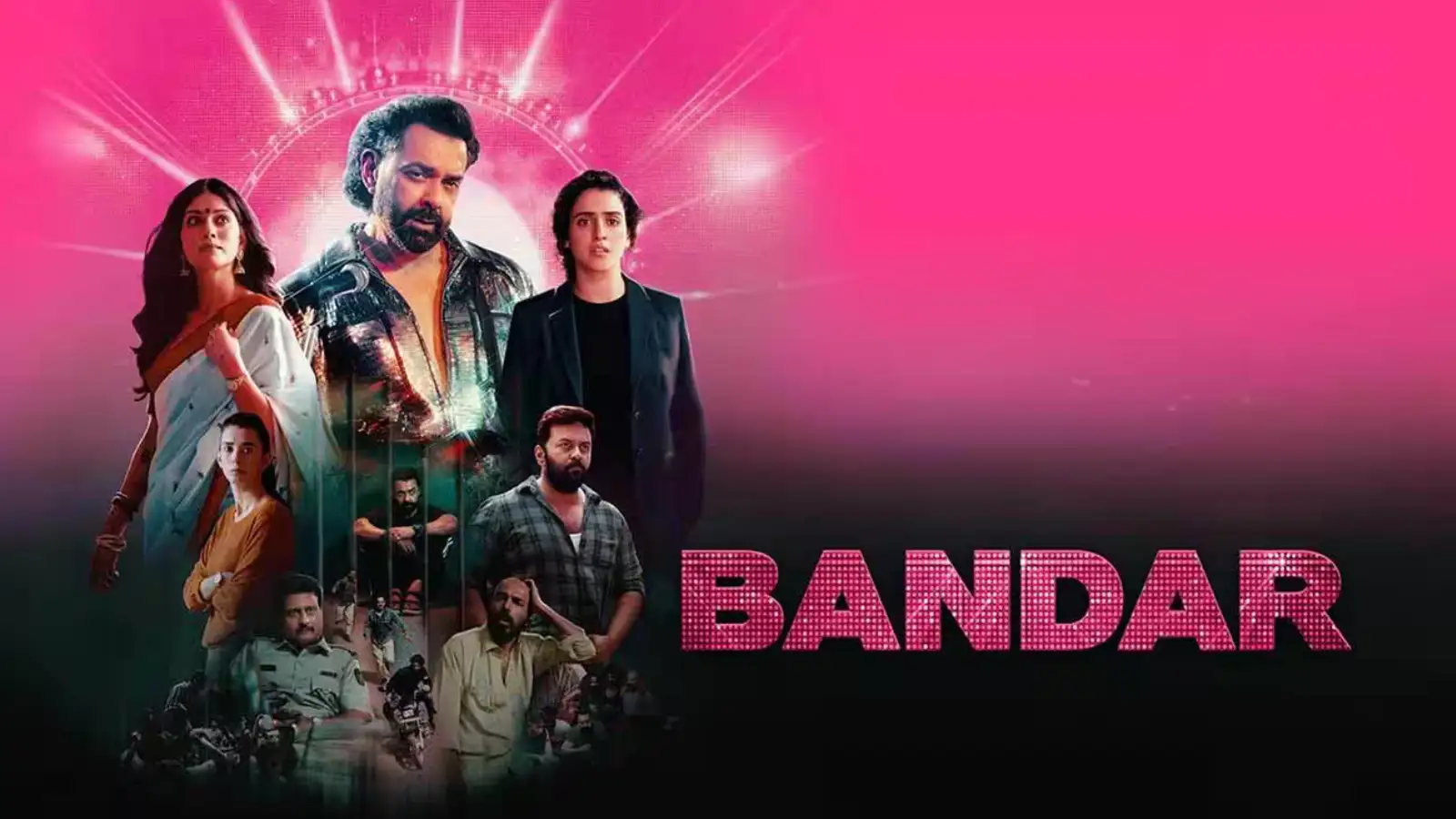
The narrative centers around Samar Mehra, portrayed brilliantly by Bobby Deol , an aging, fading superstar who is battling intense loneliness and financial stress away from his past glory days. His baseline vulnerability is completely exposed when his younger ex-girlfriend levels a severe rape accusation against him, triggering an immediate and devastating descent into police custody. Rather than framing the story around a traditional, high-stakes courtroom trial to uncover the absolute truth, Kashyap chooses to direct his analytical lens entirely at the sheer horror of how under-trial individuals are treated within Indian police stations and correctional institutions.
It is within the filthy, claustrophobic walls of the prison that the movie finds its absolute strongest footing and cinematic power.
The undisputed anchor of this entire project is Bobby Deol, who turns in what can easily be considered one of the absolute strongest and most mature performances of his entire career. Because modern viewers are well-aware of the actor's real-life professional journey and career resurgences, watching him channel raw desperation, confusion, and helplessness feels intensely and painfully authentic on screen. He manages to infuse Samar with a profound sense of broken humanity, successfully ensuring that the audience remains deeply invested in his mental deterioration even when the character acts in unlikable or deeply questionable ways.
Despite its technical strengths and exceptional acting, Bandar significantly stumbles when it comes to balancing its moral and philosophical equations. While Anurag Kashyap historically thrives when directing complex stories that exist entirely within moral grey zones, the screenplay here slowly narrows into a surprisingly one-sided perspective. By focusing overwhelmingly on Samar's immense physical suffering, the film actively nudges the viewer into sympathizing with him as the main victim, leaving deeper questions regarding power dynamics, emotional fallout, and genuine gender accountability largely unexamined.
Furthermore, the movie attempts to address the real-world danger of false allegations but risks oversimplifying the vast, sensitive conversations surrounding crimes against women. In its final acts, the narrative operates under the false assumption that making the theater audience feel physically uncomfortable or squirm is the exact same thing as forcing them to ask tough questions. Ultimately, Bandar leaves viewers with the haunting, memorable image of a man completely fading away into a massive bureaucratic ghost, but it remains a piece of work that frustratingly insists on giving easy answers to the very complex societal questions it raises.
The narrative centers around Samar Mehra, portrayed brilliantly by Bobby Deol , an aging, fading superstar who is battling intense loneliness and financial stress away from his past glory days. His baseline vulnerability is completely exposed when his younger ex-girlfriend levels a severe rape accusation against him, triggering an immediate and devastating descent into police custody. Rather than framing the story around a traditional, high-stakes courtroom trial to uncover the absolute truth, Kashyap chooses to direct his analytical lens entirely at the sheer horror of how under-trial individuals are treated within Indian police stations and correctional institutions.
Brutal and Relentless Realism Behind Bars
It is within the filthy, claustrophobic walls of the prison that the movie finds its absolute strongest footing and cinematic power.
- The Process of Humiliation: The film leaves audiences visibly shaken as it documents new inmates being stripped naked, subjected to degrading positions, and stripped of basic human dignity.
- A Wretched Ecosystem: The narrative effectively captures an overcrowded environment filled with systemic abuse, where even hardened criminals hold onto strict internal hierarchies regarding different types of offenses.
A Powerful, Career-Defining Performance
The undisputed anchor of this entire project is Bobby Deol, who turns in what can easily be considered one of the absolute strongest and most mature performances of his entire career. Because modern viewers are well-aware of the actor's real-life professional journey and career resurgences, watching him channel raw desperation, confusion, and helplessness feels intensely and painfully authentic on screen. He manages to infuse Samar with a profound sense of broken humanity, successfully ensuring that the audience remains deeply invested in his mental deterioration even when the character acts in unlikable or deeply questionable ways.
Where the Narrative Fumbles
Despite its technical strengths and exceptional acting, Bandar significantly stumbles when it comes to balancing its moral and philosophical equations. While Anurag Kashyap historically thrives when directing complex stories that exist entirely within moral grey zones, the screenplay here slowly narrows into a surprisingly one-sided perspective. By focusing overwhelmingly on Samar's immense physical suffering, the film actively nudges the viewer into sympathizing with him as the main victim, leaving deeper questions regarding power dynamics, emotional fallout, and genuine gender accountability largely unexamined.
Furthermore, the movie attempts to address the real-world danger of false allegations but risks oversimplifying the vast, sensitive conversations surrounding crimes against women. In its final acts, the narrative operates under the false assumption that making the theater audience feel physically uncomfortable or squirm is the exact same thing as forcing them to ask tough questions. Ultimately, Bandar leaves viewers with the haunting, memorable image of a man completely fading away into a massive bureaucratic ghost, but it remains a piece of work that frustratingly insists on giving easy answers to the very complex societal questions it raises.
Next Story