
Sculpted Sanctum: Rahul Mishra's 'Devi' Brings Ancient Temple Art to Paris Haute Couture Week

Paris Haute Couture Week has long served as the ultimate playground for avant-garde expression, yet few designers manage to seamlessly inject deep-rooted spiritual storytelling into its demanding aesthetic framework. Rahul Mishra did exactly that, capturing the global fashion industry's attention by transforming a crisp Parisian runway into an architectural sanctuary. His latest collection, appropriately titled Devi, was not merely a showcase of luxury evening wear; it was a profound visual essay celebrating the eternal, primordial energy of the sacred feminine. By drawing direct inspiration from India’s historic temple architecture, Mishra orchestrated a beautiful dialogue between ancient stone iconography and the fluid world of high fashion.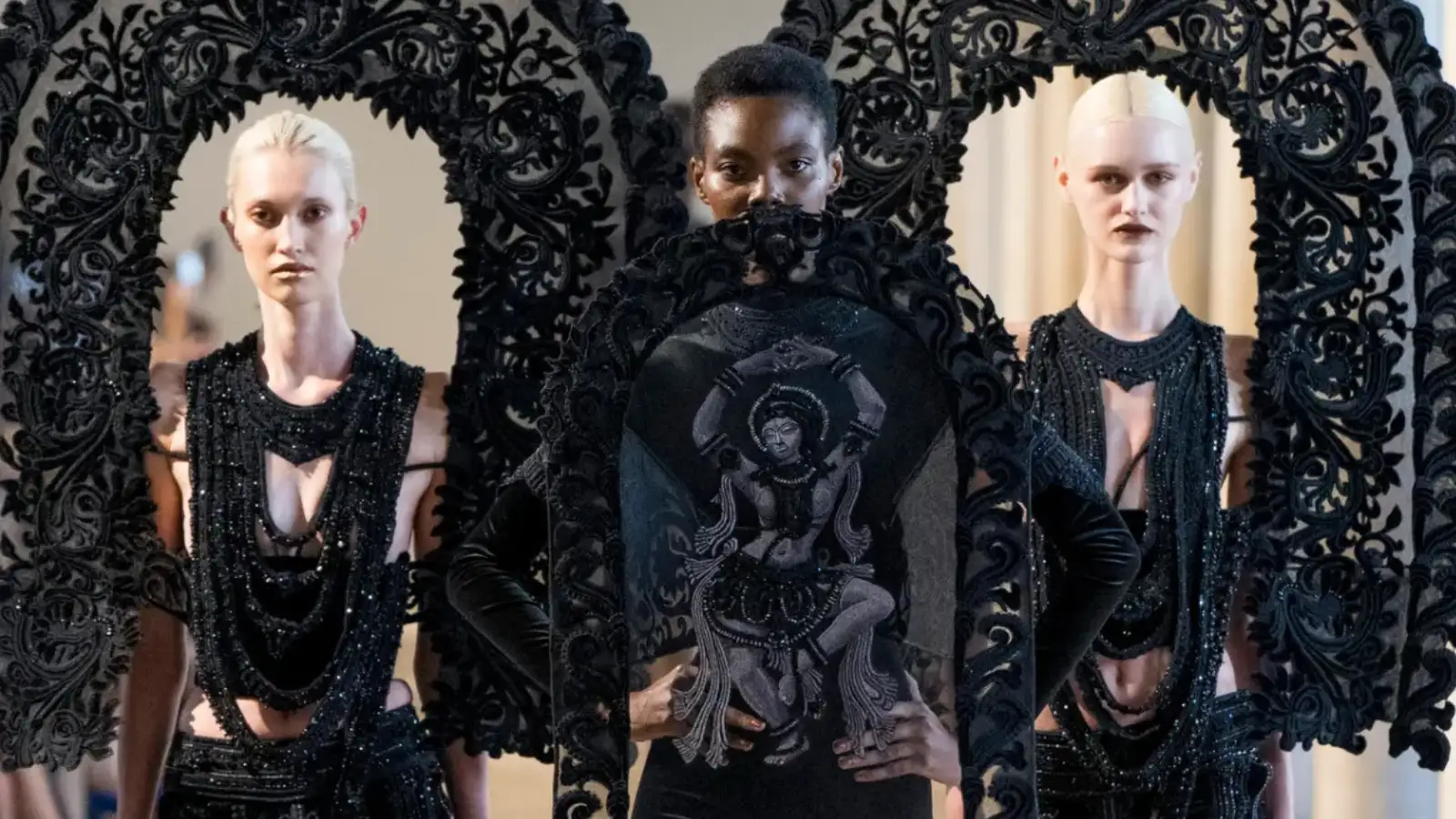
Sculpting Couture from Thread and Stone
The architectural brilliance of Devi lay in Mishra's rare ability to translate the rigid, unyielding textures of ancient stone bas-reliefs into supple, wearable textiles. Each garment that walked the runway appeared as if it had been chipped away from temple walls over centuries, balancing weight with fluid movement:- Three-Dimensional Topography: Using dense, multi-layered metallic gold threads, ivory silks, and meticulous zardozi hand-embroidery, Mishra’s team of master artisans built multi-dimensional figures of goddesses, divine motifs, and sacred elements that literally rose out of the fabric.
- Structural Illusions: Sharp, exaggerated silhouettes mimicked the grand arches, stepped columns, and geometric layout of sacred shrines, effectively turning the models into walking pieces of living architecture.
Empowering the Living Archive of Craftsmanship
Beyond the immediate glamour of the Paris runway, Devi functions as a vital economic engine for rural Indian craft communities. Mishra’s signature business model relies on de-centralized production, taking luxury couture embroidery work directly to the doorsteps of traditional handloom weavers and artisans across Indian villages, preserving ancestral knowledge through consistent, ethical livelihood.Next Story