
Shonen vs Seinen vs Shojo vs Josei: A Beginner's Guide To Anime Categories

Are you new to anime and often find yourself confused by terms like shonen, seinen, shojo, and josei? Many people assume these words refer to anime genres. However, they actually describe the target audience for whom a particular series is primarily created. These labels are widely used in the anime world, but many beginners are unaware of what they really mean.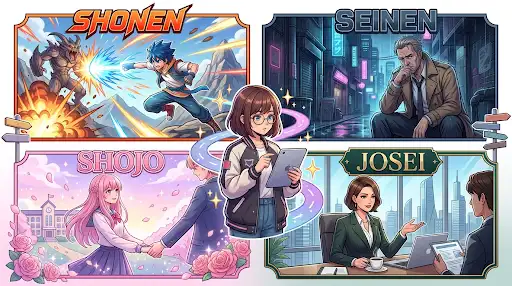
Understanding these categories can make it much easier to discover shows that match your interests, whether you enjoy action-packed adventures, heartfelt romances, mature dramas, or realistic slice-of-life stories. So, here's a beginner-friendly guide to help you understand the differences between shonen, seinen, shojo, and josei.
What Is Shonen ?
The word 'shonen' translates to 'young boy' in Japanese, meaning this category is primarily aimed at male audiences between the ages of 12 and 18. It is best known for its action-packed stories, inspiring protagonists, and themes of perseverance and personal growth. Shonen series typically follow a young hero striving to achieve a major goal, becoming stronger through challenges, training, and intense rivalries along the way.
Themes such as friendship, teamwork, determination, and self-improvement are central to many shonen stories, making them both entertaining and inspiring. Some of the most popular shonen anime include Naruto, One Piece, Demon Slayer, Jujutsu Kaisen, and My Hero Academia.
What Is Seinen?
While shonen is primarily aimed at teenage boys, seinen anime is generally created for adult men, typically those aged 18 and above. The word seinen translates to "young man" in Japanese, and this demographic often explores more mature themes and complex storytelling. While some seinen series delve into intense psychological, philosophical, or political subjects, others focus on romance, workplace life, comedy, and slice-of-life experiences. What sets seinen apart is its ability to tackle these themes with greater depth and nuance. Some popular examples of seinen anime include Berserk, Monster, Vinland Saga, Tokyo Ghoul, and Kaguya-sama: Love Is War.
What Is Shojo?
The word shojo (also spelled shōjo) means "young girl" in Japanese and primarily targets teenage girls. Shojo anime often focuses on emotions, relationships, and personal growth, with romance being one of its central themes. These series commonly explore friendship, family bonds, self-discovery, and coming-of-age experiences. Compared to action-oriented anime, shojo places greater emphasis on character emotions, interpersonal relationships, and emotional development. Some of the most popular shojo anime include Fruits Basket, Sailor Moon, Kimi ni Todoke, and Ouran High School Host Club.
What Is Josei?
Just as seinen is aimed at adult men, josei is targeted at adult women. The word josei itself translates to "woman" in Japanese. While josei anime often includes romance, it typically portrays relationships in a more realistic and nuanced way. Instead of focusing on idealised love stories, josei anime explores themes such as adult life, careers, marriage, friendships, family responsibilities, and personal growth. Some popular josei anime include Nana, Paradise Kiss, Honey and Clover, Chihayafuru, and Wotakoi: Love Is Hard for Otaku.
What’s The Difference?
Although shonen, seinen, shojo, and josei are often mistaken for anime genres, they are actually demographic categories that indicate the primary target audience of a series. Shonen is aimed primarily at teenage boys and typically features action, adventure, friendship, and personal growth. Seinen, on the other hand, targets adult men and often explores more mature themes, complex narratives, and realistic storytelling.
Similarly, shojo is created for teenage girls and generally centres on emotions, relationships, and coming-of-age experiences. Josei, meanwhile, is aimed at adult women and tends to present more realistic portrayals of romance, careers, friendships, and everyday adult life.
Despite these distinctions, there are no strict rules about who can enjoy a particular category. Anyone can watch anime from any demographic based on their personal interests.
Understanding these categories can make it much easier to discover shows that match your interests, whether you enjoy action-packed adventures, heartfelt romances, mature dramas, or realistic slice-of-life stories. So, here's a beginner-friendly guide to help you understand the differences between shonen, seinen, shojo, and josei.
What Is Shonen ?
The word 'shonen' translates to 'young boy' in Japanese, meaning this category is primarily aimed at male audiences between the ages of 12 and 18. It is best known for its action-packed stories, inspiring protagonists, and themes of perseverance and personal growth. Shonen series typically follow a young hero striving to achieve a major goal, becoming stronger through challenges, training, and intense rivalries along the way.Themes such as friendship, teamwork, determination, and self-improvement are central to many shonen stories, making them both entertaining and inspiring. Some of the most popular shonen anime include Naruto, One Piece, Demon Slayer, Jujutsu Kaisen, and My Hero Academia.
What Is Seinen?
While shonen is primarily aimed at teenage boys, seinen anime is generally created for adult men, typically those aged 18 and above. The word seinen translates to "young man" in Japanese, and this demographic often explores more mature themes and complex storytelling. While some seinen series delve into intense psychological, philosophical, or political subjects, others focus on romance, workplace life, comedy, and slice-of-life experiences. What sets seinen apart is its ability to tackle these themes with greater depth and nuance. Some popular examples of seinen anime include Berserk, Monster, Vinland Saga, Tokyo Ghoul, and Kaguya-sama: Love Is War.
You may also like
- 'Dhurandhar' singer Jasmine Sandlas faces severe backlash for turning up 3 hours late for Hyderabad concert: 'Then you came and lip-synced at a live show'
- Dua Lipa can't move into new London home till 2027
- Shaalien Malhotra: Writing and directing were never part of my plan
- After death of worker on Sanjay Leela Bhansali's 'Love And War' set, FWICE demands better working conditions, compensation of Rs 50 lakhs: 'Instead of 12 hours, 16-18 hours of work is done'
- Indore Food Corner: 10 Best Waffles To Satiate Your Sweet Cravings
What Is Shojo?
The word shojo (also spelled shōjo) means "young girl" in Japanese and primarily targets teenage girls. Shojo anime often focuses on emotions, relationships, and personal growth, with romance being one of its central themes. These series commonly explore friendship, family bonds, self-discovery, and coming-of-age experiences. Compared to action-oriented anime, shojo places greater emphasis on character emotions, interpersonal relationships, and emotional development. Some of the most popular shojo anime include Fruits Basket, Sailor Moon, Kimi ni Todoke, and Ouran High School Host Club.
What Is Josei?
Just as seinen is aimed at adult men, josei is targeted at adult women. The word josei itself translates to "woman" in Japanese. While josei anime often includes romance, it typically portrays relationships in a more realistic and nuanced way. Instead of focusing on idealised love stories, josei anime explores themes such as adult life, careers, marriage, friendships, family responsibilities, and personal growth. Some popular josei anime include Nana, Paradise Kiss, Honey and Clover, Chihayafuru, and Wotakoi: Love Is Hard for Otaku. What’s The Difference?
Although shonen, seinen, shojo, and josei are often mistaken for anime genres, they are actually demographic categories that indicate the primary target audience of a series. Shonen is aimed primarily at teenage boys and typically features action, adventure, friendship, and personal growth. Seinen, on the other hand, targets adult men and often explores more mature themes, complex narratives, and realistic storytelling. Similarly, shojo is created for teenage girls and generally centres on emotions, relationships, and coming-of-age experiences. Josei, meanwhile, is aimed at adult women and tends to present more realistic portrayals of romance, careers, friendships, and everyday adult life.
Despite these distinctions, there are no strict rules about who can enjoy a particular category. Anyone can watch anime from any demographic based on their personal interests.






More from our partners


Loving Newspoint? Download the app now
