
Cockroach Janta Party Surpasses BJP on Instagram With 10 Million Followers in Just 5 Days

In a country where political dominance is traditionally built over decades of grassroots campaigning, an online satirical front has shaken up the digital landscape. In less than a week, a meme-fuelled youth movement known as the Cockroach Janta Party (CJP) has achieved unprecedented viral success. The Cockroach Janta Party beats BJP on Instagram, crossing 10 million followers in 5 days, outpacing the official handle of the ruling Bharatiya Janata Party (@bjp4india), which sits at roughly 8.7 million followers. Armed with nothing more than biting sarcasm, relatable reels, and collective internet outrage, the fictional political outfit has successfully tapped into the frustrations of India’s Gen Z and millennial youth.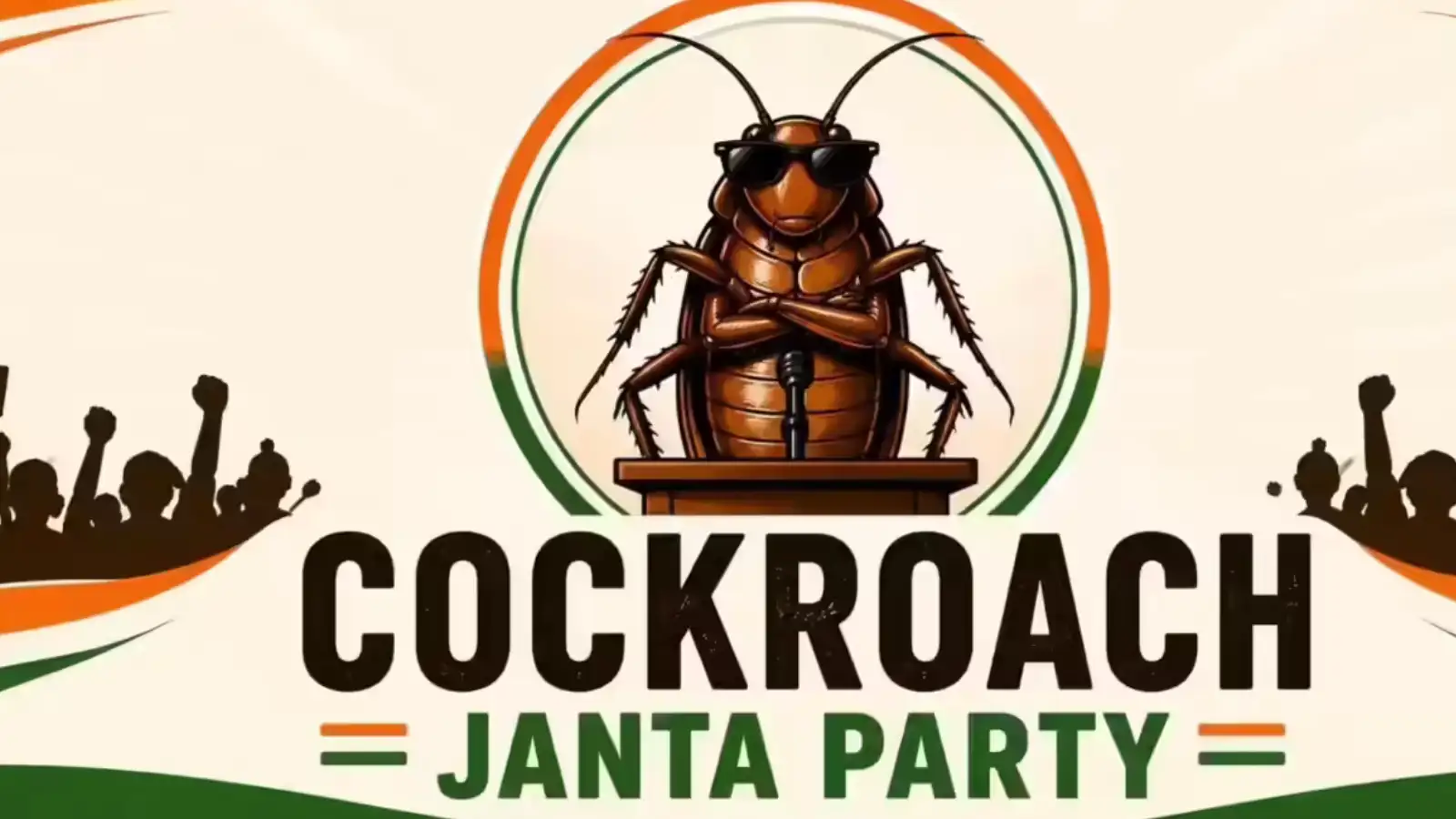
The movement was sparked by oral observations made on 15 May by the Chief Justice of India (CJI), Surya Kant, during a court hearing. Commenting on the online behaviour of certain individuals, the CJI remarked, "There are youngsters, like cockroaches, who don't get any employment or have any place in the profession. Some of them become media, some of them become social media, RTI activists and they start attacking everyone."
Although the CJI issued a clarification the next day stating he was misquoted and was specifically targeting individuals with fake degrees acting like "parasites" rather than the youth at large, the "cockroach" analogy had already triggered massive backlash. Founded by digital creator Abhijeet Dipke , the CJP was launched as a direct satirical protest against the remarks. Supporters felt deeply hurt that a custodian of the Constitution would use such a demeaning comparison for citizens expressing their opinions online.
What initially seemed like a fleeting meme page rapidly evolved into a full-scale digital protest against broader socio-economic issues. The CJP became a lightning rod for youth anger surrounding widespread unemployment, frequent exam paper leaks, and a perceived institutional disconnect from the concerns of younger generations. Describing itself as "a political front of the youth, by the youth, for the youth," the movement achieved rapid traction, gaining over 3 million followers in its first 78 hours before breaching the 10-million mark.
The scale of this growth is particularly striking when compared to mainstream political machinery. While the BJP has posted over 18,000 times to build its Instagram presence, the CJP bypassed its follower count with just 56 posts. Following the milestone, the CJP handle directly mocked the political establishment by posting, "World's largest party, they said," referencing the BJP's massive global primary membership of over 140 million.
As the movement exploded online, it caught the attention of prominent figures. High-profile influencers like Dhruv Rathee, activist-lawyer Prashant Bhushan, and Trinamool Congress (TMC) MPs Mahua Moitra and Kirti Azad engaged with the campaign, with some jokingly expressing a desire to join. Unofficial "state units," including an online claim for a "CJP Uttarakhand unit," even began popping up as supporters demanded official structure.
Despite the mainstream political interest, founder Abhijeet Dipke maintains that the CJP will remain an independent, anti-establishment symbol. He emphasized that the platform has no intention of inducting established politicians, noting that Gen Z users value the movement precisely because it stands as an alternative to traditional, orchestrated political structures. Proving its reach beyond digital metrics, Dipke revealed that over 200,000 people have already registered on the movement's website, indicating a deep, frustration-driven political identity that shows no signs of fizzling out.
Born from Institutional Outrage
The movement was sparked by oral observations made on 15 May by the Chief Justice of India (CJI), Surya Kant, during a court hearing. Commenting on the online behaviour of certain individuals, the CJI remarked, "There are youngsters, like cockroaches, who don't get any employment or have any place in the profession. Some of them become media, some of them become social media, RTI activists and they start attacking everyone."
Although the CJI issued a clarification the next day stating he was misquoted and was specifically targeting individuals with fake degrees acting like "parasites" rather than the youth at large, the "cockroach" analogy had already triggered massive backlash. Founded by digital creator Abhijeet Dipke , the CJP was launched as a direct satirical protest against the remarks. Supporters felt deeply hurt that a custodian of the Constitution would use such a demeaning comparison for citizens expressing their opinions online.
You may also like
- Delhi records season's first severe heatstroke case as 24-year-old admitted to RML Hospital
- 16 arrested for stone-pelting during anti-encroachment drive in Mumbai's Bandra area
- "This is a sign of a poor mentality": Shivraj Singh Chouhan hits back at Rahul Gandhi over 'Toffee' controversy
- North East Delhi riots 2020: Court asks Delhi police to mention role of each accused in rebuttal arguements
- 1st ICMR Annual Clinical Trial Meet 2026 highlights India's emerging leadership in integrative medicine research
More Than Just a Passing Trend
What initially seemed like a fleeting meme page rapidly evolved into a full-scale digital protest against broader socio-economic issues. The CJP became a lightning rod for youth anger surrounding widespread unemployment, frequent exam paper leaks, and a perceived institutional disconnect from the concerns of younger generations. Describing itself as "a political front of the youth, by the youth, for the youth," the movement achieved rapid traction, gaining over 3 million followers in its first 78 hours before breaching the 10-million mark.
The scale of this growth is particularly striking when compared to mainstream political machinery. While the BJP has posted over 18,000 times to build its Instagram presence, the CJP bypassed its follower count with just 56 posts. Following the milestone, the CJP handle directly mocked the political establishment by posting, "World's largest party, they said," referencing the BJP's massive global primary membership of over 140 million.
Resisting Mainstream Absorption
As the movement exploded online, it caught the attention of prominent figures. High-profile influencers like Dhruv Rathee, activist-lawyer Prashant Bhushan, and Trinamool Congress (TMC) MPs Mahua Moitra and Kirti Azad engaged with the campaign, with some jokingly expressing a desire to join. Unofficial "state units," including an online claim for a "CJP Uttarakhand unit," even began popping up as supporters demanded official structure.
Despite the mainstream political interest, founder Abhijeet Dipke maintains that the CJP will remain an independent, anti-establishment symbol. He emphasized that the platform has no intention of inducting established politicians, noting that Gen Z users value the movement precisely because it stands as an alternative to traditional, orchestrated political structures. Proving its reach beyond digital metrics, Dipke revealed that over 200,000 people have already registered on the movement's website, indicating a deep, frustration-driven political identity that shows no signs of fizzling out.






More from our partners


Loving Newspoint? Download the app now

